
July 23, 2026
Cloudy Aquarium Water
White or milky water is usually a bacterial bloom, which clears on its own within days to a couple of weeks. Grey water with visible particles is dust or debris, which fine filter wool clears. Test ammonia and nitrite first, feed less, and avoid deep-cleaning the filter, because that often makes cloudiness last longer.
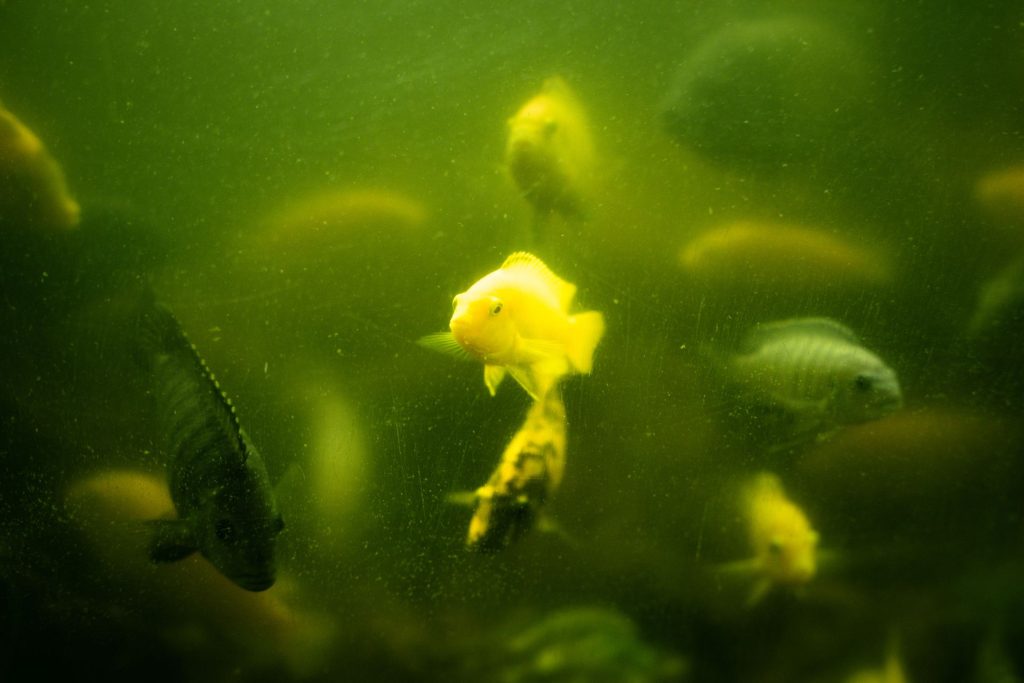
Identify What Kind of Cloudy Water You Have
The colour and look of the cloudiness point to the cause. A uniform white or milky haze usually means free-floating bacteria. Grey water with particles you can see drifting is dust or debris. Green water is suspended algae, and yellow or brown water usually comes from tannins in wood or leaves.
Note when it started: right after setup, after a water change, after adding fish, or after cleaning the filter. The timing usually tells you more than the colour alone.
White or Milky Water and Bacterial Blooms
A bacterial bloom happens when there is more dissolved food in the water than the established bacteria can process, so free-floating bacteria multiply. It is common in new tanks, after heavy feeding, after adding many fish at once, and after a filter has been cleaned too hard.
Most blooms clear within a few days to two weeks as the biological filter catches up. The haze itself rarely harms fish, but the waste that caused it can.
Cloudiness From Dust and Suspended Debris
Fine substrate dust, especially from new sand or gravel that was not rinsed, can stay suspended for hours or days. Stirring the substrate during planting or cleaning has the same effect.
Weak mechanical filtration lets fine particles circulate. Rinse new substrate well before use, and pour water onto a plate or bag when filling the tank to avoid disturbing it.
Check Ammonia, Nitrite, and Aquarium Stability
Test ammonia and nitrite whenever the water turns cloudy with fish in the tank. A bloom often appears when the bioload outpaces the filter, and that can also mean ammonia or nitrite are rising.
If either reads above zero, do a partial water change with dechlorinated, temperature-matched water and cut back feeding. If both read zero, the cloudiness is mostly cosmetic and time is the main cure.
How to Clear Cloudy Aquarium Water
For particles, add a layer of fine filter wool or polishing pad to the filter and replace it once it clogs. For a bacterial bloom, feed lightly, keep the filter running, and let the bacteria settle.
Treat the cause rather than the haze. Chemical clarifiers clump particles so the filter can catch them, but they do nothing for a bloom’s cause and should never be used to hide a water-quality problem.
Mistakes That Can Make Cloudiness Worse
Do not replace all filter media or rinse it in tap water, because this removes the bacteria that clear the bloom. Avoid repeated large water changes in a new tank when ammonia and nitrite are zero, as they can prolong the imbalance.
Do not add antibiotics or other medicines to clear cloudy water, and avoid adding more fish until the water is clear and tests are stable.
Preventing Cloudy Water From Returning
Feed only what the fish eat within a few minutes, add new fish gradually, and rinse new substrate before use. Clean the filter media in old tank water, and only when the flow slows.
Keep a regular schedule of partial water changes and light substrate vacuuming. A mature, stable tank rarely clouds without a clear trigger.
Frequently Asked Questions
Why Did My Aquarium Suddenly Turn Cloudy?
The most common causes are a bacterial bloom after overfeeding, adding many fish or cleaning the filter too hard, or fine particles stirred up from the substrate. Note what changed just before it clouded.
Will Cloudy Water Harm Fish?
The haze itself rarely harms fish, but its cause can. Test ammonia and nitrite: if either is above zero, change some water and feed less.
How Long Does a Bacterial Bloom Last?
Usually a few days to two weeks. It lasts longer if the filter is deep-cleaned, the fish are overfed, or many fish are added at once.
Should I Change Water When the Tank Is Cloudy?
Only if ammonia or nitrite are above zero, or if the cloudiness comes from debris. For a bacterial bloom with zero readings, repeated large water changes can make it last longer.
Can Overfeeding Cause Cloudy Water?
Yes. Uneaten food breaks down and feeds the bacteria behind a bloom. Feed only what the fish finish within a few minutes and remove leftovers.
Does a Filter Clear Cloudy Aquarium Water?
A filter clears cloudiness from particles, especially with fine filter wool added. A bacterial bloom clears when the biological filter catches up, which takes time rather than more filtration.
Why Is My Water Cloudy After a Water Change?
Usually the substrate was disturbed, or the new water contains tiny gas bubbles or minerals that cloud briefly. This type of cloudiness normally clears within a few hours.