
July 23, 2026
CO2 vs Low-Tech Tanks
A low-tech planted tank uses moderate light, slow-growing plants and no injected CO2, so it is cheaper, steadier and easier to look after. A CO2-injected tank grows plants faster and supports demanding species and dense carpets, but it costs more, needs more trimming and must be balanced carefully to avoid algae and protect fish.
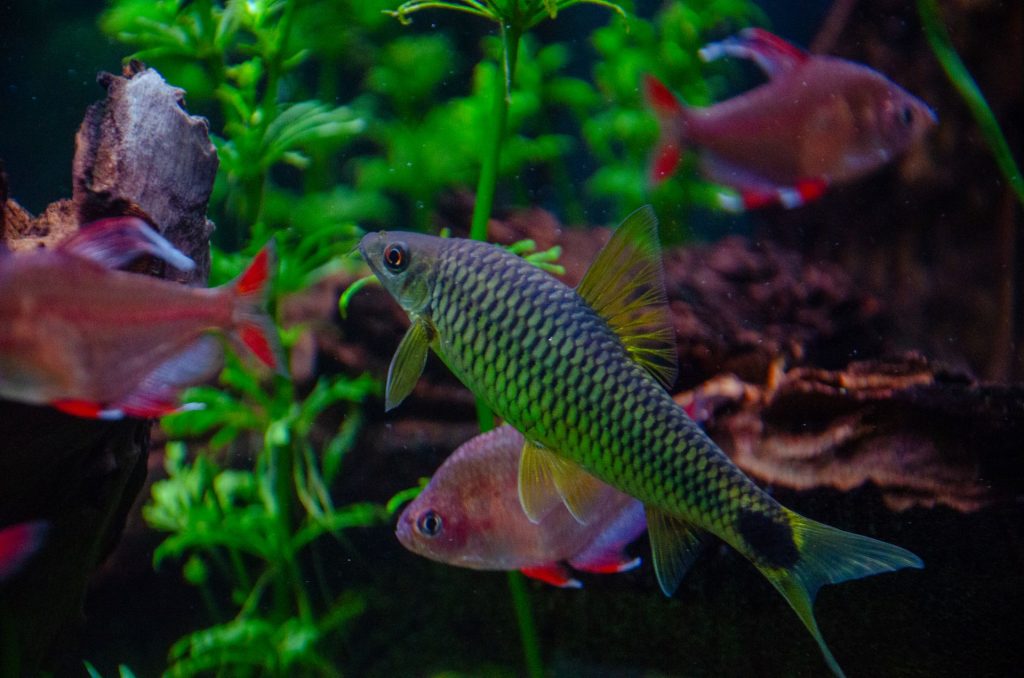
CO2-Injected vs Low-Tech Planted Tanks
Plants need carbon for photosynthesis. In a low-tech tank, CO2 comes only from fish respiration, bacteria and contact with air, so carbon stays low and plants grow slowly. In a CO2-injected tank, gas from a cylinder or other source raises carbon levels so plants can grow much faster.
Everything else follows from that: how much light you can use, which plants grow well, and how much work the tank needs.
Plant Growth and Species Choice
Low-tech tanks favour hardy, slower plants such as Anubias, Java fern, Cryptocoryne, mosses, Vallisneria, Amazon swords and many easy stem plants. They grow steadily without extra carbon.
CO2 tanks allow demanding plants, such as many red stem plants and fine carpeting plants like HC Cuba and Glossostigma, to grow densely and colour well.
Lighting Requirements and Algae Risk
Light should match available carbon and nutrients. Strong light in a tank without injected CO2 often leads to algae, because plants cannot use the extra light.
CO2 tanks can use strong light, but only if CO2 and fertiliser keep up. Low-tech tanks do best with low to moderate light for 6 to 8 hours a day.
Equipment, Cost, and Complexity
A pressurised CO2 system needs a cylinder, regulator, solenoid, bubble counter, tubing and a diffuser or reactor, plus refills. Many CO2 tanks also use stronger lights and more fertiliser.
Low-tech tanks need only a suitable light, a good substrate or root tabs, and occasional liquid fertiliser, which keeps costs and complexity low.
Maintenance and Stability
Fast growth means frequent trimming, often weekly, along with regular fertilising and careful CO2 adjustment. Mistakes show quickly as algae or melting plants.
Low-tech tanks change slowly. They need less trimming and forgive missed fertiliser doses, which makes them more stable for many keepers.
Fish and Shrimp Considerations
Too much CO2 can suffocate fish and shrimp. Increase injection slowly, keep gentle surface movement, use a timer so CO2 stops at night, and watch for fish gasping at the surface.
Low-tech tanks carry no CO2 risk, and their steady conditions suit shrimp and sensitive fish.
Which Approach Should You Choose?
Choose low-tech if you want a steady tank with modest upkeep, or if you are new to planted tanks. Choose CO2 injection if you want fast growth, dense carpets, demanding plants or a Dutch or nature-style layout, and you are happy to trim and adjust regularly.
Many keepers start low-tech and add CO2 later once they understand how their tank responds.
Frequently Asked Questions
Do Planted Tanks Need Injected CO2?
No. Many planted tanks do well without it, using slow-growing plants and moderate light. Injected CO2 matters most for demanding plants, dense carpets and high light.
Do Plants Grow Faster With CO2 Injection?
Yes, often much faster, as long as light and nutrients are also sufficient. Faster growth also means more trimming.
Are Low-Tech Tanks Easier to Maintain?
Usually, yes. They need less trimming, less adjustment and less equipment, and they change slowly enough that mistakes are easier to correct.
Can a CO2 Tank Be Safe for Fish?
Yes, if CO2 is increased gradually, surface movement is kept and injection stops at night. Watch for fish gasping at the surface and lower CO2 at once if you see it.
What Plants Work Well Without Injected CO2?
Anubias, Java fern, Cryptocoryne, mosses, Vallisneria, Amazon swords, Bucephalandra and many easy stem plants all grow well without injected CO2.
Does CO2 Prevent Algae?
Not on its own. CO2 helps plants outcompete algae only when light and nutrients are balanced. Unstable or low CO2 in a high-light tank often causes algae.
Which Setup Is Better for a Beginner?
A low-tech tank is usually the better first choice. It teaches how plants, light and nutrients interact with less risk and cost.