
Explainer
Midground Plants
Midground plants link the low foreground to the tall background. Easy choices include Cryptocoryne, Anubias, Java fern, Bucephalandra and compact stem plants. Place the main midground group off-centre, keep hardscape visible, and trim at the base to keep them tidy.
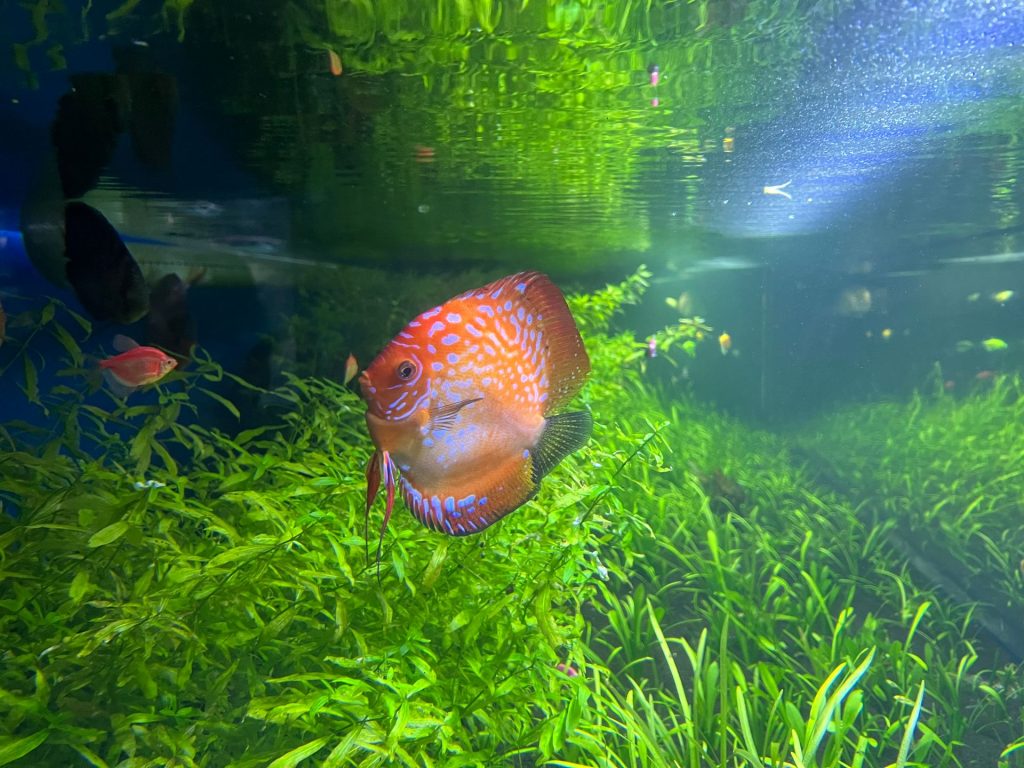
What Midground Plants Do in an Aquascape
Midground plants connect a low foreground to taller background growth. They soften the bases of wood and rock, hide equipment without filling the entire swimming area, and create a sense of depth when their mature height is planned before planting.
Plant height is relative to aquarium size. A species that forms a neat midground clump in a large tank may dominate a nano aquarium. Mature leaf length, spread, and growth direction are more useful than the size of the plant at the store.
Easy Midground Plants for Beginners
Most easy midground plants do well under moderate light. Stronger light can increase growth rate and maintenance demand and may expose slow epiphytes to algae. Match light to the whole planted system rather than increasing intensity for one shaded leaf.
Using Cryptocoryne in the Midground
Cryptocoryne species are popular because many tolerate moderate light and grow into dense rosettes. Different species and cultivars vary greatly in mature size, so choose compact forms for the front-middle area and larger forms where they have room to spread.
Crypts can lose older leaves after a major environmental change, a response often called crypt melt. Healthy roots may produce new submerged leaves once conditions stabilize. Avoid repeatedly uprooting a recovering plant unless rot or another clear problem is present.
Anubias, Java Fern, and Other Epiphytes
Anubias and Java fern are useful around hardscape because their rhizomes should remain above the substrate. Attach them to wood or rock rather than burying the rhizome. Their slower growth makes them easy to shape, although older leaves can collect algae under excessive light.
Bucephalandra and many small epiphytes can fill detailed midground areas without requiring deep substrate. They are usually slow-growing and should be placed where faster stems will not shade them completely.
Compact Stem and Bushy Midground Plants
Compact stem plants can create colorful or fine-textured bushes between foreground and background groups. Their final height is controlled partly by trimming, which means they require more frequent maintenance than naturally compact rosette plants.
Bushy plants look more natural when several stems are grouped rather than planted as isolated single stalks. Leave enough space for water movement and new shoots instead of packing the group so tightly that lower leaves remain shaded and collect debris.
Placement, Spacing, and Visual Depth
Place the largest midground mass slightly off-center and repeat smaller groups elsewhere to create visual continuity. Leaving some open substrate or negative space prevents the aquarium from becoming a solid wall of leaves.
Hardscape should remain visible after plants mature. When planting around a feature rock, imagine the future leaf spread and keep important edges exposed. Midground plants are often most effective when they frame hardscape instead of covering it.
Lighting, Nutrition, and Trimming
Rooted plants benefit from nutrients in the substrate or root tabs when an inert substrate is used. Epiphytes take nutrients from the water column. A mixed midground therefore often benefits from both appropriate root nutrition and consistent water-column fertilization.
Trim damaged or oversized leaves at their base rather than cutting broad leaves in half. Stem plants can be topped and replanted to renew a group. Remove loose trimmings so they do not decay behind rocks or filter intakes.
Do not change lighting, fertilizer, CO2, and substrate treatment simultaneously when plants struggle. Stable conditions make it easier to identify whether a species simply needs time to establish or whether a specific resource is limiting growth.
Frequently Asked Questions
What Height Should Midground Aquarium Plants Be?
There is no fixed height because tank dimensions matter. Midground plants should visually bridge the foreground and background without hiding the main hardscape or filling all open swimming space.
What Are Easy Midground Plants for Beginners?
Many Cryptocoryne, small Anubias, Java fern varieties, and selected compact stem plants are beginner-friendly when their mature size matches the aquarium and light remains moderate.
Can Anubias Be Planted in Substrate?
Its roots can contact substrate, but the thick rhizome should remain exposed. Burying the rhizome can encourage rot. Attaching Anubias to rock or wood is often simpler.
Why Is My Cryptocoryne Melting?
Crypts can lose leaves after changes in water, light, planting, or transport. If roots and crown remain healthy, stable conditions often allow new submerged leaves to develop.
Do Midground Plants Need CO2?
Many easy species do not require injected CO2. CO2 can accelerate growth, but moderate light and consistent nutrition are sufficient for numerous beginner midground plants.
How Do I Stop Midground Plants Hiding Rocks?
Choose plants by mature spread, leave more space around focal stones, and trim or divide groups before they cover important hardscape edges.
Do Midground Plants Need Root Tabs?
Rooted species can benefit from root tabs in inert substrate. Epiphytes such as Anubias and Java fern rely more on nutrients available in the water column.