
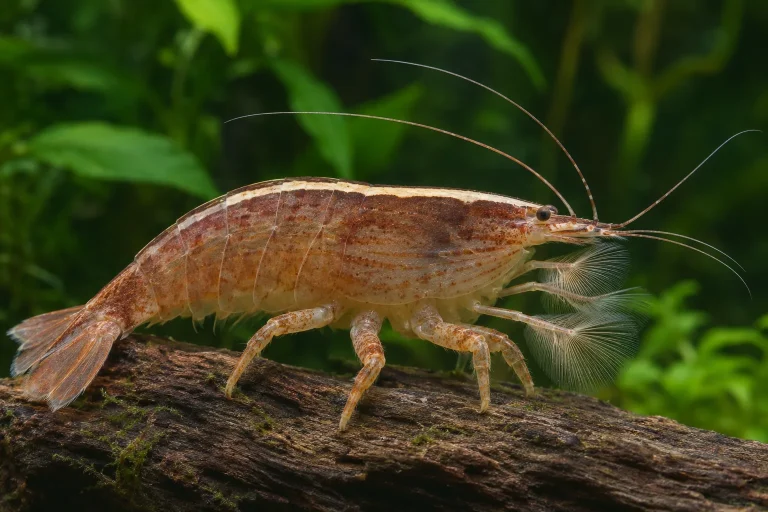
Bamboo Shrimp
Atyopsis moluccensis
- Care level
- Intermediate
- Adult size
- 6–9 cm
- Minimum tank
- 80 litres
- Temperature
- 22–27 °C
Species profile
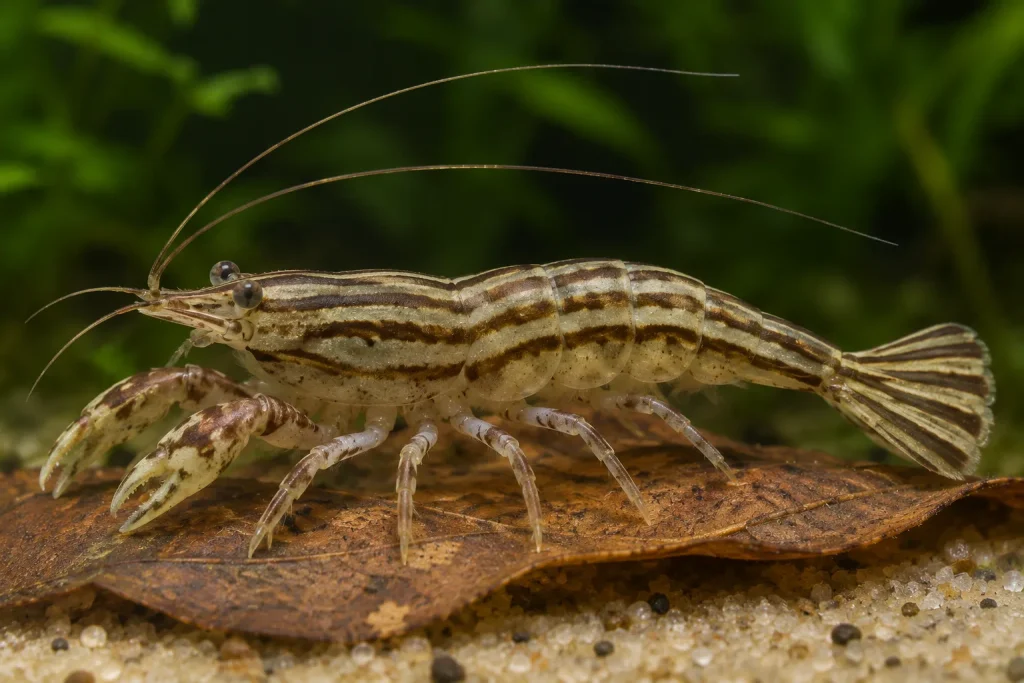
Euryrhynchus amazoniensis
Common names: Amazon Zebra Shrimp, Amazon Leaf Shrimp, Peru Zebra Shrimp
Up to 3 cm
Typical adult length 1.5–3 cm.




A rare, tiny Amazonian leaf-litter shrimp with contrasting bands and enlarged front claws. It is best maintained in a mature, soft, acidic blackwater aquarium.
A small brown, cream, and translucent shrimp marked with contrasting points, stripes, or zebra-like bands. The first two pairs of walking legs end in conspicuous claws that give the animal a miniature crayfish-like appearance.
Confirm the Euryrhynchus body form, enlarged front claws, Amazonian provenance, and zebra-like pattern. Several related Euryrhynchus species exist, so trade labels without locality data should be treated cautiously.
Males and females are difficult to distinguish casually. Mature females become fuller through the abdomen and can be identified when carrying eggs; males may show proportionally stronger chelae.
Use dim lighting, a fine substrate, abundant decomposing leaf litter, roots, branches, and mature biofilm. Provide gentle filtration and cover the intake. Avoid major clean-outs that remove all microbial food and shelter.
A secretive leaf-litter shrimp that forages on the substrate, wood, and plants. It may become bolder in a secure group.
Keep a same-species group in a quiet aquarium. The shrimp does not require a large swimming area, but it needs extensive cover.
Not strongly territorial, though individuals may use their claws to contest food or close shelter.
Best kept alone or with very small peaceful upper-water fish. Avoid cichlids, larger tetras, loaches, puffers, and predatory shrimp or crayfish. Small shrimplets from other species may be vulnerable.
Natural populations are associated with very soft, acidic blackwater and flooded forest habitats. Some captive groups may adapt more broadly, but freshly imported shrimp should be maintained near their source conditions.
An omnivorous leaf-litter forager that consumes biofilm, detritus, microorganisms, carrion, and small animal foods.
Feed tiny portions close to cover and preserve mature leaf litter. Newly imported shrimp may feed mainly after dark.
Females brood eggs beneath the abdomen. Development is abbreviated and occurs in freshwater, but a short larval stage may still occur before the young adopt the benthic juvenile form. Detailed captive protocols are not well established.
You can write a note about what worked for you, or send a photograph. We check everything before it appears here.
Atyopsis moluccensis
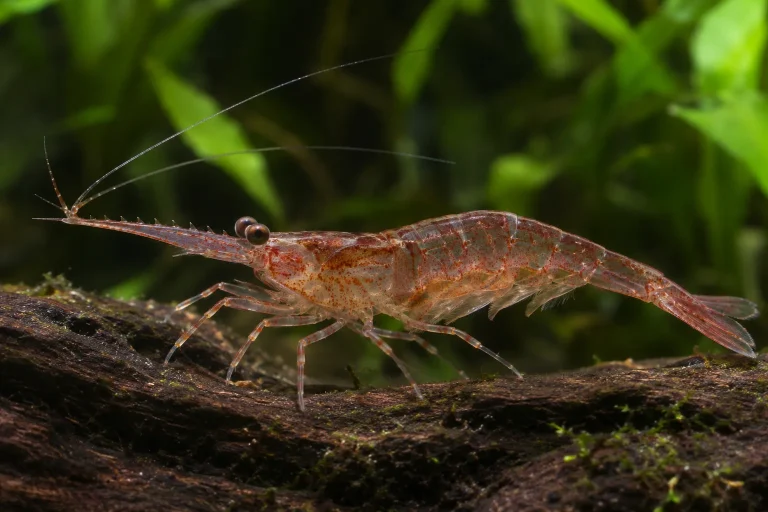
Marosina serratirostris
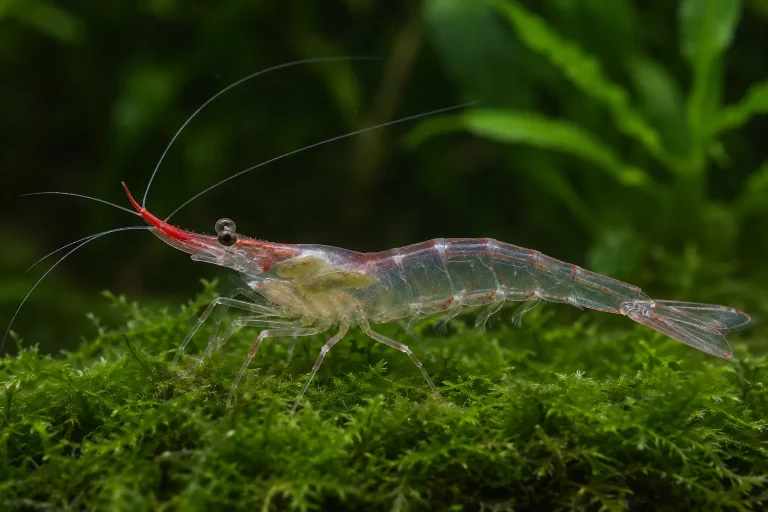
Gracidina gracilirostris
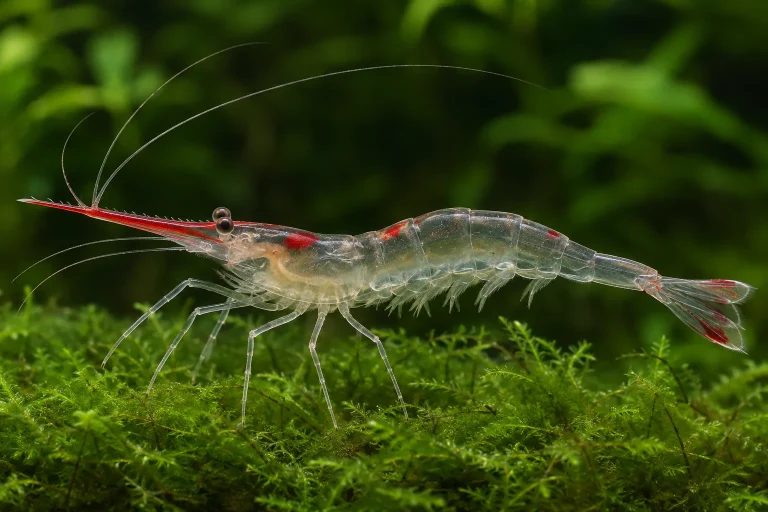
Gracidina gracilirostris