
Explainer
Jungle Aquascape
A jungle aquascape is a dense, informal planted layout in which plants grow tall and spill over each other. Use wood as a hidden structure, layer plants of different heights and leaf shapes, leave some open space for fish, and trim by plant group so it stays lush rather than chaotic.
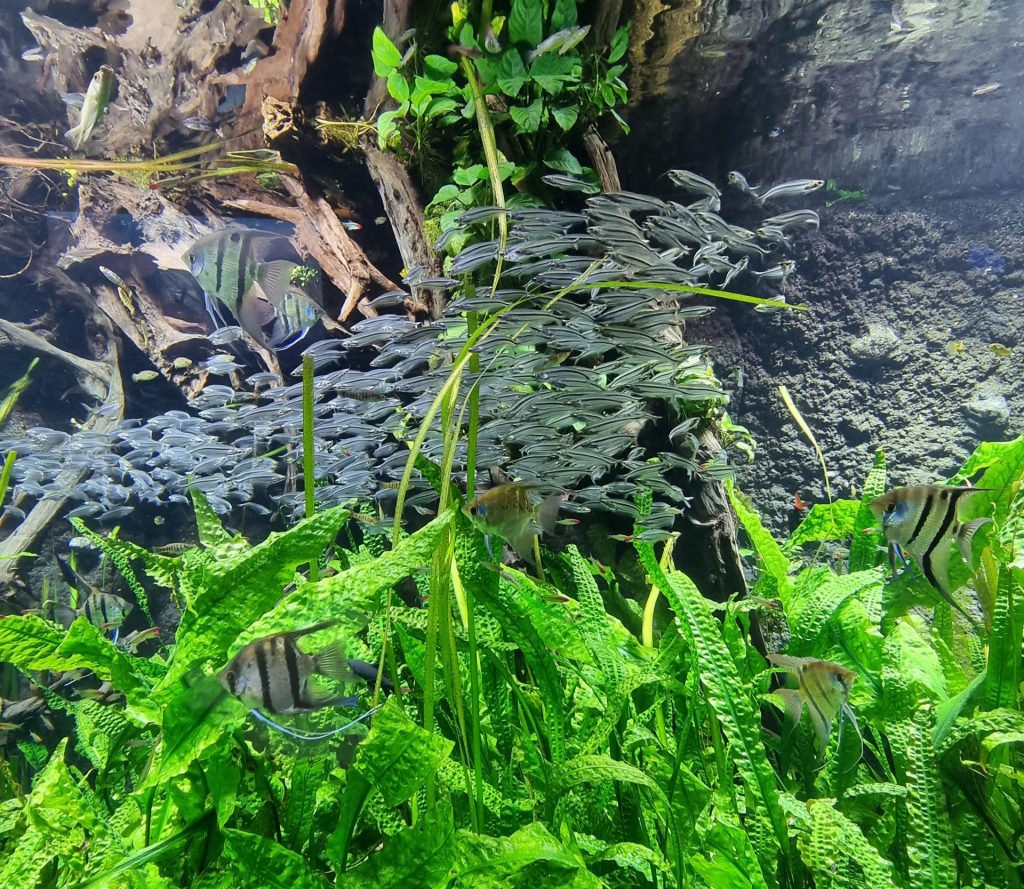
What Defines a Jungle Aquascape
A jungle aquascape aims for lush, mature plant growth with an informal natural appearance. Unlike highly geometric layouts, it can allow leaves to overlap and species to intermingle, but the best examples still have intentional structure underneath the apparent wildness.
Hardscape and Underlying Structure
Wood is especially useful because branches can disappear partly into foliage and create the impression of roots or fallen trees. Rocks can stabilize slopes and define planting boundaries even when they become less visible later.
Plan equipment access before planting. A filter intake hidden behind a beautiful wall of stems becomes a maintenance problem if every cleaning requires uprooting plants.
Choosing Plants for a Jungle Layout
Fast growers help establish the lush appearance quickly but require frequent pruning. Mix them with slower structural plants so the whole aquascape does not need to be rebuilt every few weeks.
Choose species with different mature heights and leaf textures. Tall stems and Vallisneria can form the background, Cryptocoryne and ferns can create midground mass, and low plants or leaf litter can keep the foreground from feeling equally dense.
Layering Plants Without Creating Chaos
Layer plants in irregular groups rather than strict horizontal rows. Let some background growth reach forward around wood while preserving clear pockets that reveal depth.
Avoid planting too many single specimens. Repeated groups create visual rhythm and make the layout look intentional even when growth becomes loose and natural.
Lighting, CO2, and Nutrients
Moderate light is enough for many jungle layouts. High light can accelerate stems but increases pruning, nutrient, and CO2 demand. Choose intensity based on the most important plants rather than the desire for maximum growth.
Injected CO2 is optional but useful for demanding species and dense fast growth. A low-tech jungle can be built with ferns, Cryptocoryne, Anubias, mosses, Vallisneria, and other tolerant plants.
Consistent fertilization matters because a large plant mass can consume nutrients rapidly. Watch new growth and follow a measured fertilization routine rather than reacting to every old damaged leaf.
Livestock and Functional Open Space
Fish benefit from cover but still need open swimming areas. A school moving between dense plant masses can enhance the jungle effect while remaining easy to observe.
Density should not mean every centimeter is planted. Open water, shadowed gaps, and visible hardscape make thick plant groups feel richer and preserve swimming and maintenance space.
Trimming and Long-Term Jungle Maintenance
Trim by plant group rather than shearing the entire aquarium to one height. Thin large leaves, replant selected stem tops, remove runners that cross boundaries, and keep the front viewing area open.
Jungle aquascapes mature continuously. Accept some movement and self-seeding while intervening when one aggressive plant shades or crowds the rest. Controlled abundance is the goal, not neglect.
Frequently Asked Questions
What Is a Jungle Aquascape?
It is a lush planted style that allows natural-looking overlap and dense growth while retaining intentional structure, depth, open areas, and maintenance access.
Does a Jungle Aquascape Need CO2?
No. CO2 helps demanding plants and fast growth, but a low-tech jungle can use ferns, Cryptocoryne, Anubias, mosses, Vallisneria, and other tolerant plants.
What Plants Are Good for a Jungle Aquarium?
Use a mix of tall stems or Vallisneria, midground rosettes and ferns, epiphytes, mosses, and lower plants whose light and nutrient needs are compatible.
How Do I Stop a Jungle Tank Looking Messy?
Repeat plant groups, preserve some negative space, keep the foreground and equipment access clear, and prevent one aggressive species from overwhelming the rest.
How Often Should a Jungle Aquascape Be Trimmed?
It depends on growth rate. Fast stems may need frequent work, while slower ferns and epiphytes need less. Trim when shading and crowding begin to change the intended structure.
Can Fish Live in a Densely Planted Jungle Tank?
Yes, when open swimming space, oxygenation, feeding access, and species requirements are maintained. Dense cover should complement rather than eliminate usable habitat.
Is a Jungle Aquascape Beginner-Friendly?
It can be when built with easy plants and moderate light. The main challenge is ongoing pruning and preventing vigorous species from shading slower plants.