
Explainer
Nature Aquarium Style
The nature aquarium style recreates a natural landscape, such as a hillside or forest, using wood, stone and plants. It relies on an off-centre focal point, depth created with slopes and plant layers, open negative space, a few repeated plant species and regular pruning to keep the scene in proportion.
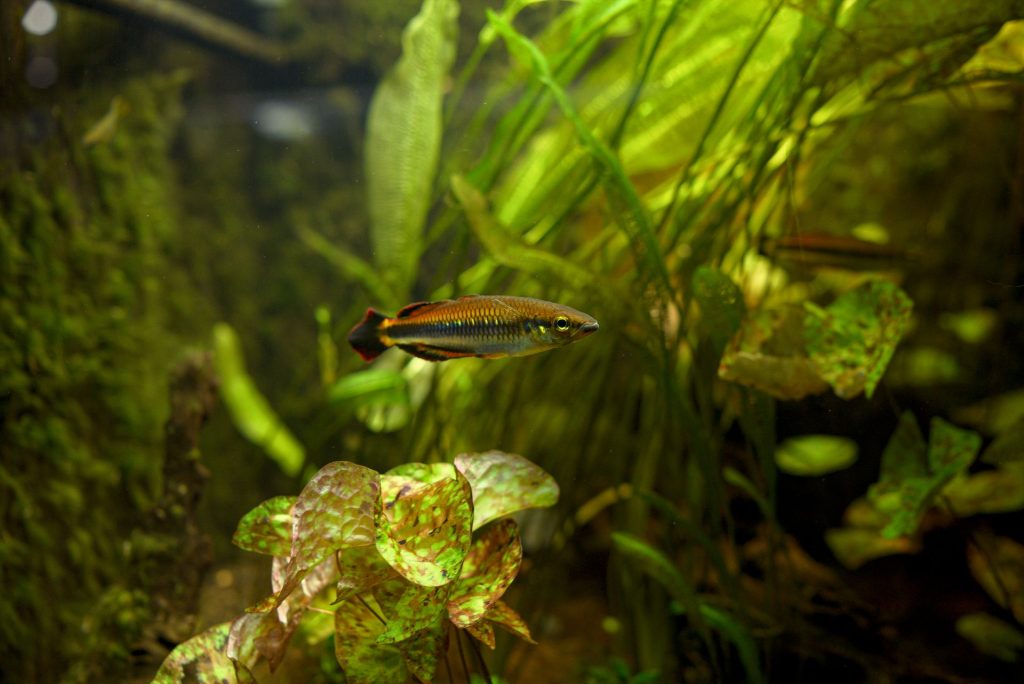
What Defines the Nature Aquarium Style
Nature Aquarium style uses aquatic plants, wood, stone, open space, and livestock to evoke natural landscapes without literally copying one habitat. The goal is an integrated composition in which plants soften hardscape over time and the aquarium develops a sense of scale, movement, and balance.
The style is closely associated with Takashi Amano and the modern planted-aquarium movement. It often borrows visual ideas from terrestrial landscapes and Japanese aesthetics while relying on horticultural control to keep the underwater composition readable.
Composition, Balance, and Focal Points
A strong composition has hierarchy. One area attracts attention first, supporting elements guide the eye, and quieter areas prevent every part of the aquarium from competing equally. Centering the largest object can work, but off-center focal points often create more movement.
Balance does not require symmetry. A large stone on one side can be balanced visually by a broad plant mass or branching wood on the other. Consider visual weight, texture, brightness, and empty space rather than counting objects.
Choosing and Arranging Wood and Stone
Hardscape establishes the structure before plants grow. Choose stones from a consistent type and wood with related direction so the materials appear to belong together. Test rock chemistry when livestock requires specific hardness or pH conditions.
Arrange hardscape dry when possible and photograph several versions. Once substrate, plants, and water are added, major structural changes become disruptive. Stable foundations are essential because digging animals and maintenance can undermine loose stone.
Plant Selection and Layering
Planting usually moves from low foreground species through midground transition plants to taller background groups, but strict horizontal bands can look artificial. Let groups overlap and follow the direction established by the hardscape.
Repeated plant species create unity. Using every attractive plant available can turn the layout into a collection rather than a composition. A limited palette also makes trimming and nutrient management easier.
Creating Depth and Natural Negative Space
Depth can be suggested by substrate slopes, narrowing paths, overlapping hardscape, and changes in leaf size or texture. These techniques create perspective even in a shallow aquarium, but exaggerated slopes need structural support.
Negative space is part of the design. Open sand, a dark area under wood, or clear water above a low foreground can make planted masses feel more substantial. Filling every empty patch usually reduces the sense of scale.
Using Fish and Shrimp in the Composition
Fish are moving elements in the composition. One cohesive school can strengthen direction and scale more effectively than many small groups of unrelated species. Livestock choice must still be based on welfare, tank size, and water conditions.
Shrimp and snails can contribute subtle activity and grazing, but they are animals rather than cleaning accessories. A layout should provide suitable food, minerals, cover, and safe tank mates.
Maintaining a Nature-Style Aquascape
Nature-style aquariums depend on pruning. Stem groups are cut and allowed to branch, carpets are thinned, and epiphytes are kept from swallowing hardscape. Maintenance preserves the intended negative space and proportions.
A beginner can simplify the style by choosing easy plants, moderate light, and a strong hardscape instead of copying a high-light competition tank. The design principles work at many technology levels; demanding plants and injected CO2 are optional tools, not the definition of the style.
Frequently Asked Questions
What Is Nature Aquarium Style?
It is a planted-aquarium approach that uses plants, wood, stone, open space, and livestock to create a naturalistic composition with strong visual balance and controlled plant growth.
Who Popularized the Nature Aquarium Style?
Japanese aquarist and photographer Takashi Amano is closely associated with popularizing Nature Aquarium principles and modern naturalistic planted-aquarium design.
Does a Nature Aquarium Require CO2?
No. Many famous high-growth layouts use injected CO2, but the design principles can be applied with easy plants, moderate light, and a low-tech approach.
What Plants Are Best for a Nature Aquarium?
Choose plants that create clear foreground, transition, and background relationships while repeating species for unity. The exact plants should match your light, CO2, substrate, and maintenance level.
How Many Plant Species Should I Use?
There is no required number. A restrained palette often produces a more coherent composition and makes trimming and nutrient management easier than using every available species.
Can Fish Be Part of the Aquascape Design?
Yes. A cohesive school can reinforce scale and movement, but fish welfare, adult size, social needs, and water conditions must take priority over visual effect.
How Often Does a Nature Aquarium Need Trimming?
Frequency depends on plant growth and technology. Fast stems and carpets may need frequent trimming, while low-tech epiphyte layouts grow more slowly. Trim when the composition begins losing its intended shape.