

Cuphea Annagalloidea
Cuphea anagalloidea
- Care level
- Advanced
- Placement
- Foreground, Midground
- Light
- High, Medium
- CO₂
- Strongly Beneficial
Plant profile
Cardamine lyrata
Common names: Cardamine Lyrata, Cardamine lyrata




A small to medium aquarium or wetland plant with round to kidney-shaped leaves on thin stems and light green. Best used for loose green bushes, trailing growth, or floating cover; care and final appearance vary with aquarium conditions.
This small to medium plant has round to kidney-shaped leaves on thin stems. Its commonly observed colour is light green. Colour, leaf size, and internode length can change with light, CO₂, nutrients, temperature, and the individual plant.
It can grow upright, trail, or spread horizontally depending on light and trimming.
It is normally used for loose green bushes, trailing growth, or floating cover. During the first few weeks, watch the growing tip, roots, and new submerged leaves. Do not judge success only from old nursery-grown foliage.
Injected CO₂ is optional. It can improve establishment, branching, and recovery, but the plant can usually grow without it when light and nutrients are modest and stable.
CO₂ must remain stable and be balanced with light, macro- and micronutrients, circulation, and oxygen. Adding CO₂ does not make very strong light automatically safe.
Increase light or fertiliser only after the plant is producing healthy new growth. Sudden changes can cause melting, algae, or stalled tops.
Some links may earn us a commission on qualifying purchases, at no extra cost to you. Check suitability, price and availability with the seller. How affiliate links work
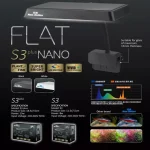 Neo-Helios S3 Plus Nano 13 W plant light
A compact lighting option to consider for the low-to-medium-light planting described above. The seller specifies tanks about 20-46 cm long and glass up to 15 mm thick.
Check your tank width, depth and planted area before choosing it. This compact unit is not presented as sufficient lighting for every tank or for high-light plants.
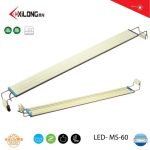 Xilong MS60 16 W aquarium plant light
A tank-top lighting option to consider for low-to-medium-light aquarium planting. The seller lists a 58.5 cm light body and mounting on tanks approximately 65-75 cm long.
Confirm the mounting range, water depth and planted coverage. Keep the unit above water. It is not presented as adequate lighting for high-light species or every aquarium size.
This plant should be rooted in substrate, floated, or allowed to spread through runners according to its growth habit. Do not glue healthy stems, crowns, or roots to wood or stone.
Frequent light trimming usually creates denser growth. Long delays between trims can produce shaded, bare lower stems.
Propagate only healthy growth. A melting, algae-covered, or recently imported plant should recover before being divided or cut heavily.
Transport, planting, and conversion from emersed to submerged growth can cause temporary leaf loss or slow growth.
It prefers cooler, well-oxygenated conditions and may become weak, leggy, or melt in prolonged heat.
Yellowing, holes, pale tips, red colour loss, twisted growth, or slow growth can have several causes. Possible causes include nutrient imbalance, unstable CO₂, unsuitable light, temperature stress, damaged roots, adaptation, algae, or physical damage.
Old damaged leaves will not repair themselves. Use the next several leaves to assess whether the change helped.
You can write a note about what worked for you, or send a photograph. We check everything before it appears here.
Cuphea anagalloidea
Bucephalandra sp. 'Black Pearl'
Hygrophila corymbosa 'Angustifolia Rubra'
Anubias barteri 'Paxing'