

Hygrophila Angustifolia
Hygrophila corymbosa 'Angustifolia'
- Care level
- Beginner
- Placement
- Background, Midground
- Light
- Low, Medium
- CO₂
- Optional
Plant profile
Hydrocotyle tripartita 'Japan'
Common names: Hydrocotyle Tripartita (Japan), Hydrocotyle tripartita


A small foreground, runner, rosette, grass-like, or carpeting plant with small three-lobed leaves on creeping and branching stems. Best used for fast green carpets, low bushes, and growth draped over hardscape; planting depth and stability are important.
This small plant has small three-lobed leaves on creeping and branching stems. Its common colour is light to bright green. Leaf height, density, and colour can change with light, CO₂, nutrients, water depth, trimming, and the individual plant.
Branching stems can creep across substrate, climb hardscape, or grow upward.
It is normally used for fast green carpets, low bushes, and growth draped over hardscape. During the first few weeks, watch for firm crowns, fresh roots, runners, creeping tips, or new submerged leaves rather than expecting immediate coverage.
Injected CO₂ is recommended for reliable compact or carpeting growth, but it is not automatically required. Stable CO₂ can improve runner production, rooting, density, leaf form, and recovery after planting or trimming.
Keep CO₂ steady and balance it with light, complete nutrition, circulation, and oxygen. Do not raise light sharply before the plant is producing healthy new growth.
Some links may earn us a commission on qualifying purchases, at no extra cost to you. Check suitability, price and availability with the seller. How affiliate links work
 Neo-Helios S3 Plus Nano 13 W plant light
A compact lighting option to consider for the low-to-medium-light planting described above. The seller specifies tanks about 20-46 cm long and glass up to 15 mm thick.
Check your tank width, depth and planted area before choosing it. This compact unit is not presented as sufficient lighting for every tank or for high-light plants.
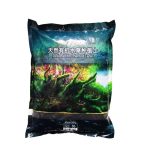 Amazon aqua soil – 3 L planting substrate
A nutrient-bearing substrate option for the rooted planting described above. This is a 3-litre pack; calculate the amount needed from your tank footprint and intended substrate depth.
The seller describes a water-softening effect. Check its effect on pH and hardness against your livestock requirements before use, and cycle the aquarium before adding animals. Keep plant crowns and growing points at the level recommended in the care guide.
 Xilong MS60 16 W aquarium plant light
A tank-top lighting option to consider for low-to-medium-light aquarium planting. The seller lists a 58.5 cm light body and mounting on tanks approximately 65-75 cm long.
Confirm the mounting range, water depth and planted coverage. Keep the unit above water. It is not presented as adequate lighting for high-light species or every aquarium size.
This plant is normally rooted in substrate, but healthy creeping stems can be guided over porous stone or wood.
Light, regular trimming encourages branching and keeps a carpet low. A very thick untrimmed mat may lift away from the substrate.
Propagate only healthy growth. Allow recently imported, melting, or algae-covered plants to recover first.
Transport, planting, and conversion from nursery growth can cause temporary melting, pale leaves, or slow spreading.
Japan is an aquarium trade form. It can grow upward or climb over neighbouring plants when light is low or trimming is delayed.
Yellowing, transparent leaves, holes, twisted runners, pale tips, or slow spreading do not prove one nutrient deficiency. Similar signs can result from unstable CO₂, unsuitable light, damaged roots, adaptation, temperature stress, algae, poor circulation, or repeated uprooting.
Old damaged leaves will not repair themselves. Assess the next runners or leaves after making a change.
You can write a note about what worked for you, or send a photograph. We check everything before it appears here.
Hygrophila corymbosa 'Angustifolia'
Hydrocotyle leucocephala
Hydrocotyle sibthorpioides
Hydrocotyle verticillata