
How-To Guide
Preventing Egg Fungus
Fish breeders often use the phrase “egg fungus” for white, fuzzy growth that develops on dead or failing eggs. Water molds such as Saprolegnia can colonize organic material, and an unfertilized or damaged egg can become a focus for growth that may spread across a tightly packed clutch. Prevention therefore begins with healthy breeders, clean spawning conditions, good water movement, and prompt removal of obviously dead eggs where the species and setup allow it.
Not every white egg is a fungal emergency, and not every species should be handled the same way. Some parent fish actively clean and fan eggs, while artificial incubation requires the aquarist to provide circulation and hygiene. Before using medication, identify the species, understand whether the parents normally care for the clutch, and follow a treatment that is known to be safe for eggs and the surrounding livestock.
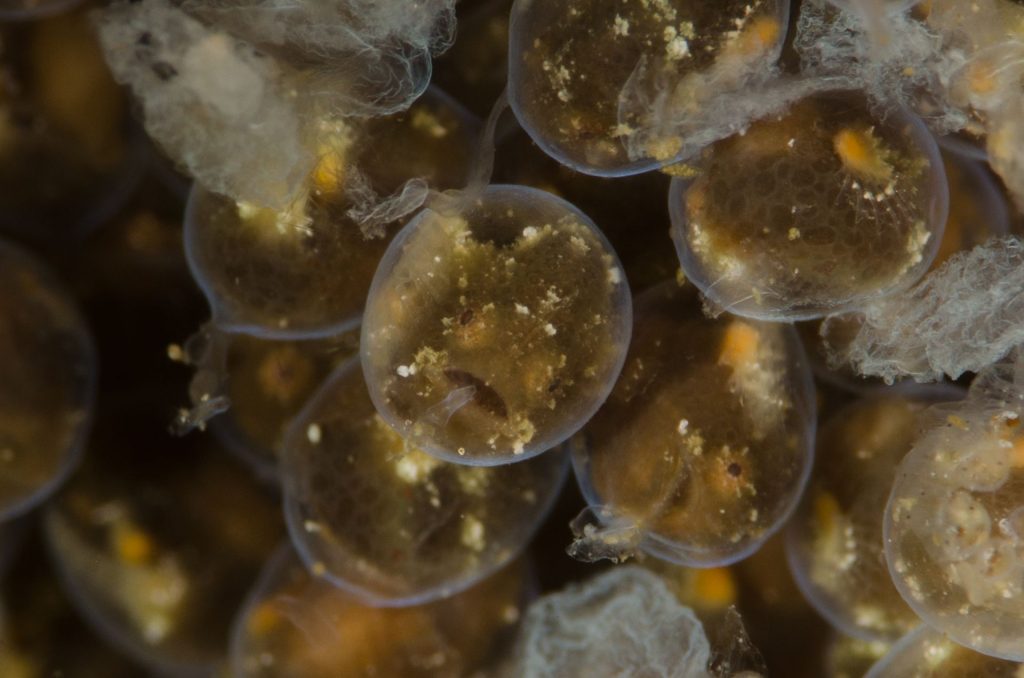
Why Fish Eggs Develop Fuzzy Growth
Unfertilized eggs commonly turn opaque and deteriorate. Once tissue is dead, water molds and other microorganisms can colonize it. In a dense clutch, growth on one egg can contact neighboring eggs.
Poor water quality, heavy organic debris, weak circulation, and physical damage can increase losses. Fertilization rate also matters: a clutch containing many infertile eggs gives microorganisms more dead material to colonize.
The goal is not to create sterile water. It is to keep the incubation environment clean, oxygenated, and appropriate for normal embryo development.
Recognizing Fertile and Failed Eggs
Appearance differs by fish species. Fertile eggs may remain translucent and later show developing embryos, while failed eggs often become uniformly opaque. Learn what normal development looks like for the exact species before removing eggs.
A single color rule is unreliable because egg color, adhesive coating, lighting, and developmental stage vary. Use timing and visible embryo development when possible.
If parents are caring for the eggs, they may remove failed eggs themselves. Excessive interference can cause stress or lead inexperienced parents to abandon or consume the clutch.
Water Quality and Incubation Conditions
Use fully cycled, stable water appropriate for the breeding species. Ammonia and nitrite should remain controlled, and temperature should match the developmental needs of the eggs.
Gentle water movement helps deliver oxygen and prevents stagnant conditions, but strong flow can dislodge adhesive eggs or damage delicate embryos. In artificial incubation, position an airstone or flow source to move water around the eggs rather than blasting them directly.
Keep the incubation container free from accumulating food and waste. Eggs do not need the heavy feeding that fry will require after hatching.
Removing Dead or Fungused Eggs
When eggs are being artificially incubated and individual failed eggs can be identified confidently, remove them with clean forceps, a pipette, or another controlled tool. Work slowly so healthy eggs are not damaged.
For a large adhesive clutch, individual removal may be impractical. Good circulation and overall hygiene become even more important.
Do not repeatedly expose eggs to air or handle them unnecessarily unless the species’ breeding method specifically allows it.
Parent Care vs Artificial Incubation
Many cichlids and other egg-laying fish fan, clean, and defend their eggs. Experienced parents can provide excellent egg care without human treatment.
Artificial incubation is useful when parents repeatedly eat clutches, when eggs are intentionally collected, or when a breeding program requires controlled conditions. It also transfers responsibility for oxygenation and hygiene to the aquarist.
Choose one strategy deliberately. Constantly moving eggs between parents and an incubator can create more disturbance than either method alone.
Using Antifungal Treatments Carefully
Some breeders use egg-safe antifungal treatments, but the correct product and dose depend on the fish, egg stage, water chemistry, and whether other animals are present. Do not improvise concentrations.
Certain treatments can affect biological filtration or be unsafe for invertebrates and plants. A separate incubation container may be more appropriate when medication is genuinely needed.
Medication should support good incubation practice, not replace clean water, suitable flow, and removal of dead organic material.
After the Eggs Hatch
Once larvae hatch, husbandry changes. Newly hatched larvae may remain attached or rely on a yolk sac before becoming free-swimming. Do not begin heavy feeding before the species is ready to eat externally.
Maintain gentle filtration that cannot trap larvae. Sponge filtration is commonly useful because it provides biological filtration without an exposed high-suction intake.
Prepare first foods before the hatch date. Egg care is only successful if the breeder is ready for the much more food-sensitive fry stage that follows.
Frequently Asked Questions
Why Are My Fish Eggs Turning White?
Many failed or unfertilized eggs become opaque, but normal appearance varies by species. Compare with expected embryo development before removing eggs.
Is White Fuzz on Fish Eggs Fungus?
Fuzzy growth is often associated with water molds colonizing dead or failing organic material, but species-specific diagnosis is still important.
Should I Remove White Eggs?
In artificial incubation, clearly failed eggs can often be removed carefully. Parent fish may remove them themselves when providing normal brood care.
Do Fish Eggs Need an Airstone?
Artificially incubated eggs often benefit from gentle water movement, but flow should circulate water around the eggs rather than batter them.
Should I Medicate Every Clutch?
No. Clean, stable water, suitable circulation, and good egg hygiene are the foundation. Use treatments only when appropriate for the species and setup.
Can Poor Water Quality Cause Egg Losses?
Yes. Unstable or polluted water can reduce embryo survival and encourage microbial problems.
When Should I Feed Newly Hatched Fry?
That depends on species. Many larvae first use their yolk reserves and begin external feeding only after becoming free-swimming.