
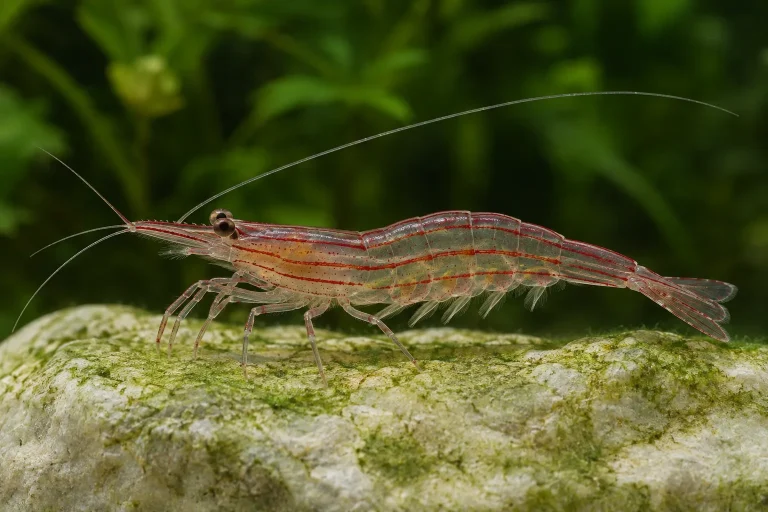
Sulawesi Red Line Shrimp
Caridina striata
- Care level
- Advanced
- Adult size
- 2–3 cm
- Minimum tank
- 30 litres
- Temperature
- 27–30 °C
Species profile
Caridina spongicola
Common names: Sulawesi Harlequin Shrimp, Harlequin Sulawesi Shrimp
Up to 3 cm
Typical adult length 2–3 cm.

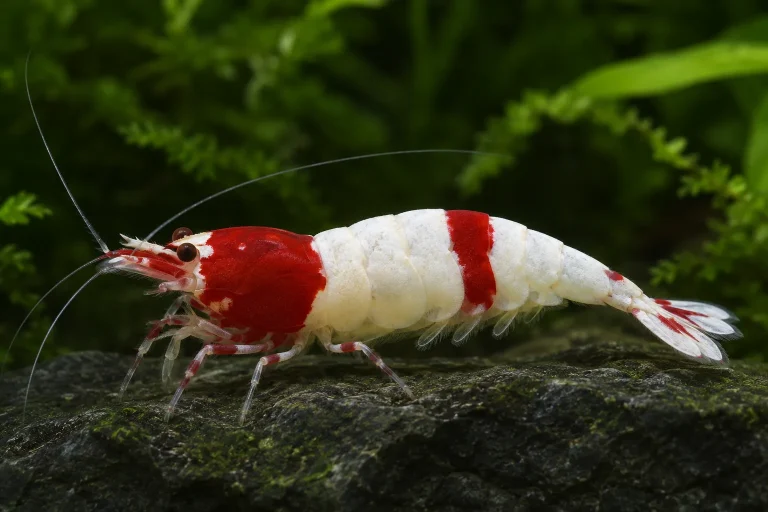
A small shrimp with a red and white pattern. In the wild, it is known for living on freshwater sponges.
A small shrimp with a red and white pattern. In the wild, it is known for living on freshwater sponges.
Accepted species with a specialized natural sponge association. Captive-trade records require provenance and conservation review.
Females are usually slightly larger, with a fuller underside, particularly when carrying eggs. Males are slimmer, although the differences can be subtle.
Use a mature, heated aquarium of 30 litres or more, with rocks and hardscape that grow plenty of biofilm. These shrimp are sensitive to change, so add them only to an established tank with gentle but steady water movement.
Peaceful and often active in the open, spending most of the day grazing on rock and hardscape.
Maintain with conspecifics or peaceful shrimp-safe tankmates where ecological requirements overlap.
Not normally territorial.
Best in a species-only tank. Few fish or other shrimp are happy in this warm, alkaline water, and small fish may eat young shrimp.
Some links may earn us a commission on qualifying purchases, at no extra cost to you. Check suitability, price and availability with the seller. How affiliate links work
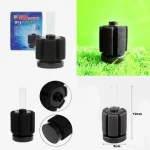 Xinyou XY-2835 small sponge filter
A small air-driven filtration option for a lightly stocked dwarf-shrimp setup. The seller lists a sponge approximately 5.5 cm across and 7 cm high.
An air pump and airline are required separately. Choose the complete filter and pump combination for your actual tank and stocking; this small sponge is not presented as the sole filter for a large aquarium.
Warm, alkaline, moderately hard water is essential, and it is very different from what bee and tiger shrimp need. Many keepers use remineralised RO water with a Sulawesi mineral salt. Published figures vary, so aim for stability within this range.
Specialized grazer that benefits from mature biofilm, algae-coated rockwork, and small amounts of appropriate prepared food. Avoid unstable or newly established aquariums.
Monitor body condition and avoid overfeeding or unstable organic waste accumulation.
Some links may earn us a commission on qualifying purchases, at no extra cost to you. Check suitability, price and availability with the seller. How affiliate links work
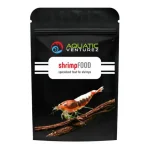 Aquatic Venturez dwarf-shrimp food – 10 g
A specialist prepared-food option for the dwarf-shrimp diet described above. This listing is a 10 g pack.
Use small portions alongside the mature grazing surfaces and other foods in the care guide. Remove leftovers and adjust the amount to the number of shrimp feeding. This is not a food recommendation for filter-feeding shrimp.
Females carry a small number of eggs, and the young hatch as tiny shrimp with no larval stage in salt water. Breeding needs a stable, mature tank, and broods are small.
You can write a note about what worked for you, or send a photograph. We check everything before it appears here.
Caridina striata

Caridina poso
Caridina spinata
Caridina logemanni