
Care Guide
Shrimp Feeding Guide
Feeding freshwater shrimp looks simple until you actually have a colony of them. You drop in a small piece of food, a few shrimp arrive immediately, others seem completely uninterested, and suddenly you are wondering whether you fed too much, too little, or the wrong thing entirely.
The good news is that shrimp feeding does not need to be complicated.
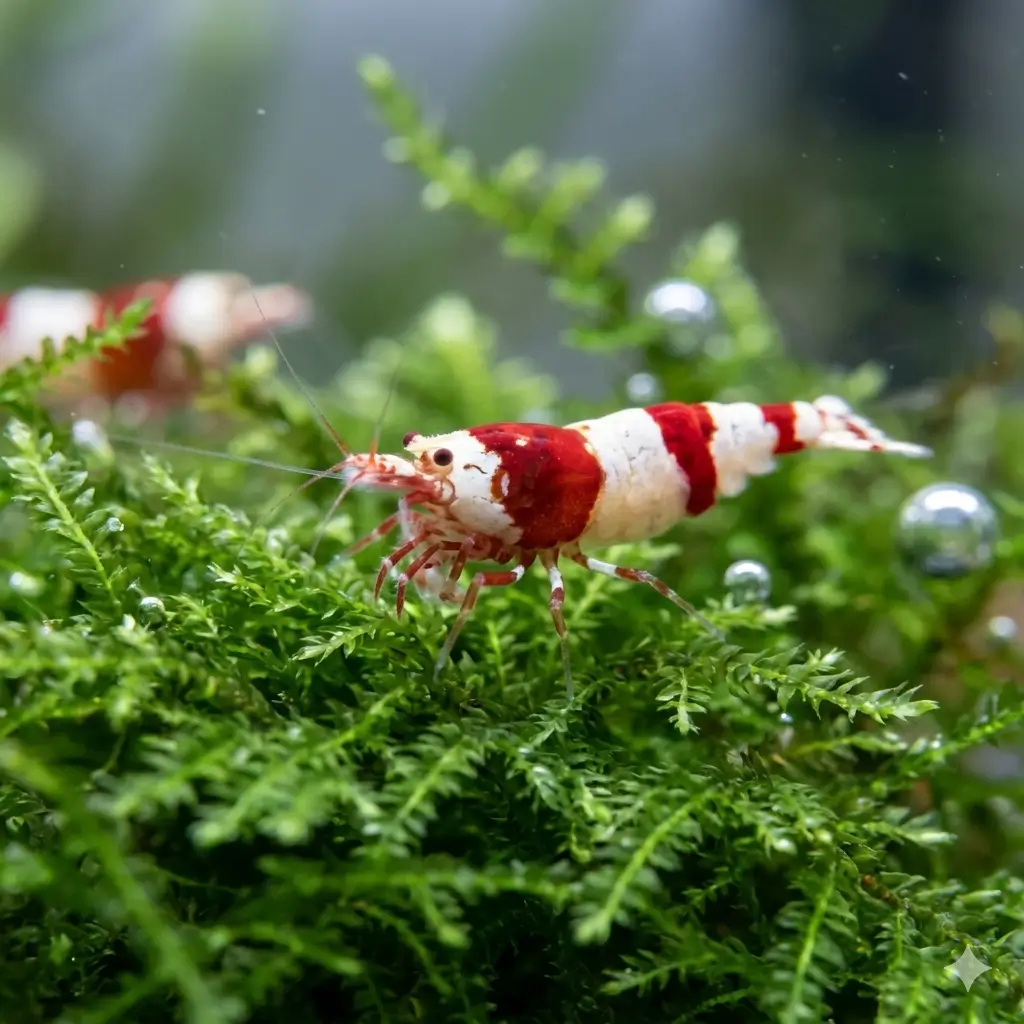
Freshwater shrimp spend a large part of the day grazing. They pick at biofilm, algae, microorganisms, and tiny pieces of organic material growing on plants, wood, rocks, substrate, and other aquarium surfaces. In a mature tank, this natural grazing can provide an important part of their diet.
That does not mean every shrimp tank contains enough natural food to support the entire colony. Supplemental feeding may still be needed, especially as the shrimp population grows.
The goal is not to keep food in the aquarium all the time. It is to provide a varied, appropriate diet while avoiding the extra waste that comes from overfeeding.
What Do Freshwater Shrimp Eat?
Many commonly kept freshwater shrimp are opportunistic grazers. Much of their day is spent searching aquarium surfaces for edible material.
Depending on the species and aquarium, this may include:
- Biofilm
- Some types of algae
- Microorganisms
- Fine organic particles
- Soft or decaying plant material
- Small amounts of leftover food
- Prepared shrimp foods
If you watch a healthy shrimp closely, you will often see its small front appendages moving constantly as it picks material from whatever surface it is standing on.
This natural grazing behavior is one reason planted and mature shrimp aquariums work so well. Every leaf, piece of wood, rock, and patch of moss creates another surface for microorganisms and biofilm to develop.
Shrimp should still receive a diet suited to their species rather than being expected to survive on random aquarium leftovers.
What Is Biofilm and Why Do Shrimp Eat It?
Biofilm is a thin community of microorganisms and organic material that develops naturally on wet surfaces.
In an established aquarium, it can grow on glass, plants, rocks, wood, filter surfaces, decorations, and other submerged objects.
You may barely notice it, but your shrimp certainly do.
They can spend hours grazing over the same piece of wood or plant leaf, collecting tiny particles from the surface.
This is particularly valuable for baby shrimp because they are extremely small and benefit from having food available across many surfaces rather than depending entirely on finding one large piece of prepared food.
A tank does not need to look dirty to contain biofilm. In fact, continually scrubbing every surface until it looks brand new can remove some of the natural grazing area that makes a mature shrimp aquarium useful.
Do Freshwater Shrimp Need Prepared Food?
Often, yes—but how much depends on the aquarium.
A mature planted tank with a small number of shrimp may provide a surprising amount of natural food. A newer aquarium or a tank containing a large breeding colony may provide much less food per shrimp.
Prepared shrimp foods are useful because they allow you to supplement natural grazing with a more predictable source of nutrition.
When choosing a food, look for one intended for the type of freshwater shrimp you keep and follow the manufacturer’s feeding guidance as a starting point.
Don’t assume that the most expensive shrimp food is automatically the best. The important questions are whether the food is appropriate for your species, whether the shrimp actually eat it, and whether you can feed it without leaving large amounts of waste behind.
How Often Should You Feed Shrimp?
There is no single feeding schedule that works for every shrimp aquarium.
A small colony in a mature tank may spend much of its time feeding naturally. A large colony can use available food much more quickly and may require more frequent supplemental feeding.
Instead of blindly following a schedule, look at your aquarium.
Ask yourself:
- How many shrimp are in the tank?
- Is the colony growing?
- How mature is the aquarium?
- How much algae and biofilm are available?
- Are there other animals competing for food?
- How quickly is prepared food consumed?
- Is uneaten food regularly left behind?
Those observations tell you much more than simply feeding because it is a particular time of day.
Start conservatively. You can always make small adjustments once you understand how quickly your colony consumes food.
How Much Food Do Shrimp Need?
One of the hardest things for beginners is realizing just how little food a shrimp colony may need.
A portion that looks tiny to you can still be substantial to an animal only a few centimeters long.
There is no universal portion size because foods have different densities, shapes, ingredients, and feeding instructions. Colony size also makes a major difference.
The simplest method is observation.
Add a conservative portion and watch what happens. Healthy shrimp may gradually gather around the food. If most of it is consumed without large leftovers sitting in the aquarium, your portion may be reasonable.
If a significant amount remains long after feeding, reduce the amount next time.
You are trying to feed the shrimp, not the substrate.
How to Tell If You Are Overfeeding Shrimp
Overfeeding is one of the easiest mistakes to make in a shrimp tank.
You may be feeding too much if:
- Large amounts of food regularly remain uneaten
- Food is breaking down before the shrimp finish it
- Debris is accumulating around feeding areas
- Water quality is becoming harder to maintain
- Populations of reproducing snails increase rapidly alongside abundant leftover food
Uneaten food contributes organic material to the aquarium. As organic waste breaks down, it increases the amount of material the aquarium’s biological system must process.
Good filtration helps, but filtration is not a reason to deliberately overfeed.
If you realize you are feeding too much, reduce future portions rather than trying to compensate with increasingly aggressive cleaning.
Can Shrimp Live on Algae Alone?
Do not assume that visible algae provides a complete diet for freshwater shrimp.
Different shrimp species graze different materials, and not every type of algae growing in an aquarium will be eaten equally.
Even shrimp commonly described as algae eaters should be cared for as animals with nutritional needs rather than aquarium cleaning equipment.
The amount of natural grazing also changes as the aquarium matures and as the colony grows.
A tank that provided plenty of natural food for ten shrimp may not provide enough for fifty.
Use algae and biofilm as part of the feeding environment, not as an excuse to ignore the shrimp’s diet.
What Are Good Foods for Freshwater Shrimp?
The best diet depends on the shrimp species, but aquarium keepers have several types of food available.
Prepared Shrimp Foods
Foods formulated for freshwater shrimp are convenient because they are designed with shrimp feeding in mind.
They may come as pellets, sticks, wafers, granules, or powdered foods.
Choose products appropriate for your species and follow the manufacturer’s directions while adjusting the actual amount to match your colony.
Natural Grazing
Biofilm and microorganisms growing around a mature aquarium provide continual feeding opportunities between supplemental meals.
Plants, moss, rocks, wood, and other aquarium-safe surfaces can all contribute grazing area.
Plant-Based Foods
Depending on the species, some freshwater shrimp will feed on suitable plant-based aquarium foods and softened vegetable matter.
If offering fresh foods, make sure they are appropriate for the shrimp and remove excessive leftovers before they deteriorate.
Protein-Containing Foods
Shrimp also require nutrients that are not supplied by algae alone. Many complete prepared shrimp foods contain both plant and animal-derived ingredients.
There is rarely a reason for a beginner to constantly add large amounts of high-protein food. A balanced food intended for your shrimp is easier to manage than building the entire diet around one ingredient.
Should Shrimp Have a Varied Diet?
A varied diet can help avoid relying too heavily on one food source.
This does not mean you need ten open packets of food beside the aquarium.
A practical approach is to choose a good staple food appropriate for the shrimp you keep, allow natural grazing in a mature aquarium, and occasionally offer suitable alternatives.
Pay attention to how your shrimp respond.
If a food repeatedly sits untouched, adding more of it will not make it more useful. Remove unnecessary leftovers and try something more appropriate.
Variation should improve nutrition and feeding behavior—not turn every feeding session into a buffet that pollutes the tank.
Feeding Neocaridina Shrimp
Neocaridina shrimp, including the many color varieties commonly kept in home aquariums, spend much of their time grazing across aquarium surfaces.
A mature planted environment provides useful natural feeding opportunities, but larger colonies may need supplemental food.
Prepared foods designed for freshwater dwarf shrimp are an easy starting point.
When feeding Neocaridina, watch the colony rather than individual shrimp. Some animals may arrive at food immediately, while others continue grazing elsewhere and join later.
If your Neocaridina are breeding, remember that the population can increase substantially over time. Feeding that was adequate for the original group may need to change as more young shrimp mature.
How Do You Feed Baby Shrimp?
Newly hatched freshwater dwarf shrimp are tiny, which means feeding them is different from feeding a few large adults.
One of the most helpful things you can provide is a mature aquarium with extensive grazing surfaces.
Biofilm developing on moss, plants, wood, rocks, substrate, and other surfaces gives baby shrimp many places to feed without requiring them to travel across the tank to one pellet.
Some prepared shrimp foods are designed to break into very fine particles or disperse through the aquarium, making food available over a wider area.
Use powdered or finely dispersed foods carefully, though. Because the particles are small and difficult to see once added, it is easy to feed far more than the aquarium needs.
Baby shrimp need food, but they also need good water quality.
Do Berried Shrimp Need Special Food?
A female carrying eggs is commonly described by aquarium keepers as “berried.”
You do not normally need to dramatically change the aquarium or begin heavy feeding simply because a female is carrying eggs.
Continue providing an appropriate, varied diet and stable water conditions.
A common mistake is to see berried females and immediately double the amount of food because baby shrimp will soon appear. That extra food may begin decomposing before the young are even present.
Focus instead on maintaining a mature aquarium with good grazing surfaces. Once young shrimp appear, observe whether the growing colony is using supplemental food more quickly and adjust gradually.
Should You Use a Shrimp Feeding Dish?
A feeding dish is optional, but it can be useful.
Placing prepared food in a shallow aquarium-safe dish makes it easier to see how much food remains after feeding. It can also help prevent food from disappearing deep into coarse substrate before the shrimp find it.
Feeding dishes are particularly handy when you are still learning how much your colony eats.
They are not essential, though. Shrimp are perfectly capable of feeding without one, and natural grazing should still occur throughout the aquarium.
Think of the dish as a monitoring tool rather than required shrimp equipment.
Feeding Shrimp in a Community Tank
Feeding becomes more complicated when shrimp share the aquarium with fish or other invertebrates.
Fish may quickly eat food intended for shrimp, while snails may slowly settle over a pellet and remain there for a long time.
If shrimp are consistently being pushed away from food, try distributing suitable food across more than one location.
Dense plants, moss, wood, and sheltered areas can also give shrimp places to graze where larger tank mates cannot compete as easily.
Remember that tank mates must be compatible for reasons beyond feeding. Fish capable of swallowing shrimp may treat them as food rather than simply competing with them for dinner.
Feeding Shrimp with Snails
Shrimp and peaceful freshwater snails can often share food without a problem.
You may see both gathered around the same sinking pellet or piece of suitable food.
What matters is making sure both animals receive an appropriate diet.
Do not continually add extra food simply because a snail is sitting on the shrimp’s pellet. If necessary, divide the portion between two locations.
Also remember that food availability can influence populations of snail species that reproduce readily in freshwater. A sudden increase in snail numbers can be a useful reason to review how much food is entering the aquarium.
Should You Remove Uneaten Shrimp Food?
If a substantial amount of supplemental food remains uneaten and is beginning to break down, removing it is usually better than leaving it to decay.
Exactly how quickly you should remove a food depends on what you offered. A durable shrimp feeding product behaves differently in water from a soft piece of fresh food.
Follow the manufacturer’s directions for prepared foods and use common sense with fresh foods.
If you repeatedly have to remove a large amount after every feeding, the solution is not a better removal technique.
Feed less next time.
Why Water Quality Matters When Feeding Shrimp
Feeding and water quality are closely connected.
Food entering an aquarium eventually becomes part of the system. Some is eaten and later becomes animal waste. Some may remain uneaten and break down directly.
The biological filter processes nitrogen-containing waste, but there is still a limit to how much unnecessary organic material you should allow to accumulate.
A properly established shrimp aquarium should not allow ammonia or nitrite to accumulate. Regular water testing helps you understand how the aquarium is responding to its stocking and feeding routine.
If you increase feeding because the colony has grown, monitor water quality as well. More shrimp and more food mean more material for the aquarium to process.
Common Shrimp Feeding Mistakes
Feeding Every Time the Shrimp Approach the Glass
Shrimp spend much of their day looking for food. Their constant grazing does not mean they need another prepared meal every time you see them moving around.
Using Algae as the Entire Diet
Visible algae should not be treated as a guaranteed complete food source. Provide a diet suitable for the shrimp species you keep.
Overfeeding a Small Colony
A few shrimp require very little supplemental food, particularly in a mature aquarium. Start with conservative portions.
Adding Too Much Powdered Food
Fine foods can be useful for young shrimp, but they spread throughout the aquarium and are easy to overdose because you cannot easily recover them afterward.
Leaving Large Amounts of Fresh Food Behind
Fresh foods can deteriorate in aquarium water. Remove excessive leftovers and reduce the next portion.
Ignoring Natural Grazing
Shrimp do not only eat when you feed them. Biofilm and microorganisms growing throughout an established aquarium provide important feeding opportunities.
Overfeeding to Grow Shrimp Faster
More food is not automatically better husbandry. Excess feeding can damage water quality, which works against the goal of maintaining a healthy colony.
Changing the Diet Too Quickly
If the shrimp are doing well, there is no need to replace their entire feeding routine every time you discover a new product. Make changes gradually and observe how the colony responds.
Shrimp Feeding Guide FAQ
What Should I Feed Freshwater Shrimp?
Freshwater shrimp naturally graze on biofilm, microorganisms, algae, and organic material. Depending on the species and how much natural food the aquarium provides, you can supplement this with a suitable prepared shrimp food and other appropriate foods.
How Often Should Freshwater Shrimp Be Fed?
There is no universal schedule. A small colony in a mature aquarium may need less supplemental feeding than a large colony with limited natural grazing. Watch how quickly food is consumed and adjust the amount and frequency accordingly.
How Much Should I Feed My Shrimp?
Start with a conservative portion appropriate for the colony and the manufacturer’s instructions for the food. If substantial food repeatedly remains uneaten, reduce the amount. Colony size and natural food availability matter more than a universal portion rule.
Can Shrimp Survive on Algae?
Shrimp may graze on certain algae, but algae alone should not automatically be considered a complete diet. The amount and type of natural food available varies between aquariums.
Do Shrimp Eat Biofilm?
Yes. Biofilm and the microorganisms associated with aquarium surfaces are important natural grazing resources for many commonly kept freshwater shrimp.
Do I Need to Feed Shrimp Every Day?
Not necessarily. The appropriate frequency depends on the shrimp species, colony size, aquarium maturity, and available natural food. A mature tank with abundant grazing may require less supplemental feeding.
How Do I Know If My Shrimp Are Hungry?
It can be difficult to judge hunger from grazing behavior because healthy shrimp naturally search for food throughout the day. Monitor body condition, colony growth, natural grazing availability, and how the shrimp respond to reasonable portions rather than assuming constant grazing means starvation.
How Do I Know If I Am Overfeeding Shrimp?
Regularly finding substantial uneaten food is one of the clearest signs. Excess debris, deteriorating water quality, and rapidly increasing populations of food-responsive snails can also prompt you to review your feeding routine.
What Do Baby Shrimp Eat?
Baby shrimp graze on tiny food resources found throughout a mature aquarium, including biofilm and microorganisms. Fine prepared shrimp foods can also be used when appropriate, but should be added carefully to avoid overfeeding.
Can Shrimp and Snails Eat Together?
Yes. Freshwater shrimp and peaceful snails may share some foods. Make sure each species receives a suitable diet and divide food between different areas if one animal consistently prevents the others from feeding.
Should I Remove Uneaten Shrimp Food?
Remove substantial leftovers when they are likely to deteriorate and contribute unnecessary organic waste. Follow the instructions for prepared foods, and reduce future portions if you regularly have food left over.
Do Berried Shrimp Need More Food?
A female carrying eggs needs appropriate nutrition, but you do not need to suddenly overfeed the entire aquarium. Continue a suitable feeding routine and adjust gradually as the colony grows.
Is a Feeding Dish Necessary for Shrimp?
No. A feeding dish is optional. It can make portion monitoring and leftover removal easier, but shrimp will continue grazing throughout the aquarium whether you use one or not.
Why Aren't My Shrimp Eating the Food I Added?
They may already have plenty of natural food, they may not recognize or prefer that particular food, or environmental conditions may be affecting their activity. If the entire colony suddenly stops feeding, check water quality and look for other changes in behavior.