
July 23, 2026
Neocaridina vs Caridina
Neocaridina shrimp, such as cherry shrimp, are hardy and suit most tap water, which makes them the better choice for beginners. Caridina shrimp, such as Crystal Red and Taiwan Bee, need soft, acidic water, usually from RO water and active soil, and more stable conditions.

Neocaridina vs Caridina at a Glance
Neocaridina and Caridina are freshwater shrimp genera that include many popular aquarium varieties. Cherry shrimp and their color lines are Neocaridina, while Crystal Red, Crystal Black, Taiwan Bee, and several other specialized shrimp belong to Caridina groups. Their care overlaps, but their preferred water chemistry can be very different.
Neocaridina are generally more tolerant of a range of moderately hard freshwater conditions and are commonly recommended to beginners. Many selectively bred Caridina varieties are kept in softer, more acidic water with tighter control of GH, KH, temperature, and dissolved minerals.
Water Chemistry and Mineral Requirements
GH reflects primarily calcium and magnesium hardness and is important for molting. KH contributes to carbonate buffering. Many Neocaridina setups retain measurable KH, while bee-type Caridina systems often use very low KH with active buffering substrate.
Exact target parameters vary by shrimp line and breeder. Stable conditions are more important than chasing a number from a generic chart. Learn the water in which the shrimp were raised and make changes gradually.
Substrate and Water Preparation
Caridina keepers frequently start with reverse-osmosis or deionized water and add a shrimp-specific remineralizer to a repeatable GH and conductivity or TDS range. This gives greater control than trying to force hard tap water downward with chemicals.
Active aquasoil is commonly used for soft-water Caridina because it lowers pH and consumes carbonate buffering. Its effect weakens with age. Neocaridina can live over aquasoil when resulting chemistry is suitable, but an inert substrate is often simpler in naturally appropriate tap water.
Feeding, Biofilm, and Tank Maintenance
Both groups benefit from mature aquariums rich in biofilm. Shrimp spend much of the day grazing microorganisms and fine organic material from plants, wood, substrate, and filter sponges. A newly sterile tank provides fewer continuous grazing surfaces.
Supplemental feeding should be controlled. Quality shrimp foods, plant-based foods, and occasional protein sources can complement biofilm, but excess food degrades water quality. Feed according to colony size and remove persistent leftovers.
Regular small maintenance is safer than dramatic corrections. Match new water for temperature and mineral content, protect filter intakes, and avoid sudden swings in TDS or pH. Copper-containing medications and other invertebrate-toxic treatments require particular caution.
Breeding and Juvenile Survival
Both Neocaridina and many dwarf Caridina reproduce through direct development: females carry eggs under the abdomen and release miniature shrimp rather than free-swimming larvae. Juveniles need safe filter intakes, tiny foods, and abundant mature surfaces.
Breeding Neocaridina is usually straightforward when adults are healthy and conditions are stable. Specialized Caridina lines can be less forgiving, with juvenile survival declining when mineral balance, temperature, or water cleanliness drifts.
Colors, Patterns, and Selective Breeding
Neocaridina color varieties can interbreed, and mixing unrelated color lines often produces offspring with less predictable or wild-type coloration over generations. Caridina selective breeding can involve complex pattern and grade genetics, so breeding goals should be planned before mixing lines.
Which Shrimp Is Better for Your Aquarium?
Do not choose by color alone. A striking Crystal Red shrimp is a poor choice if your tap water is very hard and you do not want to manage RO water and active soil. A Neocaridina colony may be more enjoyable when it matches the water you can maintain consistently.
Whichever group you choose, source healthy shrimp from conditions similar to your intended setup when possible. Acclimation cannot permanently compensate for incompatible water; long-term stability must come from the aquarium itself.
Frequently Asked Questions
Are Neocaridina Easier Than Caridina Shrimp?
Neocaridina are generally more forgiving of a wider range of moderately hard freshwater conditions. Many bee-type Caridina require softer, low-KH water and more deliberate mineral management.
Can Neocaridina and Caridina Live Together?
Some varieties have overlapping ranges, but their ideal water chemistry often differs. A compromise tank may be less suitable than maintaining each group in conditions designed for it.
Do Caridina Shrimp Need RO Water?
Not every Caridina species does, but many selectively bred soft-water lines are kept with RO or deionized water remineralized to a controlled GH and conductivity range.
Do Neocaridina Need Active Aquasoil?
No. They can thrive over inert substrate when the source water provides suitable stable chemistry. Active soil can be used only if its buffering effect remains compatible.
Which Shrimp Breeds More Easily?
Neocaridina commonly reproduce readily in stable mature aquariums. Specialized Caridina can breed well too, but egg and juvenile survival may be less forgiving of chemistry or temperature drift.
Can Different Neocaridina Colors Be Mixed?
They can interbreed. Over generations, mixed color lines often produce less predictable coloration, including offspring closer to wild-type patterns.
Should I Choose Shrimp Based on My Tap Water?
Yes. Choosing a shrimp whose requirements match water you can maintain consistently is often easier than continuously modifying unsuitable tap water.
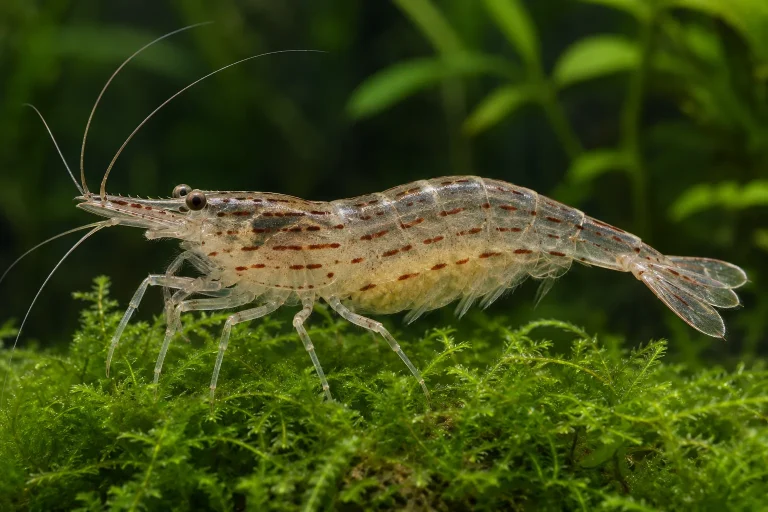
Amano Shrimp
Caridina multidentata
- Care level
- Beginner
- Adult size
- 3–5.5 cm
- Minimum tank
- 40 litres
- Temperature
- 18–28 °C
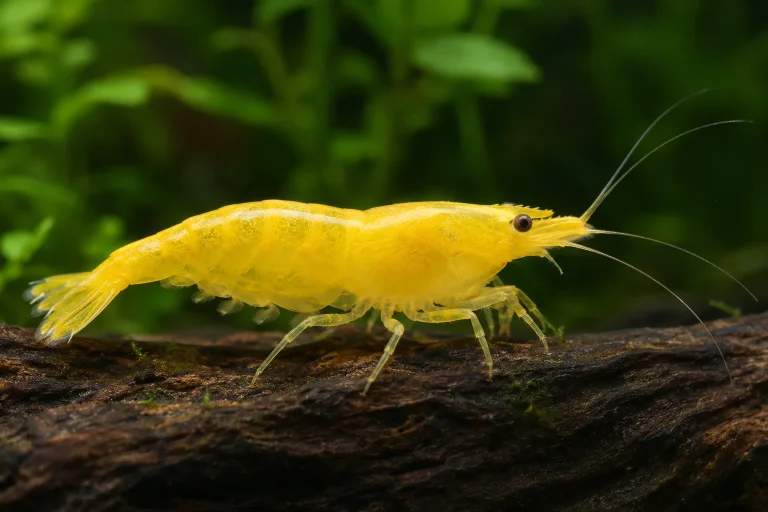
Yellow Shrimp
Neocaridina davidi
- Care level
- Beginner
- Adult size
- 3–4 cm
- Minimum tank
- 20 litres
- Temperature
- 18–26 °C
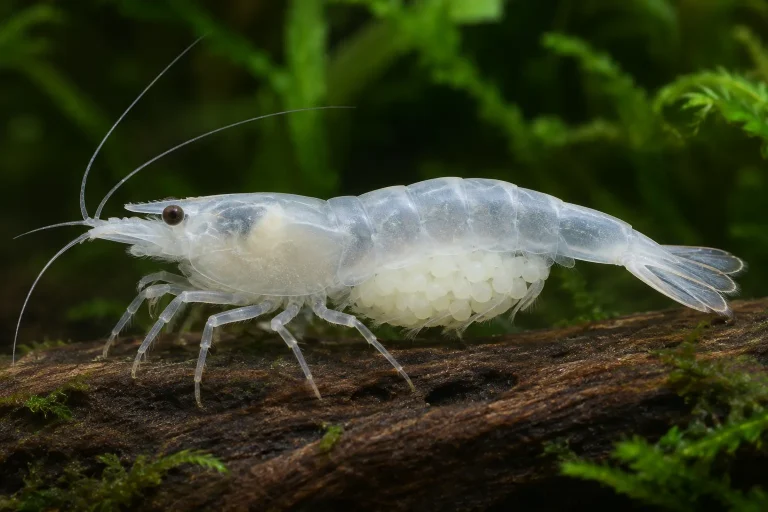
Snowball Shrimp
Neocaridina zhangjiajiensis
- Care level
- Beginner
- Adult size
- 2.5–3 cm
- Minimum tank
- 20 litres
- Temperature
- 18–26 °C
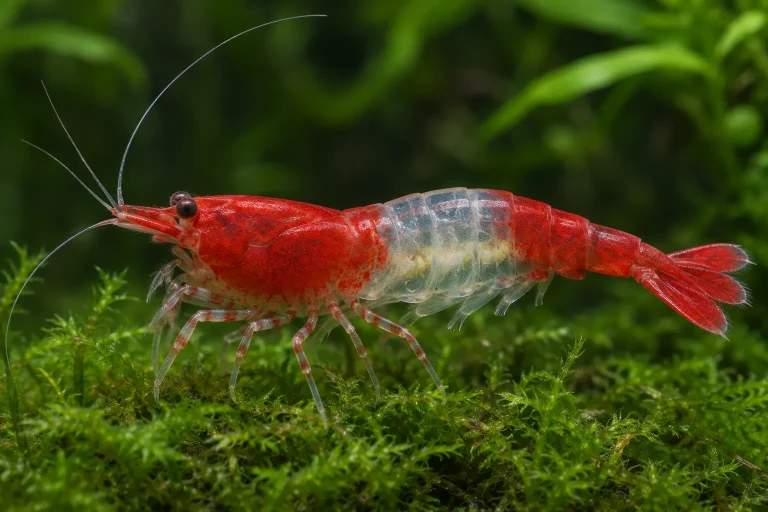
Red Rili Shrimp
Neocaridina davidi
- Care level
- Beginner
- Adult size
- 3–4 cm
- Minimum tank
- 20 litres
- Temperature
- 18–26 °C