

Sunburst Neocaridina Shrimp
Neocaridina davidi
- Care level
- Beginner
- Adult size
- 2–3 cm
- Minimum tank
- 20 litres
- Temperature
- 19–26 °C
Species profile
Neocaridina zhangjiajiensis
Common names: Snowball Shrimp, White Pearl Shrimp
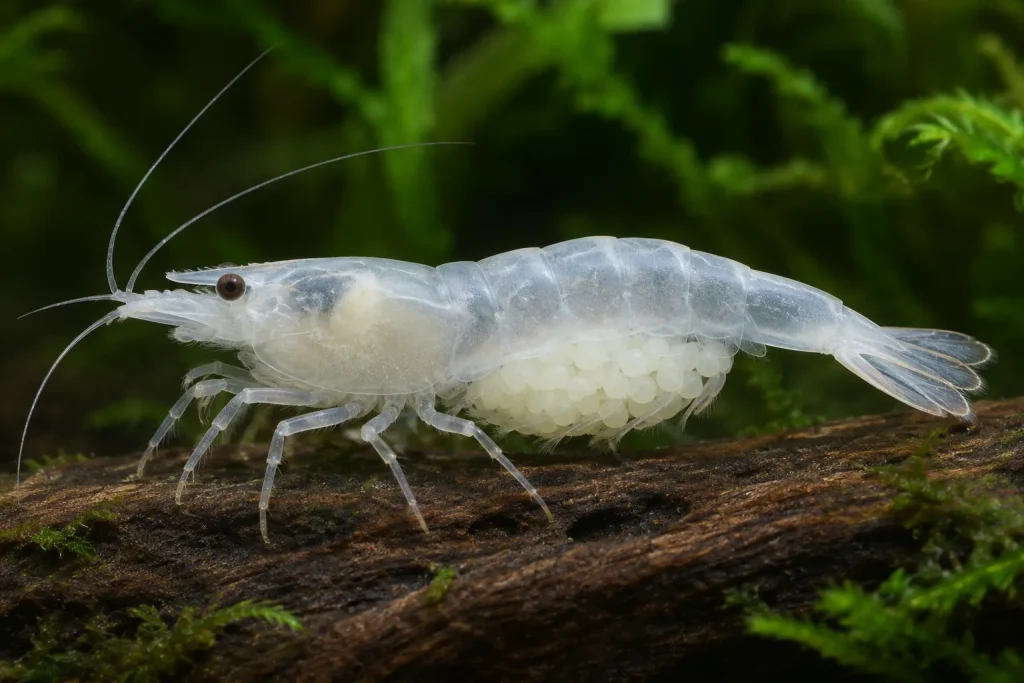
Up to 3 cm
Typical adult length 2.5–3 cm.
A pale white freshwater dwarf shrimp commonly traded as Snowball or White Pearl Shrimp and associated with Neocaridina zhangjiajiensis.
Translucent white to milky captive line, often associated with conspicuously pale or white eggs in berried females.
Usually sold as Neocaridina zhangjiajiensis, although aquarium lines can have mixed ancestry. Ask the seller about the line if purity matters to you.
Females are generally larger and broader through the abdomen. Sex and maturity can also influence visible color and egg appearance.
Use a mature, stable aquarium with biofilm, plant cover, protected filter intakes, and gentle flow. These shrimp are hardy, but new tanks, copper in water or medication, and sudden changes are the usual causes of loss.
Peaceful and continuously active as a surface grazer.
Not a schooling species, but normally kept as a colony.
Not normally territorial.
Small fish may consume shrimplets.
Some links may earn us a commission on qualifying purchases, at no extra cost to you. Check suitability, price and availability with the seller. How affiliate links work
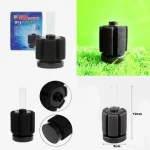 Xinyou XY-2835 small sponge filter
A small air-driven filtration option for a lightly stocked dwarf-shrimp setup. The seller lists a sponge approximately 5.5 cm across and 7 cm high.
An air pump and airline are required separately. Choose the complete filter and pump combination for your actual tank and stocking; this small sponge is not presented as the sole filter for a large aquarium.
Neutral to slightly alkaline, moderately hard water suits these shrimp. Keep GH and KH within range to support moulting, and avoid sudden changes.
An opportunistic grazer and detritivore consuming biofilm, algae, decomposing plant material, leaf litter, microorganisms, and other organic material.
Avoid leaving excess food in the aquarium.
Some links may earn us a commission on qualifying purchases, at no extra cost to you. Check suitability, price and availability with the seller. How affiliate links work
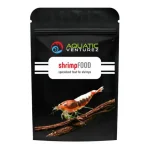 Aquatic Venturez dwarf-shrimp food – 10 g
A specialist prepared-food option for the dwarf-shrimp diet described above. This listing is a 10 g pack.
Use small portions alongside the mature grazing surfaces and other foods in the care guide. Remove leftovers and adjust the amount to the number of shrimp feeding. This is not a food recommendation for filter-feeding shrimp.
Females carry white eggs that resemble small snowballs, which gives the shrimp its name. The young hatch as tiny shrimp with no larval stage.
You can write a note about what worked for you, or send a photograph. We check everything before it appears here.
Neocaridina davidi
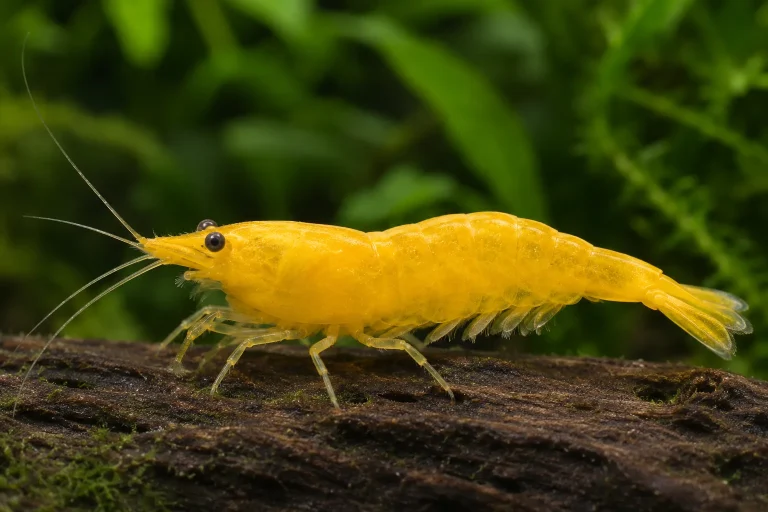
Neocaridina davidi
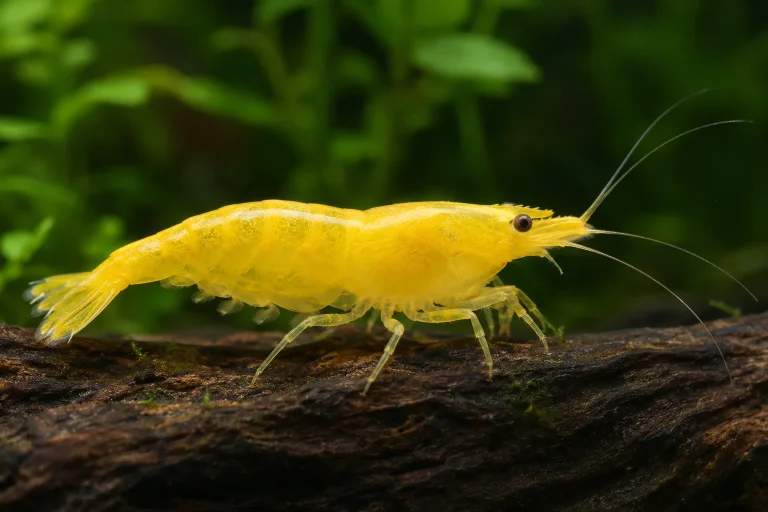
Neocaridina davidi
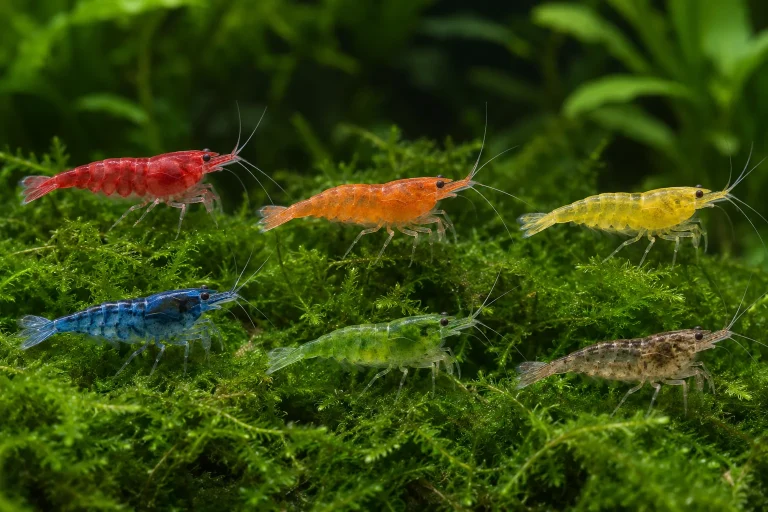
Neocaridina spp.