
Care Guide
Amano Shrimp Care Guide
Amano shrimp are hardy, active freshwater shrimp best known for grazing algae and leftover food, but they still need the same fundamentals as other aquarium animals: stable water, a mature environment, appropriate food, safe tank mates, and protection during molting. Their scientific name is Caridina multidentata, and adults are larger and more robust than typical cherry shrimp.
They are often recommended to beginners because they adapt to a range of freshwater community setups and do not reproduce into large freshwater populations. That does not mean they can be dropped into a new tank as a cleanup crew. Amano shrimp do best in an established aquarium with biofilm, hiding places, stable mineral content, and no detectable ammonia or nitrite.

Tank Setup for Amano Shrimp
Use a fully cycled aquarium with plants, wood, rocks, or other surfaces that develop biofilm. Mosses and dense plants provide cover during molts, while open areas allow you to observe feeding and condition.
Cover filter intakes with a sponge or shrimp-safe guard. Amano shrimp are strong climbers and explorers, so a secure lid and attention to cable or tubing gaps can reduce escapes.
Stable water matters more than chasing an exact number. Keep temperature and mineral conditions within a suitable range and avoid sudden shifts during water changes.
Amano shrimp use the entire hardscape as feeding territory, so surface area matters as much as open water. Branching wood, porous rock, moss, and mature plant leaves create many places for biofilm to develop. Avoid making the aquarium so sterile that every surface is scrubbed during maintenance. At the same time, keep accessible areas clean enough that uneaten prepared food does not rot. Because Amanos can climb equipment and sometimes leave the water, inspect openings around filter pipes and cables. A shrimp found exploring near the waterline is a reminder to check water quality as well as the lid.
Water Quality and Mineral Stability
Ammonia and nitrite should remain controlled in an established tank. Nitrate should be managed through stocking, feeding, plant growth, and water changes rather than allowed to climb unchecked.
GH provides context for calcium and magnesium availability, which is relevant to crustacean molting. KH and pH describe other aspects of water chemistry. Test the source water so you know what enters the tank during maintenance.
If using RO water, remineralize it with a product appropriate to the livestock rather than using pure RO as finished aquarium water. Consistency between batches is important.
Do not copy a GH or KH number from a care sheet and then add minerals until the test reaches it. First measure the aquarium and source water and find out whether the shrimp are captive-acclimated to similar conditions. Large, rapid corrections can be harder on shrimp than a stable value within an appropriate range. When performing water changes, avoid large temperature differences and prepare remineralized RO water consistently if you use it. Conductivity or TDS can be a useful consistency check for experienced keepers, but it does not tell you which minerals are present and should not replace GH, KH, and pH context.
What to Feed Amano Shrimp
Amano shrimp graze algae, biofilm, soft detritus, and food particles, but a clean aquarium may not provide enough natural food. Offer a varied shrimp-appropriate diet in measured portions.
They are bold feeders and can carry food away from smaller shrimp. In mixed shrimp tanks, distribute food across several locations so less dominant animals still have access.
Remove substantial leftovers before they decay. Feeding vegetables can add variety, but they should be prepared safely and removed after a reasonable period.
Watch Amanos when a sinking wafer lands: larger individuals may grab a piece and retreat, leaving smaller shrimp with little. Instead of increasing the total amount immediately, break food into several pieces and place them in different areas. This reduces competition without increasing waste. In a mature planted aquarium, some days may require little supplemental food because the shrimp are constantly grazing. In a newly cleaned or sparsely decorated tank, natural food may be limited. Judge feeding by body condition, activity, available grazing, and leftovers rather than following a fixed daily quantity.
Molting and Hiding Behavior
Like other crustaceans, Amano shrimp grow by shedding the old exoskeleton. They may hide before or after a molt while the new exoskeleton hardens.
A clear empty shell is usually an exuvia, not a dead shrimp. It can often be left temporarily because shrimp may graze minerals and biofilm from it.
Repeated failed molts call for a review of water stability, GH, diet, contamination, and recent parameter changes. Avoid trying to fix molting by adding random calcium products without testing.
Amano shrimp may become less visible before a molt and remain sheltered afterward. Provide narrow plant thickets and hardscape gaps where fish cannot easily follow them. An intact empty shell often looks surprisingly shrimp-like, but it is translucent and hollow; seeing one is normally evidence that a molt occurred. Repeated unexplained deaths around molting deserve a broader investigation. Compare the timing with water changes, mineral adjustments, new plants, medications, or household contamination. Molting problems are not solved reliably by dropping a piece of calcium into the tank without understanding the existing water chemistry.
Tank Mates and Predation Risk
Peaceful small fish can coexist with adult Amano shrimp, but any fish large enough to swallow or attack a shrimp represents a risk. Newly molted shrimp are particularly vulnerable.
Provide dense cover and avoid known crustacean predators. Bettas and other individually variable fish cannot be guaranteed shrimp-safe even when one specimen appears peaceful.
Amano shrimp can live with Neocaridina and snails when water requirements overlap. Remember that all of these animals may compete for the same sinking foods and biofilm.
Observe tank mates at feeding time and after lights change, not only during calm daytime periods. Some fish ignore shrimp while food is abundant but chase them when hungry or when a shrimp has just molted. Dense moss and wood crevices reduce exposure, but they cannot make a predatory fish safe. Amanos’ larger adult size gives them an advantage over dwarf shrimp, yet it is not armor. If a fish repeatedly stalks, pecks, or corners shrimp, separate the animals rather than waiting for the shrimp to become accustomed to harassment.
Why Amano Shrimp Do Not Breed Like Cherry Shrimp
Female Amano shrimp can carry many eggs in freshwater, but the larvae have a complex life cycle that includes brackish to marine conditions before juveniles return to freshwater.
This is why berried females in a normal freshwater community tank do not usually produce a growing population of juvenile Amano shrimp.
Breeding them intentionally is an advanced project involving larval collection, appropriate salinity, microscopic foods, and careful transitions. It is very different from breeding Neocaridina.
A berried Amano female can carry a very large number of tiny eggs, often giving the abdomen a densely speckled appearance. After hatching, the larvae are not miniature bottom-walking shrimp like Neocaridina babies. They pass through free-swimming larval stages associated with brackish or marine conditions in nature. This biological difference explains why a freshwater tank can contain berried females for years without filling with juveniles. Anyone attempting captive breeding should research a dedicated larval-rearing method in detail; simply adding aquarium salt to the adult display is neither necessary nor an appropriate shortcut.
Health, Acclimation and Warning Signs
New shrimp should be acclimated carefully to avoid abrupt changes in temperature and water chemistry. The exact method should reflect the difference between transport water and the aquarium.
Sudden widespread inactivity, frantic swimming, failed molts, or multiple deaths should prompt immediate water testing and a review of possible contaminants. Copper-containing medications and other products may be unsafe for invertebrates.
Quarantine plants and livestock when practical, and avoid introducing untreated substances, sprays, or cleaning residues near the aquarium.
Amano shrimp are sensitive to sudden environmental changes and contaminants because water directly surrounds their gills and exoskeleton. If several shrimp behave abnormally at once, test ammonia and nitrite, confirm temperature, check recent water-change preparation, and review anything newly introduced to the room or tank. Aerosol cleaners, insecticides, plant treatments, and medications deserve consideration. One shrimp hiding is not the same as a colony-wide emergency. Look for patterns across multiple animals and use that distinction to decide whether you are seeing normal individual behavior or a waterborne problem.
Frequently Asked Questions
Are Amano Shrimp Good for Beginners?
Yes in a mature, stable aquarium with safe tank mates, appropriate minerals, and supplemental food. For shrimp, pair the observation with ammonia, nitrite, temperature, GH, and recent water-change history before changing chemistry. For shrimp, pair the observation with ammonia, nitrite, temperature, GH, and recent water-change history before changing chemistry. For shrimp, pair the observation with ammonia, nitrite, temperature, GH, and recent water-change history before changing chemistry. For shrimp, pair the observation with ammonia, nitrite, temperature, GH, and recent water-change history before changing chemistry.
Do Amano Shrimp Eat Algae?
They graze several soft algae types and biofilm, but they do not eat every algae problem. For shrimp, pair the observation with ammonia, nitrite, temperature, GH, and recent water-change history before changing chemistry. For shrimp, pair the observation with ammonia, nitrite, temperature, GH, and recent water-change history before changing chemistry. For shrimp, pair the observation with ammonia, nitrite, temperature, GH, and recent water-change history before changing chemistry. For shrimp, pair the observation with ammonia, nitrite, temperature, GH, and recent water-change history before changing chemistry.
Can Amano Shrimp Live With Cherry Shrimp?
Yes when water requirements overlap and there is enough food for both. For shrimp, pair the observation with ammonia, nitrite, temperature, GH, and recent water-change history before changing chemistry. For shrimp, pair the observation with ammonia, nitrite, temperature, GH, and recent water-change history before changing chemistry. For shrimp, pair the observation with ammonia, nitrite, temperature, GH, and recent water-change history before changing chemistry. For shrimp, pair the observation with ammonia, nitrite, temperature, GH, and recent water-change history before changing chemistry.
Why Is My Amano Shrimp Hiding?
Hiding can be normal around molting, after introduction, or when the tank lacks secure cover. For shrimp, pair the observation with ammonia, nitrite, temperature, GH, and recent water-change history before changing chemistry. For shrimp, pair the observation with ammonia, nitrite, temperature, GH, and recent water-change history before changing chemistry. For shrimp, pair the observation with ammonia, nitrite, temperature, GH, and recent water-change history before changing chemistry.
Can Amano Shrimp Breed in Freshwater?
Adults mate and females carry eggs in freshwater, but larvae require a brackish or marine developmental phase. For shrimp, pair the observation with ammonia, nitrite, temperature, GH, and recent water-change history before changing chemistry. For shrimp, pair the observation with ammonia, nitrite, temperature, GH, and recent water-change history before changing chemistry. For shrimp, pair the observation with ammonia, nitrite, temperature, GH, and recent water-change history before changing chemistry.
Do Amano Shrimp Need Calcium?
They need appropriate mineral availability, but water hardness should be tested rather than corrected with random calcium additions. For shrimp, pair the observation with ammonia, nitrite, temperature, GH, and recent water-change history before changing chemistry. For shrimp, pair the observation with ammonia, nitrite, temperature, GH, and recent water-change history before changing chemistry. For shrimp, pair the observation with ammonia, nitrite, temperature, GH, and recent water-change history before changing chemistry.
Are Fish Safe With Amano Shrimp?
Small peaceful fish may coexist with adults, but any fish capable of attacking or swallowing shrimp is a risk. For shrimp, pair the observation with ammonia, nitrite, temperature, GH, and recent water-change history before changing chemistry. For shrimp, pair the observation with ammonia, nitrite, temperature, GH, and recent water-change history before changing chemistry. For shrimp, pair the observation with ammonia, nitrite, temperature, GH, and recent water-change history before changing chemistry.
Amano shrimp are easiest to keep when they are treated as animals first and algae grazers second. Give them mature surfaces, stable mineralized water, safe hiding places, measured supplemental food, and tank mates that cannot harass them. Learn to recognize normal molting and remember that their unusual larval life cycle prevents ordinary freshwater colony growth. With those needs covered, Amanos become active, long-term members of a planted aquarium.
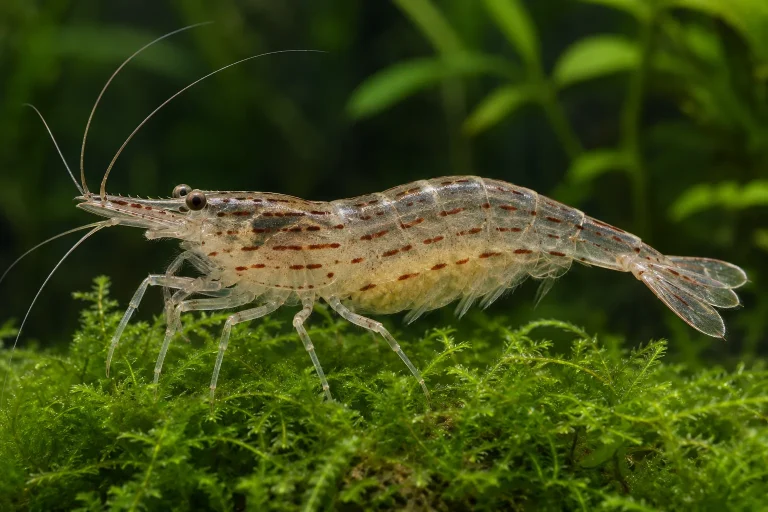
Amano Shrimp
Caridina multidentata
- Care level
- Beginner
- Adult size
- 3–5.5 cm
- Minimum tank
- 40 litres
- Temperature
- 18–28 °C
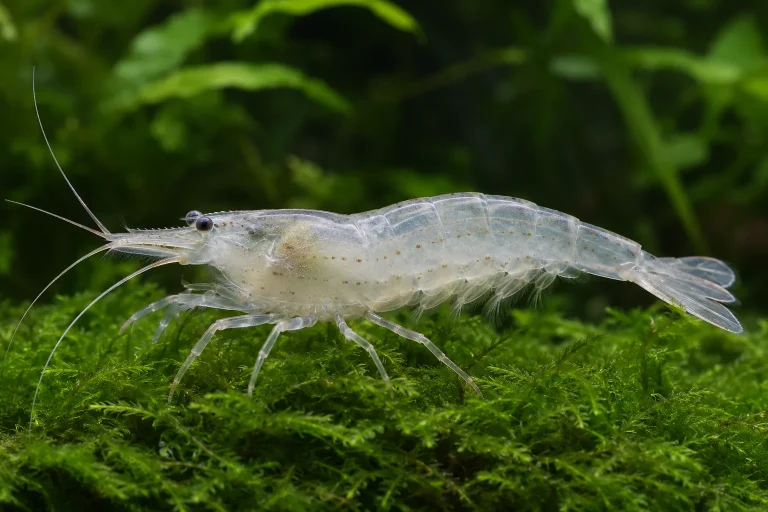
White Amano Shrimp
Caridina multidentata
- Care level
- Intermediate
- Adult size
- 4–6 cm
- Minimum tank
- 60 litres
- Temperature
- 20–27 °C