
Care Guide
Kuhli Loach Care Guide
Kuhli loaches are shy, eel-like bottom dwellers that need soft sand, plenty of hiding places and a group of at least five or six. Keep them in a mature tank of 60 litres or more at about 24 to 28 °C, feed sinking foods near dusk, and secure every gap and filter intake.

Kuhli Loach Basics and Natural Behavior
Kuhli loaches are slender bottom-dwelling loaches from Southeast Asia, with several Pangio species appearing in the aquarium trade under the common name. They are peaceful, secretive fish that spend much of their time searching the substrate or resting under cover.
Tank Size, Substrate, and Hiding Places
Their shy nature is normal and should not be treated as a problem to solve by removing hiding places. A secure aquarium with abundant shelter often makes kuhli loaches more confident and more likely to appear in the open.
Use smooth sand or fine rounded substrate because kuhli loaches probe the bottom with sensitive barbels and can burrow into soft material. Avoid sharp gravel that can damage skin or make natural foraging difficult.
Provide caves, leaf litter, wood, dense plant bases, and shaded spaces. Every decoration should be stable because these fish can squeeze into narrow gaps beneath hardscape.
Group Size and Social Behavior
Kuhli loaches are social and should be kept with several of their own kind. A larger appropriate group does not guarantee constant visibility, but isolated individuals are more likely to remain withdrawn.
They can become especially active at dusk, after a water change, or when food reaches the bottom. Sudden group activity is not automatically a sign of distress, although unusual behavior should always be interpreted alongside water quality.
Water Conditions and Filtration
Stable tropical water and a mature biological filter are important. These fish can be sensitive to ammonia, nitrite, and abrupt chemistry changes, so add them only after the aquarium is cycled.
Moderate circulation is suitable, but intakes and gaps must be secured. Kuhli loaches are flexible and can enter filter compartments or escape through surprisingly small openings.
What Kuhli Loaches Eat
They are omnivorous bottom feeders, not scavengers that can survive on waste. Offer sinking pellets, wafers, frozen foods, and other appropriately sized foods after ensuring enough reaches their hiding areas.
Feeding near dusk can help shy individuals compete. Observe body condition because food intended for kuhli loaches is easily stolen by faster midwater fish or large snails.
Tank Mates and Aquarium Safety
Peaceful community fish with compatible temperature and water needs make the best tank mates. Avoid large predators, aggressive cichlids, and species that constantly disturb the bottom.
Shrimp compatibility depends on shrimp size and the individual fish. Kuhli loaches are not specialized shrimp hunters, but very small juveniles may be eaten opportunistically by many omnivorous fish.
Health and Long-Term Care
Because they have small scales and sensitive skin, kuhli loaches can react poorly to inappropriate medication. Diagnose problems carefully and follow product directions or aquatic veterinary guidance rather than automatically using strong treatments.
Long-term care is based on stability, secure cover, a social group, deliberate feeding, and a tightly protected aquarium. A kuhli that hides during the day can still be healthy when it eats and behaves normally during its active periods.
Frequently Asked Questions
How Many Kuhli Loaches Should Be Kept Together?
Kuhli loaches are social and should be kept as a group rather than alone. Choose a group size that fits the aquarium’s floor area, filtration, and overall stocking.
Do Kuhli Loaches Need Sand?
Smooth sand is ideal because they naturally forage and may burrow. Fine rounded substrate can also work, but avoid sharp material that can injure their sensitive bodies and barbels.
Why Do My Kuhli Loaches Hide All Day?
They are naturally secretive and often more active around dusk. Good hiding places can actually increase confidence. Verify feeding and water quality rather than removing all shelter.
What Do Kuhli Loaches Eat?
Feed sinking complete foods plus appropriately sized frozen or live foods for variety. Make sure food reaches the bottom after faster fish have eaten.
Can Kuhli Loaches Live With Shrimp?
Adults may coexist with larger shrimp, but tiny shrimplets can be eaten opportunistically. Compatibility depends on the setup and cannot be guaranteed.
Can Kuhli Loaches Escape From Aquariums?
Yes. Their slender flexible bodies can enter small gaps and filter spaces. Use a secure lid and protect intakes and openings.
Are Kuhli Loaches Good Cleanup Fish?
No. They forage on the bottom but require deliberate feeding. They do not remove waste from the aquarium and should not be purchased as cleaning equipment.
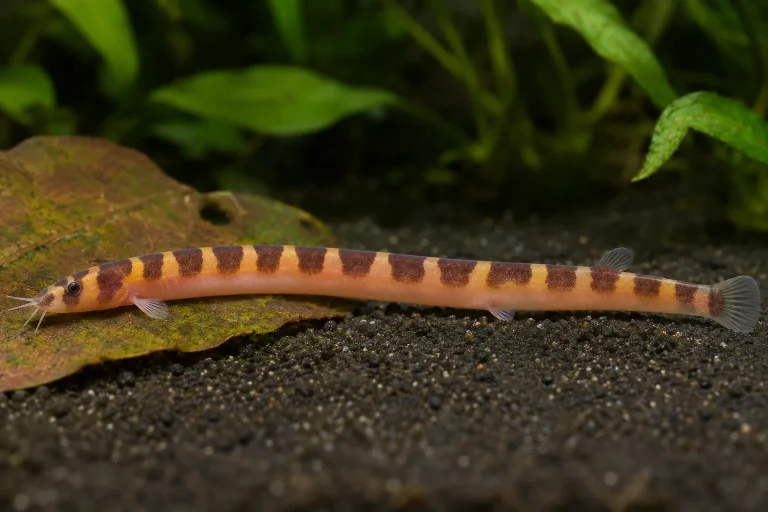
Kuhli Loach
Pangio kuhlii
- Care level
- Intermediate
- Adult size
- 7–10 cm
- Minimum tank
- 100 litres
- Temperature
- 24–28 °C
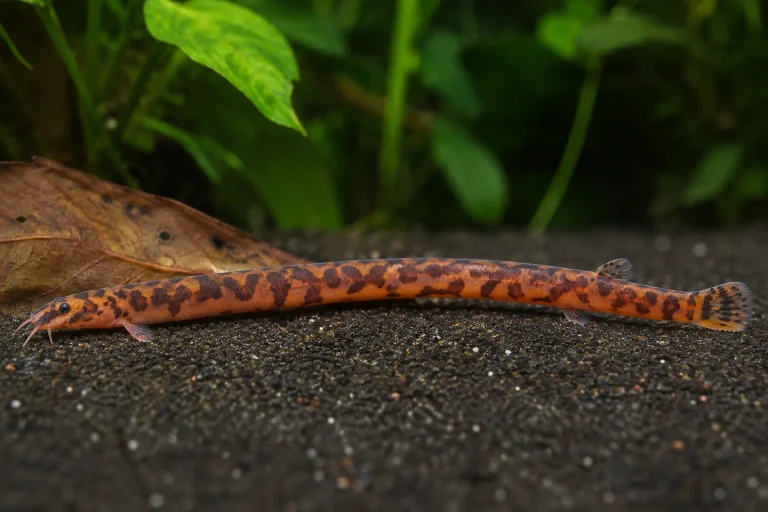
Leopard Kuhli Loach
Pangio shelfordii
- Care level
- Intermediate
- Adult size
- 7–10 cm
- Minimum tank
- 100 litres
- Temperature
- 24–28 °C
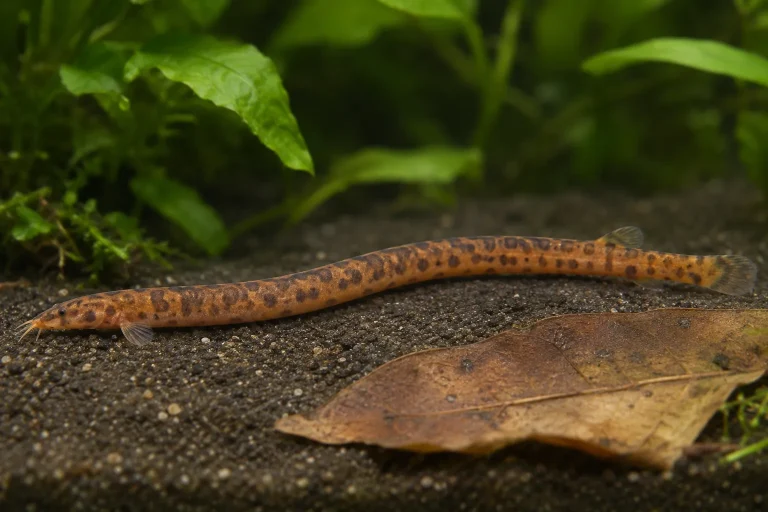
Spotted Coolie Loach
Pangio muraeniformis
- Care level
- Intermediate
- Adult size
- 7–10 cm
- Minimum tank
- 100 litres
- Temperature
- 24–28 °C