
Care Guide
Otocinclus Care Guide
Otocinclus are small South American suckermouth catfish best known for quietly grazing soft algae and biofilm from leaves, wood, glass, and hardscape. They can be excellent residents in a peaceful planted community, but they are often treated as disposable “algae cleaners.” That is where many problems begin. An Otocinclus is a fish with its own social, nutritional, and environmental needs, not a maintenance tool.
The biggest challenge is getting Otocinclus into a mature aquarium where there is enough natural grazing and where they are not forced to compete aggressively for food. A newly set-up tank may look clean and attractive to a beginner, yet provide very little of the established biofilm these fish spend much of the day browsing. Good Otocinclus care therefore starts with tank maturity, stable water, a group of compatible fish, and deliberate supplemental feeding.

Understanding Otocinclus Before You Buy Them
Several closely related Otocinclus species appear in the aquarium trade, and they are not always identified correctly at the store. They are small loricariid catfish from tropical South America. Their compact adult size makes them suitable for modest community aquariums, but small size should not be confused with low care requirements.
Otocinclus are adapted to spending long periods grazing surfaces. In an aquarium they may rest on broad leaves, wood, glass, filter sponges, and stones, then move to another patch to feed. A healthy fish should have an active interest in its surroundings and a body that does not look pinched behind the head.
Because many specimens enter the trade after collection, transport, holding, and repeated changes in food availability, condition at purchase matters. Choose alert fish with rounded bellies when possible and avoid buying a group simply because a tank has visible algae.
Tank Setup, Maturity and Water Quality
A mature planted aquarium is easier for Otocinclus than a brand-new sterile setup. Established surfaces support biofilm and naturally occurring microorganisms, while plants and wood create a large grazing area. The aquarium should be fully cycled, with ammonia and nitrite controlled and a dependable maintenance routine already in place.
Provide gentle to moderate circulation and good oxygenation. Otocinclus spend time on surfaces throughout the tank, so arrange plants and hardscape without creating stagnant pockets loaded with waste. Smooth wood, broad-leaved plants, stones, and mature filter sponges all increase usable grazing area.
Stability is more important than chasing a single perfect pH number. Keep temperature, hardness, and pH within a range appropriate to the exact species and avoid abrupt shifts during water changes. Test source water as well as tank water so replacement water is predictable.
Group Size and Normal Behavior
Otocinclus are social fish and are best kept with others of their kind rather than as a single utility fish. In a comfortable group they may graze near one another, rest together, and move around the aquarium without constant hiding.
Group size must still fit the aquarium. A larger group creates more total food demand, so adding many fish to a small tank with limited mature surface area can produce the opposite of the intended result. Stock according to tank footprint, filtration, existing fish, and the amount of supplemental food you can provide reliably.
Newly introduced Otocinclus may be shy. Give them cover and time rather than repeatedly moving decorations to check on them. Once settled, they should be visible grazing during parts of the day, even if they are not as bold as midwater schooling fish.
What to Feed Otocinclus
Algae and biofilm are important, but aquarium algae alone should not be assumed to provide a complete diet forever. Offer appropriate sinking herbivore or omnivore foods and observe whether the Otocinclus actually reach them. In a busy community, faster fish can consume a wafer before the catfish has a chance to feed.
Vegetable-based foods and suitable blanched vegetables can add variety, but remove uneaten portions before they deteriorate. Natural grazing surfaces remain valuable because they let the fish browse between prepared meals rather than depending on one large feeding event.
Do not deliberately grow a dirty aquarium to feed Otocinclus. Excess waste, unstable nutrients, and poor water quality are not substitutes for biofilm. The goal is a mature, maintained aquarium with food available in controlled forms.
Best Tank Mates and Shrimp Compatibility
Choose peaceful community fish that do not bully slow grazers away from food. Small tetras, rasboras, peaceful livebearers, and other nonaggressive species can work when their water requirements overlap. Avoid combinations where large or territorial fish make the Otocinclus hide continuously.
Otocinclus are commonly kept with dwarf freshwater shrimp because they are specialized surface grazers rather than active shrimp hunters. That makes them one of the lower-risk fish choices in a shrimp community, although every aquarium still needs enough food and space for all inhabitants.
Snails are also generally compatible when water chemistry suits both. The more important issue is food competition: a tank containing shrimp, snails, and Otocinclus may have many animals relying on the same algae and biofilm.
Health and Warning Signs
A noticeably hollow belly, persistent inactivity, rapid breathing, loss of balance, or refusal to graze deserves attention. Start with water tests and recent history before reaching for medication. Poor condition can result from inadequate food, transport stress, oxygen problems, or unsuitable water.
Quarantine is useful when practical because small catfish can arrive stressed and because medications suitable for one fish are not automatically safe for every species or invertebrate in a community tank. Diagnose before treating.
Watch body condition over time. A fish can spend all day scraping glass and still fail to receive enough nutrition if the available film has little food value. Supplemental feeding is successful only when the fish maintains or improves condition.
A Simple Otocinclus Care Routine
Check the fish during feeding and make sure each individual appears to be grazing. During weekly maintenance, test water as needed, remove excess waste, trim plants without stripping every mature surface, and clean filter media only enough to restore flow.
Leave some established hardscape and plant surfaces available for grazing instead of polishing the aquarium until every surface is spotless. At the same time, control nuisance algae through balanced light, plant health, feeding, and maintenance rather than expecting Otocinclus to solve the cause.
Before adding more Otocinclus, ask whether the current group is maintaining good body condition. If existing fish are thin, increasing the group increases competition and is unlikely to fix the underlying feeding problem.
Frequently Asked Questions
Are Otocinclus Good Beginner Fish?
They can be kept by a careful beginner, but they do best in a mature, stable aquarium with established grazing surfaces and deliberate supplemental feeding.
How Many Otocinclus Should Be Kept Together?
They are social and should be kept in a group, but the exact number must fit the tank size, food supply, filtration, and existing stocking.
Do Otocinclus Eat All Aquarium Algae?
No. They graze some soft algae and biofilm but will not reliably control every algae type, and they still need a nutritionally appropriate diet.
Can Otocinclus Live With Shrimp?
They are among the lower-risk fish choices for shrimp tanks because they are surface grazers rather than active shrimp predators.
Why Does My Otocinclus Have a Sunken Belly?
A sunken belly can indicate poor condition or inadequate food. Check water quality, observe feeding, and make sure the fish can access supplemental foods.
Do Otocinclus Need Driftwood?
Wood is useful because it adds structure and grazing surface, but the broader need is a mature aquarium with many safe surfaces and appropriate food.
Can I Add Otocinclus to a New Aquarium?
It is better to wait until the aquarium is fully cycled and biologically mature enough to provide stable water and established grazing surfaces.
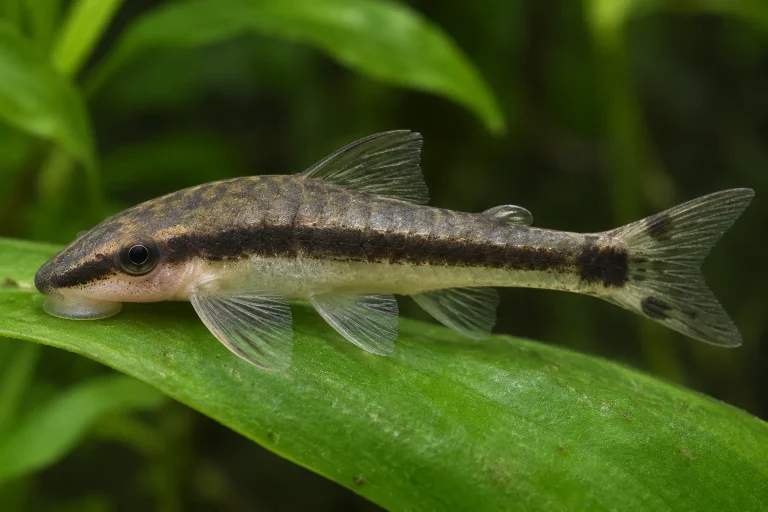
Otocinclus Catfish
Otocinclus macrospilus
- Care level
- Intermediate
- Adult size
- 3–3.5 cm
- Minimum tank
- 40 litres
- Temperature
- 21–26 °C

Tiger Otocinclus
Otocinclus cocama
- Care level
- Intermediate
- Adult size
- 4.5 cm
- Minimum tank
- 40 litres
- Temperature
- 21–25 °C
Common Otocinclus
Otocinclus vittatus
- Care level
- Intermediate
- Adult size
- 4.5 cm
- Minimum tank
- 40 litres
- Temperature
- 21–26 °C