Skip to content
Menu

Species profile

Otocinclus Catfish

Otocinclus macrospilus

Common names: Otocinclus Catfish, Otocinclus, Oto, Dwarf Sucker Catfish
Recognized speciesCatfish
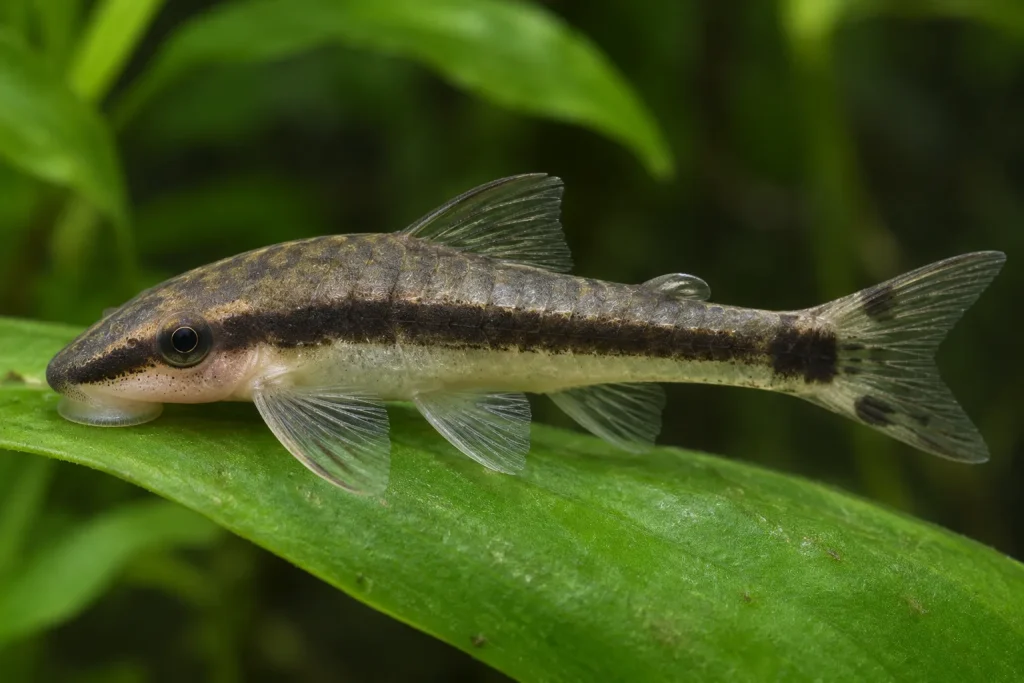
Otocinclus Catfish (Otocinclus macrospilus)

Adult size

Up to 3.5 cm

Typical adult length 3–3.5 cm.

Up to 3.5 cm

Countries of origin

  • See all stock from Colombia
  • See all stock from Peru

Good fit for your tank?

Good fit for

  • A mature planted aquarium
  • A shrimp tank that needs a safe algae grazer
  • A calm community of small fish

Think carefully if

  • The tank is new or very clean, with little natural growth
  • You want them to fully clear your algae
  • Your tankmates are large or aggressive

A tiny, peaceful algae-grazing catfish from South America that lives in groups. It is excellent with shrimp, but it needs a mature aquarium with plenty of natural food.

Appearance and Identification

A tiny, slim armoured catfish with a dark stripe along the flank, a pale belly, and a sucker mouth used for grazing.

Species are hard to tell apart, and shop labels are unreliable. Check the fish has a full belly rather than worrying about the exact name.

Viewed from above, mature females are broader in the body.

Tank Requirements

Suggested filter
About 160–200 litres an hour
Suggested heater
About 50–75 W for this tank
Minimum tank volume
40 litres
Minimum tank length
45 cm
Minimum group size
6
Recommended group size
8
Activity level
Moderate
Flow preference
Moderate
Planting preference
Heavily planted
Hiding places
Yes
Lid recommended
Yes
Jumping risk
Low

Only add to a mature aquarium with established algae and biofilm. Broad leaves, wood, and stones give them places to graze, and they like clean, oxygen-rich water.

Behaviour and Tankmates

Peaceful and rather shy, spending much of the day attached to plants, glass, and wood while grazing.

Keep at least 6, because they prefer the company of their own kind.

Not territorial.

Excellent with dwarf shrimp, small tetras, small rasboras, and honey gouramis. Avoid large or boisterous fish, and fish that outcompete them for food.

Check tankmates for this species

Water Parameters

Temperature
21–26 °C
pH
5.5–7.5
GH
1–12
Stability importance
Very important

Clean, well-oxygenated water is important. Keep nitrate low with regular water changes.

Parameter caveat
Newly imported fish are often in poor condition. Acclimate very slowly and quarantine them with food available at all times.

Feeding

Diet types
Algae Grazer, Aufwuchs Grazer, Herbivore
Feeding frequency
Daily
Preferred foods
  • Natural biofilm and soft algaeThe main food, so only add these fish to an aquarium that has a good growth of it.
  • Blanched courgette or cucumberWeigh it down and remove what is left within a day.
  • Algae wafersFeed after lights out so shy fish get a chance without competition.

A grazer that needs biofilm and soft algae, supplemented with prepared and vegetable foods.

A sunken belly is a warning sign. Feed extra vegetables or wafers, and do not rely on algae in a clean tank.

Breeding

Breeding type
Egg Layer
Breeding difficulty
Difficult
Brood or egg count
Few details are available
Parental care
None
Baby foods
  • Natural biofilm and soft algaeFry graze from the start, so a tank with established growth is essential.
  • Fine powdered fry foodUse as a supplement, and siphon out anything left uneaten.

Captive spawning has occurred, but few details are available. Spawning resembles Corydoras, with a T-position, but the eggs are scattered around the tank. Large, cool weekly water changes seem important, and the fry need plenty of algae.

Habitat and Origin

Geographic origin
Amazon Basin, Colombia, Peru, South America
Natural habitat
Freshwater River, Freshwater Stream, Vegetated Shoreline
Aquarium contexts
Nano Aquarium, Planted Aquarium, Shrimp Tank
Audience level
Intermediate

Classification

Profile type
Recognized species
Genus
Otocinclus
Family
Loricariidae
Species group
Catfish, Fish

Have you kept this species?

You can write a note about what worked for you, or send a photograph. We check everything before it appears here.

Share a note or photo

JPG, PNG, or WebP, up to 5 MB.