
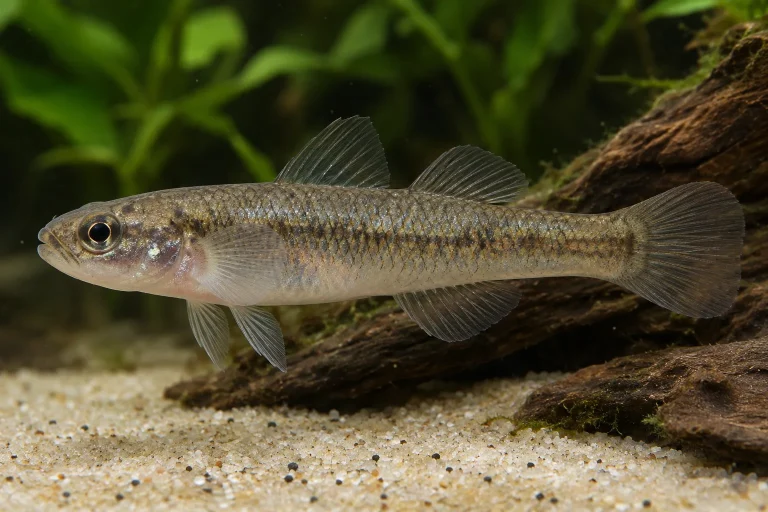
Tropical Carp Gudgeon
Hypseleotris cyprinoides
- Care level
- Advanced
- Adult size
- 5–8 cm
- Minimum tank
- 90 litres
- Temperature
- 22–28 °C
Species profile
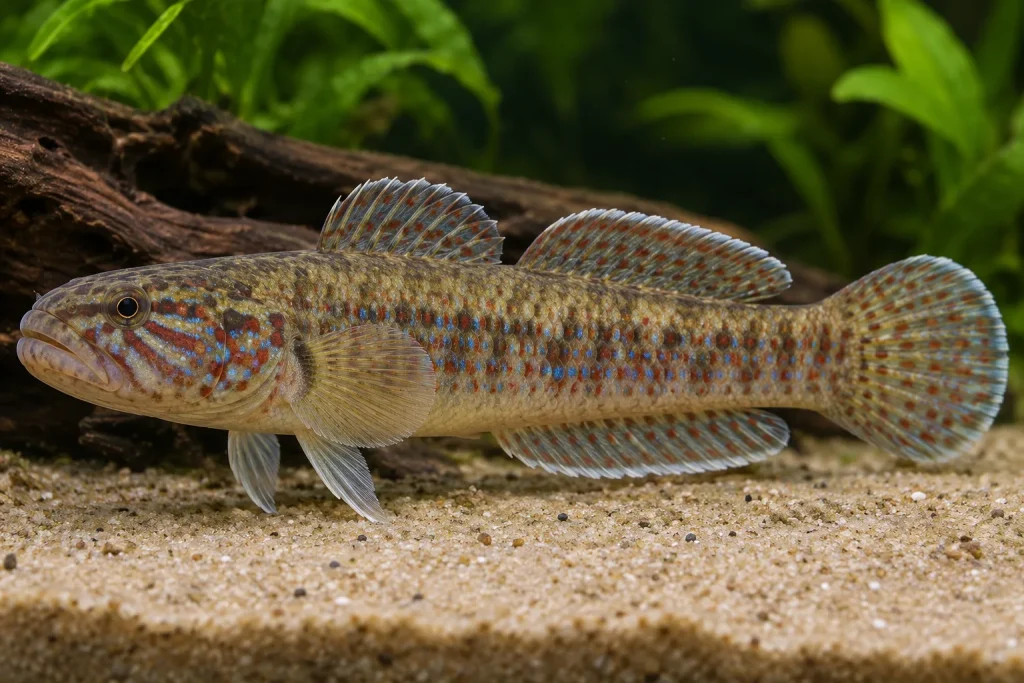
Giuris tolsoni
Common names: Tolson's Snakehead Gudgeon, Snakehead Gudgeon
Up to 12 cm
Typical adult length 8–12 cm.





Tolson’s Snakehead Gudgeon is a an elongate sleeper gudgeon with a broad flattened head, large mouth, beige to yellow flanks, reddish and bluish spots, facial streaks, and yellow-white edging on the dorsal and anal fins.
Tolson’s Snakehead Gudgeon is an elongate sleeper with a broad, flattened head and a large predatory mouth. Beige, olive, or yellowish flanks may carry reddish and bluish spots, facial streaks, and pale edging on the dorsal and anal fins. Its subdued resting colours can become noticeably stronger after settling or during social display.
Giuris tolsoni is separated from similar Giuris by scale and fin-ray characters that are difficult to assess in ordinary aquarium photographs. Keep provenance records and avoid relying on the general name “snakehead gudgeon” alone.
Published external sexing information is limited. Mature males may become more robust and more strongly coloured, while females may show a fuller abdomen, but these traits are not reliable on their own. Correct identification and locality data are especially important because similar Giuris species can be difficult to separate.
Provide a mature, tightly covered aquarium with a broad footprint, open lower-level swimming space, smooth stones, wood, and several shaded shelters. Strong filtration and good oxygenation are important. The species is associated with fresh, brackish, and coastal environments, so use the fish’s collection or rearing history to guide acclimation instead of treating salt as a standard requirement.
This is a lower-level ambush predator that often waits beside cover before lunging at food. It may appear inactive between meals but can become assertive when defending a shelter or competing with another bottom predator. Its large mouth allows it to take surprisingly substantial prey.
Treat as solitary unless a compatible pair or group has already been demonstrated. Larger quarters and visual barriers are essential for any multi-fish trial.
Likely to defend preferred shelters and feeding zones. Closely watch interactions with other gudgeons and bottom predators.
A species-only aquarium is the safest option. In a community, choose robust fish that are clearly too large to swallow and that do not compete for the same shelters. Avoid small schooling fish, shrimp, fry, timid bottom dwellers, and other territorial sleepers unless the aquarium is exceptionally large.
Maintain warm, oxygenated water with low waste and stable conductivity. The species is euryhaline in nature, but individual fish should be kept near the conditions to which they are acclimated.
Some links may earn us a commission on qualifying purchases, at no extra cost to you. Check suitability, price and availability with the seller. How affiliate links work
 Manual aquarium siphon and gravel cleaner
A manual siphon for routine aquarium water changes and accessible waste removal. The seller lists a hose approximately 1.6 m long.
Control the flow and keep the intake clear of fish and delicate planting. Clean the areas appropriate for your substrate and layout rather than disturbing the entire planted bed.
Offer sinking carnivore pellets, frozen insect larvae, worms, and small crustaceans. Recently imported fish may need moving foods before accepting prepared diets. Feed modest portions and remove leftovers promptly, since overfeeding a sedentary predator can quickly foul the bottom of the aquarium.
Wild or newly imported fish may reject dry food initially. Transition gradually from live or frozen prey to prepared food.
Captive breeding is poorly documented. Related Giuris species have amphidromous life histories in which very small larvae develop in brackish or marine water before juveniles return inland. Successful breeding would probably require separate adult and larval systems, fine first foods such as rotifers, and careful salinity control, so it remains a specialist undertaking.
You can write a note about what worked for you, or send a photograph. We check everything before it appears here.
Hypseleotris cyprinoides
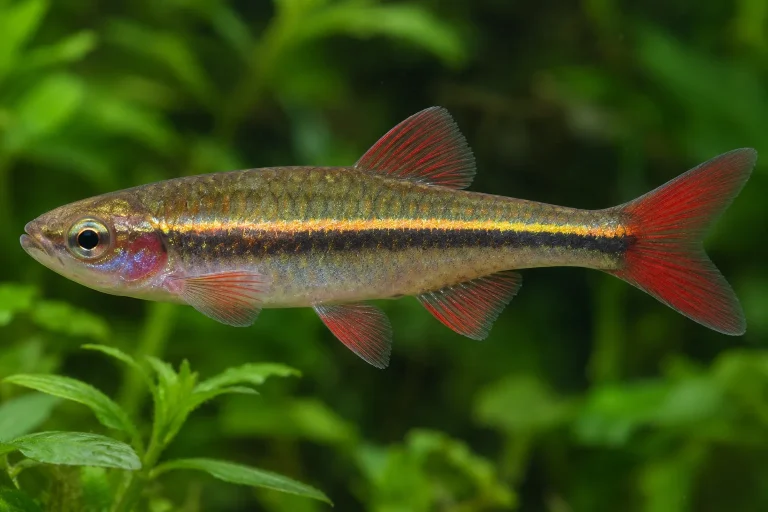
Tanichthys albonubes
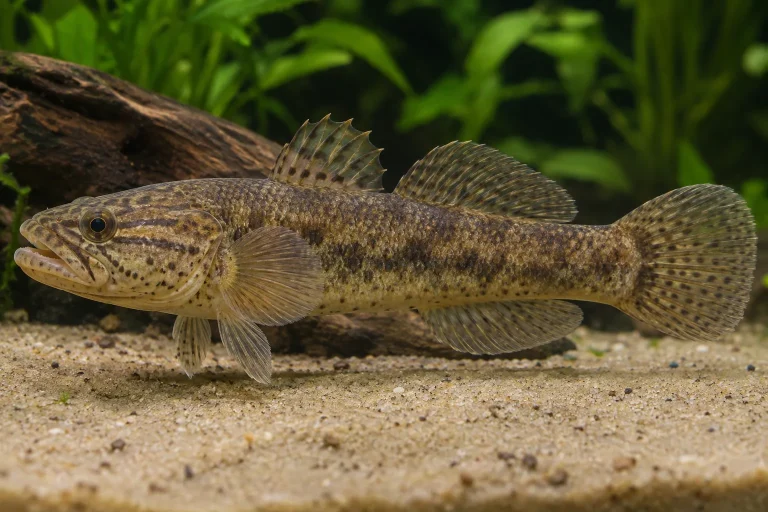
Giuris charpini
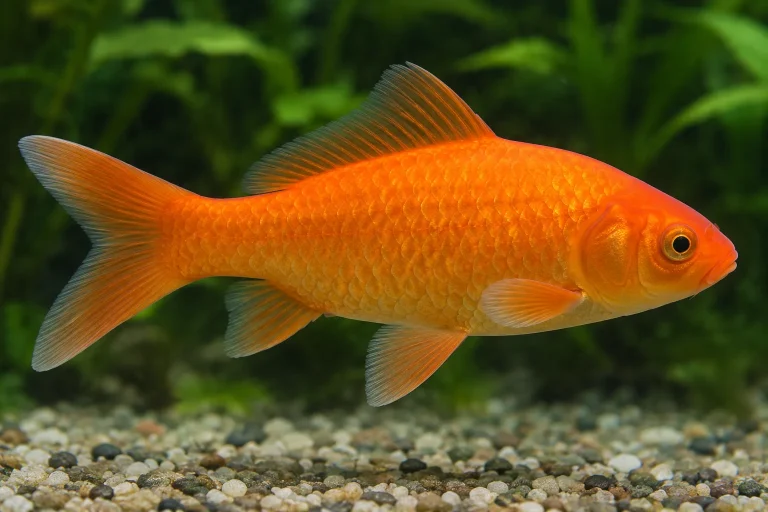
Carassius auratus