
Explainer
Best Community Fish
Good community fish are peaceful, share similar water needs and stay small enough to live together. Small tetras, rasboras, corydoras, kuhli loaches, otocinclus, honey gouramis and peaceful livebearers are reliable choices. Check temperature, adult size and temperament before mixing species.
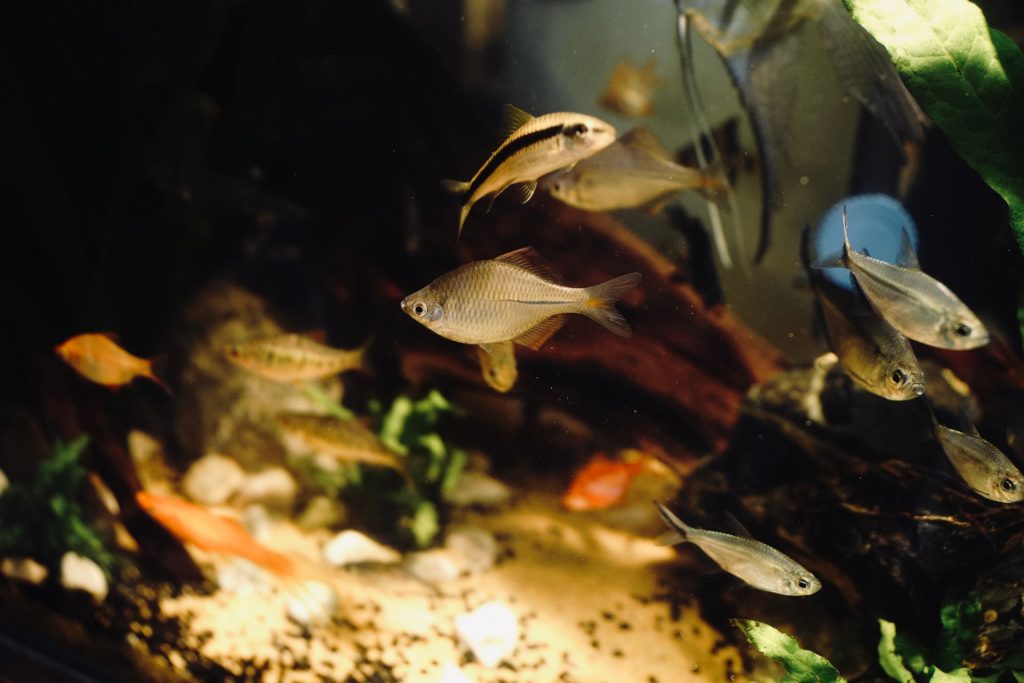
What Makes a Good Community Fish
A good community fish is not simply a species labeled peaceful. It needs an adult size, activity level, social structure, water preference, and temperament that fit the aquarium and the other inhabitants. A peaceful fish kept in too small a group or tank can still become stressed or disruptive.
Small Schooling and Shoaling Fish
Small tetras such as ember tetras and many rasboras can form attractive groups in planted community aquariums. Their confidence and natural behavior improve when kept in appropriate numbers. Choose one substantial school rather than collecting tiny groups of many species.
Harlequin rasboras are active midwater fish that work well in many peaceful tropical communities when provided adequate swimming room. Like other shoaling fish, they should be planned as a group, which means their combined bioload must be considered before stocking.
Danios are hardy and active but their constant movement can overwhelm slow or long-finned tank mates. Peaceful does not mean low-energy. Match swimming style as well as aggression level.
Peaceful Bottom-Dwelling Fish
Corydoras are social bottom-dwelling catfish that forage across the substrate. They need an appropriate group, smooth substrate that allows natural searching behavior, and actual food that reaches them. They are not scavengers that can survive on whatever other fish miss.
Kuhli loaches are shy social bottom dwellers that appreciate cover, smooth substrate, and secure gaps around filters and lids. They are often most visible when the aquarium provides enough shelter for them to feel safe.
A bristlenose pleco can work in a suitably sized community but is a substantial fish with its own dietary and waste-management needs. It should not be added simply as an algae solution. Provide shelter and a complete diet.
Centerpiece Fish for Community Tanks
Honey gouramis are commonly considered gentler centerpiece fish than some other gouramis, but individuals still have personalities and territorial behavior. Dense planting and visual barriers help create a comfortable community.
Bettas can sometimes live in carefully selected communities, but compatibility is individual and cannot be guaranteed. Fin-nipping fish, brightly colored long-finned tank mates, and high-flow setups can create problems. Always have a backup plan if aggression appears.
Livebearers in Community Aquariums
Livebearers such as guppies and platies are colorful and active, but mixed sexes can reproduce rapidly. Their preference for harder, more mineralized water may not align with every soft-water tetra community. Match chemistry rather than combining fish solely because both are beginner species.
How to Check Fish Compatibility
Compare temperature ranges, hardness preferences, adult size, diet, activity, and social requirements. A narrow overlap is less useful than a comfortable shared range. Avoid adjusting water constantly to satisfy species that naturally prefer very different conditions.
Stocking calculators and store labels are starting points, not guarantees. Observe adult dimensions and behavior, filter capacity, maintenance, and actual nitrate and waste trends. Leave room for fish to grow instead of filling every theoretical stocking slot.
Building a Balanced Community
Consider where fish spend time. A group of midwater fish, a compatible bottom group, and one suitable centerpiece species often creates a more balanced aquarium than several species competing for the same territory.
Add livestock gradually to a cycled aquarium and monitor water quality. Every addition changes bioload and social dynamics. Quarantine new fish when practical so disease is not introduced directly into an established community.
Frequently Asked Questions
What Are Good Community Fish for Beginners?
Small rasboras or tetras, Corydoras, selected livebearers, and suitable centerpiece fish can work, but the best combination depends on tank size, water chemistry, group requirements, and temperament.
How Many Schooling Fish Should I Keep?
Keep a species in an appropriate social group rather than buying one or two. The exact number depends on species and tank size, so research the particular fish before stocking.
Can Bettas Live in Community Tanks?
Some can, but compatibility varies by individual. Avoid fin nippers and unsuitable flow, provide space and cover, and have a backup plan if aggression develops.
Are Corydoras Cleanup Fish?
No. Corydoras forage on the bottom but require their own complete diet. They should not be expected to survive on leftovers from other fish.
Can Guppies Live With Tetras?
Some combinations can work behaviorally, but compare water hardness, temperature, activity, and fin-nipping risk. Guppies often prefer harder water than many soft-water tetras.
Should I Add All Community Fish at Once?
Usually no. Add fish gradually to a cycled aquarium while monitoring water quality and behavior. Quarantine new arrivals when practical.
How Do I Know If Two Fish Species Are Compatible?
Compare adult size, temperature, hardness, pH, diet, swimming level, social needs, activity, and aggression. Make sure both species share a comfortable range rather than barely overlapping.