
Explainer
Shrimp Safe Fish List
There is no fish that can be guaranteed completely safe with newborn freshwater shrimp. If a shrimplet fits into a fish's mouth and the fish recognizes it as food, predation is possible. The useful goal is therefore not to find a mythical zero-risk fish, but to choose small, peaceful species and build enough cover that an established shrimp colony can reproduce despite occasional losses.
Adult Neocaridina are easier to protect than tiny shrimplets. Fish size, mouth size, hunting behavior, group size, aquarium footprint, plant density, and feeding all change the outcome. A fish that works in one heavily planted tank may reduce reproduction dramatically in a sparse tank.
What “Shrimp-Safe” Really Means
In aquarium use, shrimp-safe usually means low predation risk, especially toward adult shrimp. It should not be interpreted as a guarantee that every shrimplet will survive.
Freshly molted adults are softer and more vulnerable, and newly released shrimplets are extremely small. Even peaceful nano fish may investigate or eat them opportunistically.
If maximum breeding output is the goal, a shrimp-only aquarium remains safer than any fish community.
Lower-Risk Fish Choices for Shrimp Tanks
Otocinclus catfish are among the lowest-risk commonly kept fish because they are specialized grazers rather than active shrimp hunters. They still require a mature aquarium with suitable natural foods and should not be purchased merely as a compatibility tool.
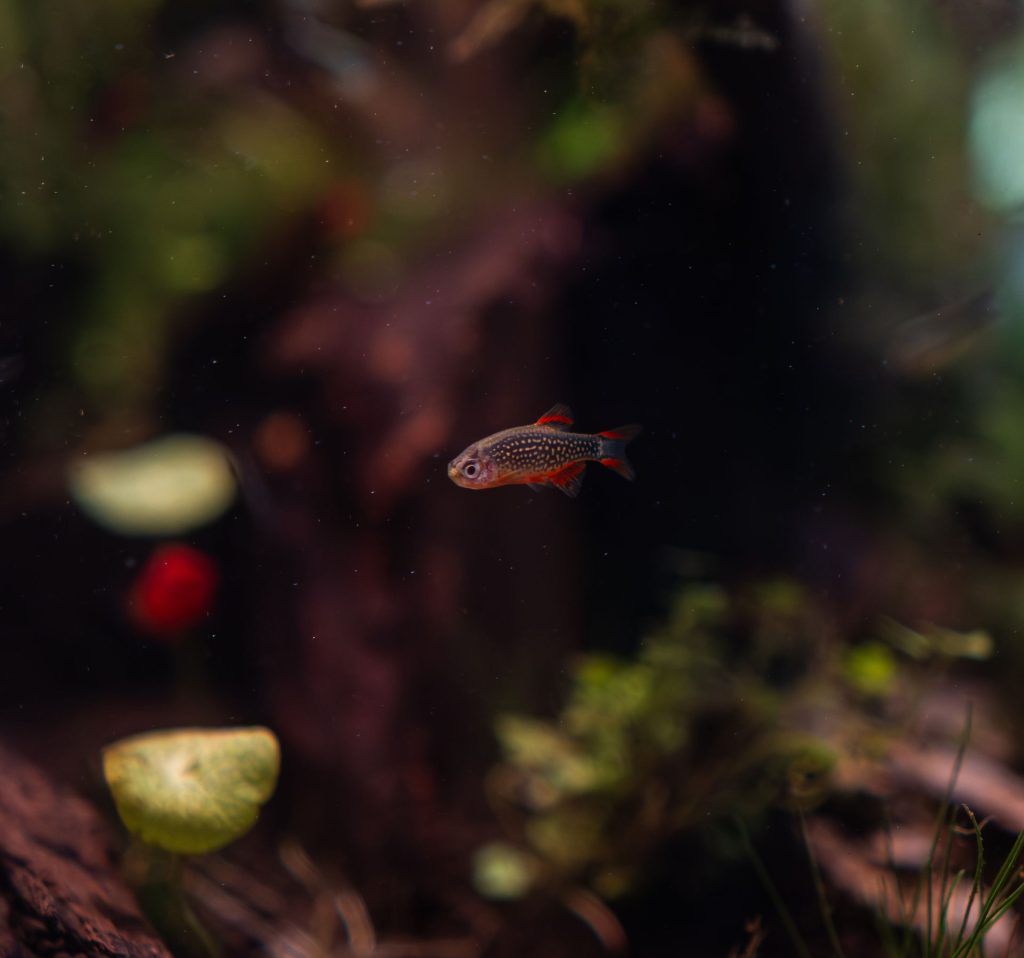
Small peaceful schooling fish such as chili rasboras and some other tiny Boraras species are often kept with adult shrimp, but they can consume shrimplets. Their small mouths reduce risk rather than eliminating it.
Small surface-oriented fish may leave adult shrimp alone more often than bottom-hunting species, but individual behavior varies. Research the adult size and feeding ecology of the exact species before buying it.
Fish That Are Often Fine With Adults but Risky for Babies
Many small tetras, danios, guppies, endlers, and similar community fish may coexist with adult Neocaridina while actively reducing shrimplet survival. Livebearers are persistent foragers and should not be considered baby-shrimp safe simply because they are peaceful toward other fish.
Betta compatibility is highly individual. Some ignore adult shrimp for months; others hunt them immediately. A betta’s temperament cannot be guaranteed from appearance or store behavior.
If you already own these fish, adding dense moss and rock or wood crevices can improve shrimp survival, but it cannot make the tank predator-free.
Higher-Risk Fish for Shrimp Colonies
Large cichlids, many gouramis, predatory catfish, loaches, puffers, and other fish that hunt invertebrates or reach a large adult size are poor choices when shrimp survival is a priority.
Bottom-oriented predators are especially difficult because they search the same plants, substrate, and hardscape where shrimp hide. No amount of moss can guarantee safety if the fish is physically capable of dismantling the refuge or persistently hunting through it.
Always research adult size. A juvenile fish sold at a small size may become a completely different compatibility problem as it matures.
Build Refuge Before Adding Fish
Java moss, other fine-leaved plants, dense stem thickets, floating plant roots, leaf litter where appropriate, and complex wood or rock create spaces fish cannot enter easily. These refuges are most valuable for shrimplets and molting adults.
Cover should be distributed around the aquarium rather than confined to one decorative clump. Shrimp need safe routes between feeding areas, filter sponges, and shelter.
A sponge prefilter also protects shrimplets from filter intakes and becomes a productive grazing surface.
Feeding Does Not Remove Predation Instinct
Well-fed fish may hunt less aggressively, but overfeeding them to protect shrimp is not a reliable strategy. Fish can eat prepared food and still take a moving shrimplet minutes later.
Excess food increases organic waste and can harm the shrimp through deteriorating water quality. Feed the fish an appropriate diet and provide the shrimp with access to grazing surfaces and targeted foods without creating constant leftovers.
Judge compatibility by long-term colony behavior. If adult shrimp remain hidden constantly or no juveniles ever reach visible size, fish pressure may be higher than expected.
How to Add Fish to an Established Shrimp Tank
Establishing the shrimp colony first gives adults time to breed and juveniles time to occupy the habitat before fish arrive. Dense plant growth and mature biofilm also make the aquarium more resilient.
Add only fish appropriate for the tank size and keep schooling species in proper groups. Understocking a schooling fish to reduce predation can create poor fish welfare and is not a good compromise.
After introduction, watch both species. Shrimp should continue grazing in the open at least some of the time. Persistent hiding, chasing, or declining numbers are reasons to reassess the combination.
Frequently Asked Questions
What Fish Is Safest With Shrimp?
Otocinclus are among the lowest-risk common choices, but no fish should be promised as completely safe with every shrimplet.
Will Chili Rasboras Eat Baby Shrimp?
They can. Their tiny size lowers the risk compared with larger fish, but newborn shrimplets may still be eaten.
Are Bettas Safe With Shrimp?
Compatibility is unpredictable. Some bettas ignore shrimp and others hunt them, so a shrimp colony should not depend on a betta being gentle.
Can Guppies Live With Neocaridina?
They can coexist with adults, but guppies are active opportunistic feeders and may eat shrimplets.
Do Shrimp Need Moss When Kept With Fish?
Dense fine cover significantly improves refuge for shrimplets and molting adults, although it cannot eliminate predation.
Should I Add Shrimp or Fish First?
Establishing shrimp first can help the colony build numbers and occupy mature cover before fish are introduced.
Can I Breed Shrimp Successfully With Fish?
Yes in some densely planted communities, but breeding output is usually more predictable in a shrimp-only aquarium.
Will Feeding Fish More Stop Them Eating Shrimp?
No. Overfeeding harms water quality and does not reliably remove opportunistic predation.