
Explainer
Corydoras Tank Mates
The best tank mates for Corydoras are small, peaceful fish that use the middle and upper water, such as tetras, rasboras, pencilfish and livebearers, plus calm bottom fish such as otocinclus and kuhli loaches. Avoid anything aggressive, territorial on the bottom, or large enough to swallow them, and make sure enough food reaches the floor for the Corydoras.

What Makes a Good Corydoras Tank Mate?
A good tank mate shares Corydoras’ water needs and calm temperament. Most Corydoras prefer 22 to 26 °C and soft to moderately hard water, so tank mates should be comfortable in the same range. Sterbai Corydoras like it warmer, peppered and bronze Corydoras cooler.
Size matters too. Fish that can fit a Corydoras in their mouth may try to eat it and can choke on its locking fin spines.
Peaceful Midwater Fish
Small schooling fish are the classic match because they use the water above the Corydoras. Neon, cardinal, ember and rummy-nose tetras, harlequin and chili rasboras, pencilfish, hatchetfish and small danios all work well.
Peaceful livebearers such as guppies, platies and endlers, and calm fish such as dwarf and honey gouramis, are also good choices in a suitable tank.
Other Bottom-Dwelling Species
Otocinclus, kuhli loaches and bristlenose plecos usually share the floor peacefully. Different Corydoras species can live together too, although each species tends to stay with its own kind, so keep a proper group of each.
Bottom space fills quickly. Add caves, plants and wood to break up the floor, and avoid crowding several bottom-dwelling species into a small tank.
Corydoras With Shrimp and Snails
Corydoras are generally safe with adult dwarf shrimp, Amano shrimp and snails. They may eat very small shrimplets they find while foraging, so a shrimp colony needs moss and plants to hide young.
Do not keep them with crayfish or large crabs, which can catch resting Corydoras at night.
Tank Mates to Avoid
Avoid large or aggressive cichlids, predatory fish such as big catfish and arowanas, and fin-nipping or very boisterous species that harass slower fish. Territorial bottom fish, such as some loaches and red-tailed sharks, may chase Corydoras away from food and cover.
Also avoid fish that need very different temperatures, such as goldfish, which prefer cooler water and grow too large.
Stocking, Space, and Feeding Competition
Keep stocking moderate so there is enough oxygen and space on the bottom. Corydoras are slow, methodical feeders, and fast midwater fish often eat sinking food before it lands.
Feed the top of the tank first, then drop sinking pellets or wafers near the Corydoras, or feed shortly after the lights go out. Check that every Corydoras has a rounded belly.
Introducing Tank Mates Safely
Quarantine new fish for a few weeks before adding them, so diseases do not reach the established group. Add tank mates in small groups rather than all at once, so the biological filter can adjust.
Watch the first days closely. Chasing, torn fins, or Corydoras hiding and not feeding mean the mix is not working and one species needs to be rehomed.
Frequently Asked Questions
What Fish Can Live With Corydoras?
Small, peaceful fish such as tetras, rasboras, pencilfish, hatchetfish, livebearers and small gouramis, plus calm bottom fish such as otocinclus, kuhli loaches and bristlenose plecos.
Can Corydoras Live With Bettas?
Often, yes. Bettas and Corydoras use different levels of the tank, and most bettas ignore them. Choose a calm betta, keep the temperature around 25 to 26 °C, and give both enough space and cover.
Can Corydoras Live With Shrimp?
Yes, with adult dwarf shrimp and Amano shrimp. Corydoras may eat a few very small shrimplets, so plenty of moss and plants help a breeding colony.
Can Different Corydoras Species Live Together?
Yes, if they need similar water. Each species tends to group with its own kind, so keep a proper group of each species rather than single fish of several.
What Fish Should Not Live With Corydoras?
Large or aggressive cichlids, predatory fish, fin nippers, very boisterous fish, territorial bottom fish, crayfish and large crabs, and fish such as goldfish that need cooler water.
Do Corydoras Compete With Loaches for Food?
They can. Active loaches find food fast, so feed enough sinking food in more than one spot and check that the Corydoras are getting their share.
How Do I Know If a Tank Mate Is Stressing Corydoras?
Signs include hiding instead of foraging, clamped or torn fins, thin bellies, and Corydoras staying away from areas the other fish guard. If this continues, rehome the problem fish.
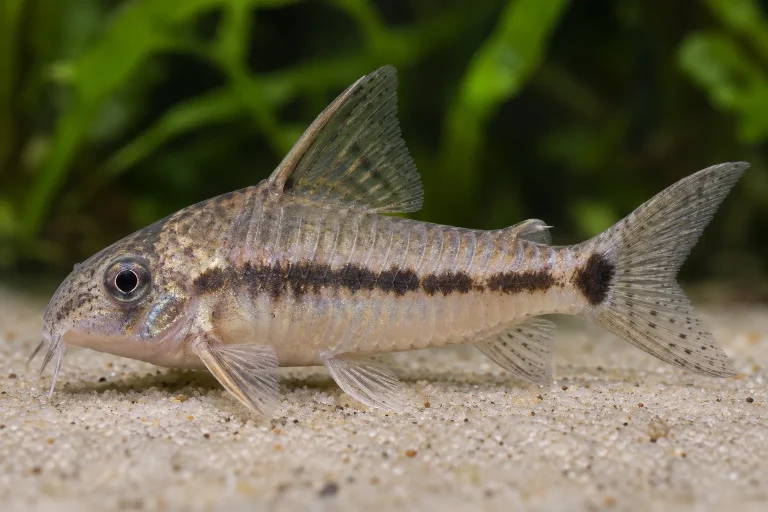
Napo Corydoras
Gastrodermus napoensis
- Care level
- Advanced
- Adult size
- 3–4.5 cm
- Minimum tank
- 60 litres
- Temperature
- 22–27 °C
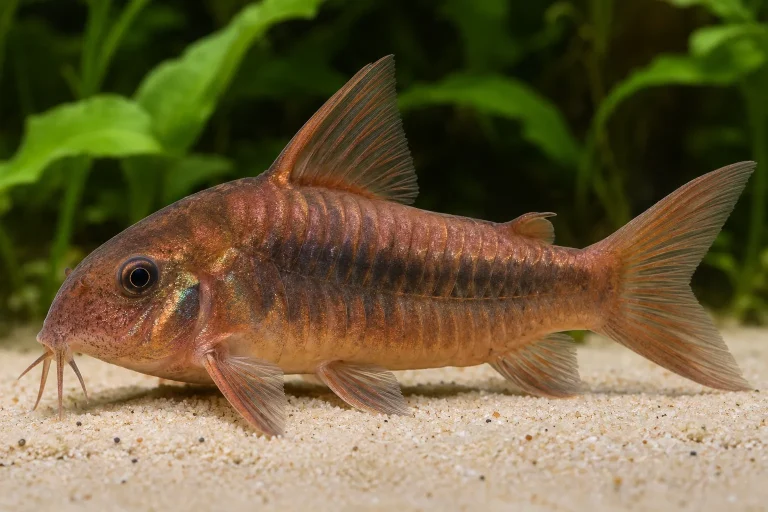
Rusty Corydoras
Osteogaster rabauti
- Care level
- Intermediate
- Adult size
- 4–5.5 cm
- Minimum tank
- 75 litres
- Temperature
- 22–27 °C
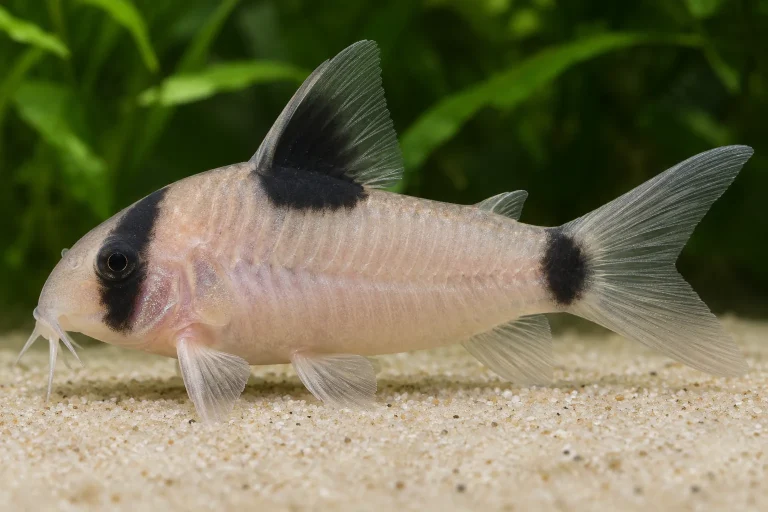
Panda Corydoras
Hoplisoma panda
- Care level
- Intermediate
- Adult size
- 3.5–5 cm
- Minimum tank
- 60 litres
- Temperature
- 20–25 °C
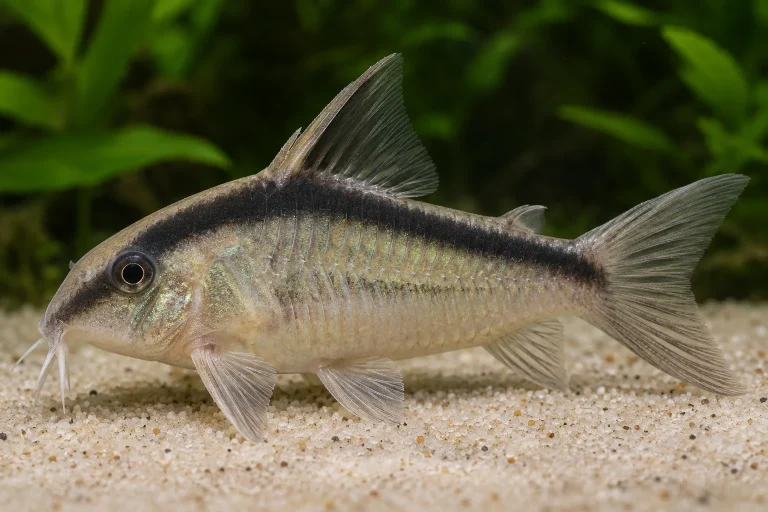
Skunk Corydoras
Hoplisoma granti
- Care level
- Advanced
- Adult size
- 4–5.5 cm
- Minimum tank
- 75 litres
- Temperature
- 22–27 °C