
Care Guide
Guppy Care Guide
Guppies are active, hardy livebearers that do best in a planted, cycled tank of 40 litres or more, with moderately hard water at about 22 to 28 °C. Feed small amounts of varied food, keep more females than males or an all-male group, and plan for fry, because guppies breed quickly.

Guppy Basics and Natural Behavior
Guppies, Poecilia reticulata, are active livebearing fish available in many colors and fin shapes. They are often sold as easy beginner fish, but good care still requires stable water, suitable minerals, social planning, and control of rapid reproduction.
Tank Size and Setup
Use a cycled aquarium with swimming space, gentle-to-moderate circulation, a secure lid, and plants or cover. Tank size should account for the number of adults and the likelihood of fry. A larger stable volume is easier to manage than a tiny container crowded with livebearers.
Water Parameters and Mineral Needs
Guppies generally do well in moderately hard to hard, mineral-rich water and can struggle in extremely soft water without appropriate remineralization. Keep ammonia and nitrite at zero, manage nitrate, and avoid abrupt pH, GH, KH, or temperature changes.
What to Feed Guppies
Feed a quality small tropical or livebearer food as the staple, with appropriate frozen, live, or plant-based foods for variety. Their small stomachs suit controlled portions. Overfeeding quickly degrades water quality and can contribute to poor body condition despite abundant food.
Male and Female Guppies
Males constantly court females, so mixed-sex groups need enough space and female numbers to reduce relentless attention. Keeping only males avoids fry but can still involve display and chasing. Female-only groups may already contain sperm from previous mating and can produce multiple broods.
Guppy Breeding and Fry
Guppies give birth to live young and can reproduce rapidly. Dense plants provide fry cover, while a separate nursery allows closer feeding control. Plan where offspring will go before keeping mixed sexes; uncontrolled breeding can turn a well-sized aquarium into an overcrowded one.
Health and Long-Term Care
Quarantine new fish when possible, observe fins, breathing, appetite, and body shape, and avoid unnecessary medication. Many guppy problems attributed to weak genetics are worsened by poor water, chronic crowding, abrupt mineral changes, or mixing fish from very different source conditions.
Frequently Asked Questions
How Many Guppies Should I Keep Together?
A small group of at least five or six. In mixed groups, keep two or three females for every male.
Do Guppies Need Hard Water?
They do best in moderately hard to hard water and can struggle in very soft, acidic water.
How Often Do Guppies Have Babies?
A healthy female can give birth every four to six weeks, and she can store sperm for several broods.
Can I Keep Only Male Guppies?
Yes. An all-male group avoids fry altogether, and males tend to show their best colours in a group.
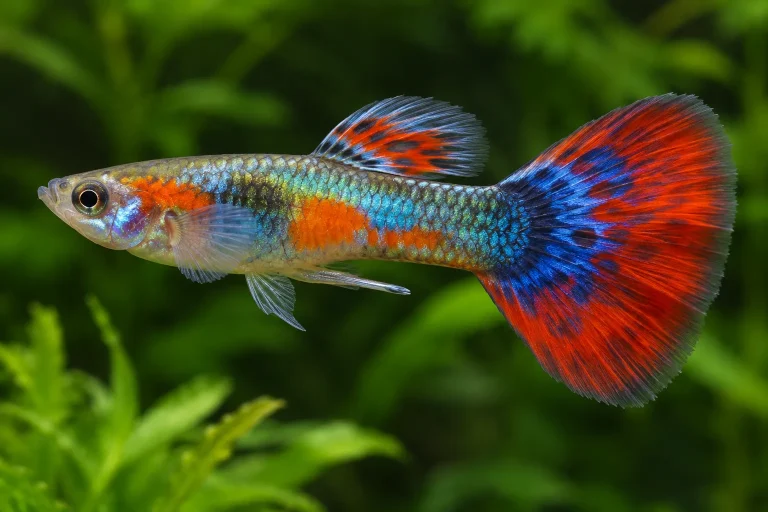
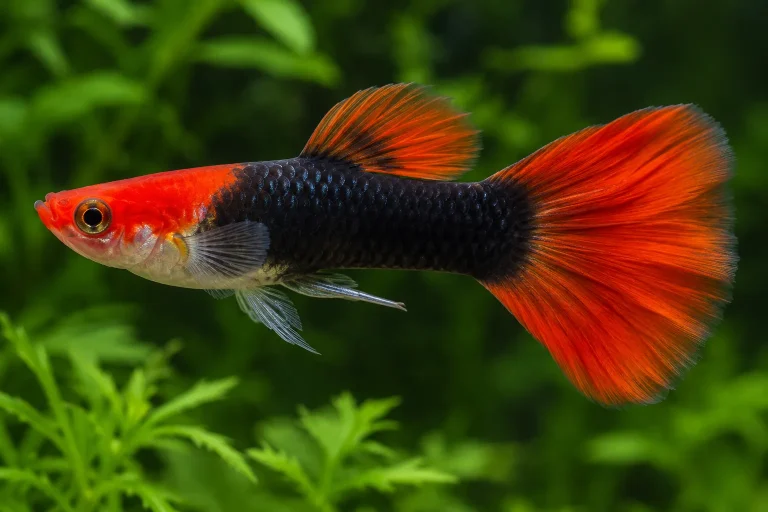
Koi Guppy
Poecilia reticulata var. "Koi"
- Care level
- Beginner
- Adult size
- 3–6 cm
- Minimum tank
- 40 litres
- Temperature
- 17–28 °C
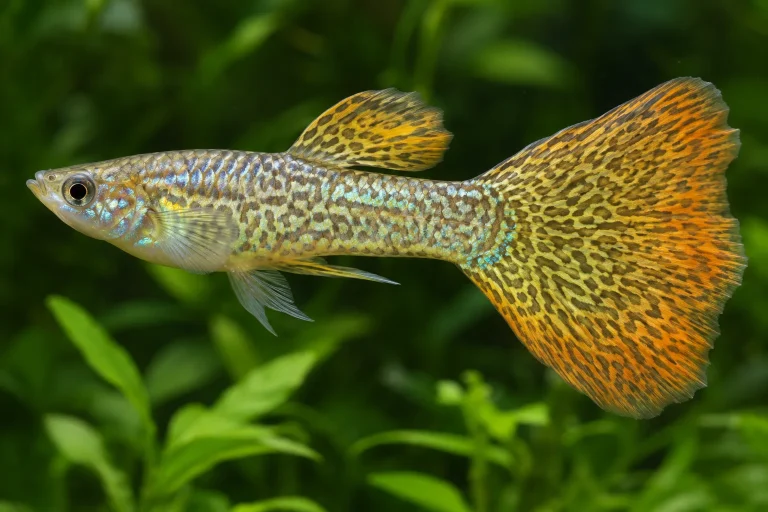
Lace Guppy
Poecilia reticulata var. "Lace"
- Care level
- Beginner
- Adult size
- 3–6 cm
- Minimum tank
- 40 litres
- Temperature
- 17–28 °C
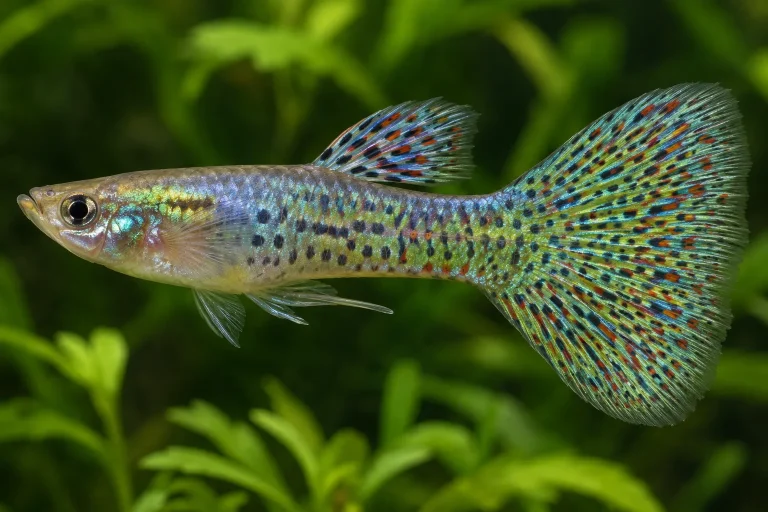
Grass Guppy
Poecilia reticulata var. "Grass"
- Care level
- Beginner
- Adult size
- 3–6 cm
- Minimum tank
- 40 litres
- Temperature
- 17–28 °C