
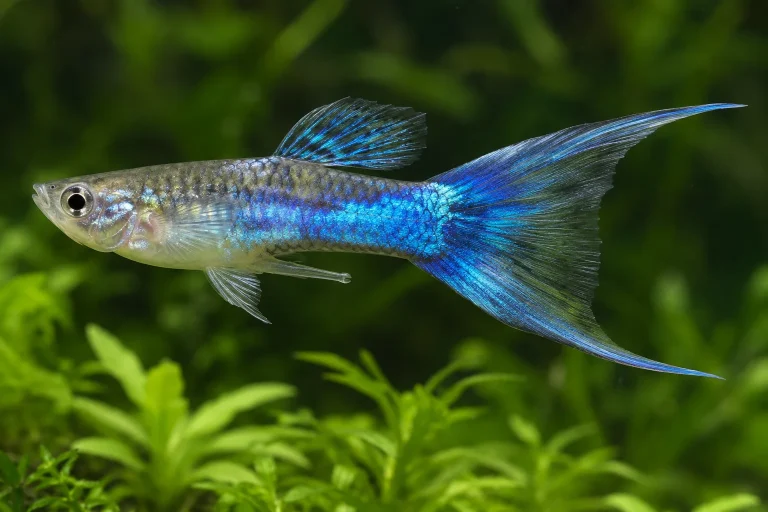
Japan Blue Guppy
Poecilia reticulata var. "Japan Blue"
- Care level
- Beginner
- Adult size
- 3–6 cm
- Minimum tank
- 40 litres
- Temperature
- 17–28 °C
Species profile
Poecilia reticulata
Common names: Guppy, Fancy Guppy, Millionfish
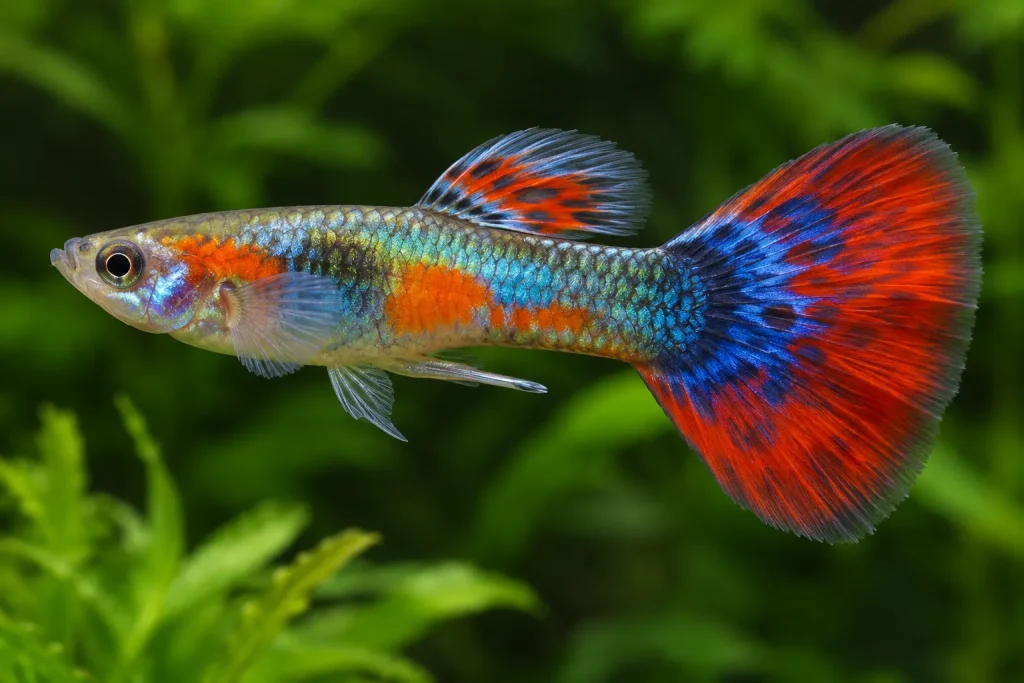
Up to 6 cm
Typical adult length 3–6 cm.







A small, peaceful livebearer known for colourful males and frequent broods. It is easy to feed and breed, but needs hard, alkaline water and a good ratio of females to males.
Males are slender with large tails and bright colour patterns. Females are larger, plumper, and mostly silver-grey with some tail colour in fancy lines.
Fancy guppies are sold in many strains with different tail shapes and colours. Endler's Livebearer is smaller and shorter-tailed, and the two species readily interbreed.
Males are more colourful and have elongated fins and a gonopodium, which is a modified anal fin used for mating. Females are larger, plumper, and duller.
Provide dense plants or floating cover to give females a break from males and to protect fry. Keep the flow gentle, because long tails make swimming harder. Filter intakes should be guarded so fry are not pulled in.
Very peaceful and active. Males display to females constantly and can pester them if there are too few females.
Keep in a group, with at least two or three females for every male. A single sex group of males also works if you want to avoid fry.
Not territorial. Males compete for females, but this rarely causes injury.
Suits quiet tanks with platies, corydoras, and small peaceful fish that like similar water. Avoid fin nippers, and avoid bettas, which may attack long-tailed males. Adults may eat shrimplets.
Hard, alkaline water suits guppies best. Fancy strains are usually happiest at about 22 to 26 °C.
An omnivore that eats small invertebrates, algae, and plant matter, and readily takes prepared foods.
Feed small amounts because guppies overeat readily. Crush the food for mixed groups with fry.
A livebearer that breeds readily with no special setup. Gestation takes 4 to 6 weeks, and females store sperm, so a female can have several broods from one mating. Provide dense plants or a separate tank, because adults eat their young. Avoid inbreeding fancy lines heavily, which can weaken the fish.
You can write a note about what worked for you, or send a photograph. We check everything before it appears here.
Poecilia reticulata var. "Japan Blue"
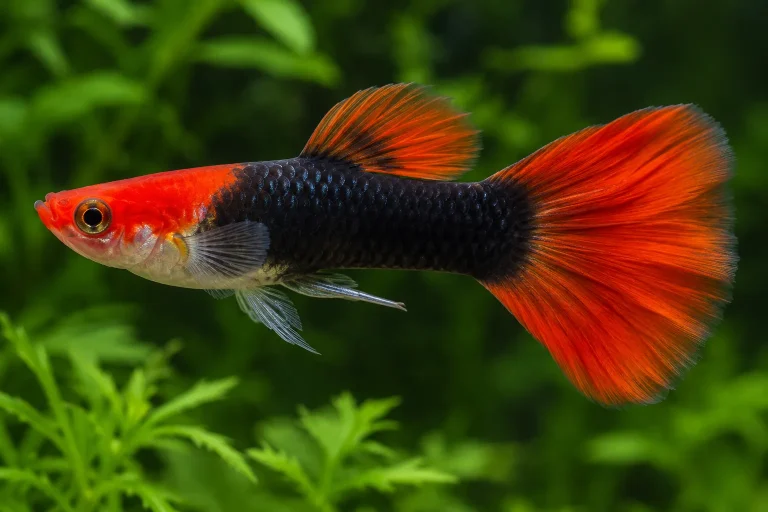
Poecilia reticulata var. "Koi"
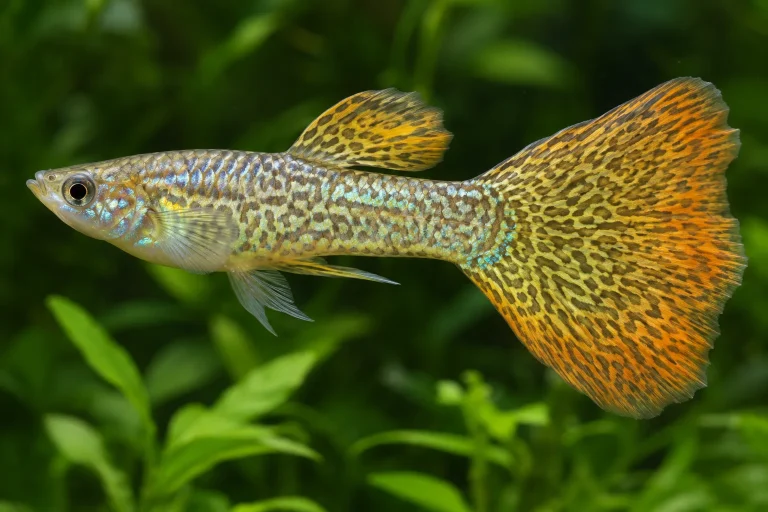
Poecilia reticulata var. "Lace"
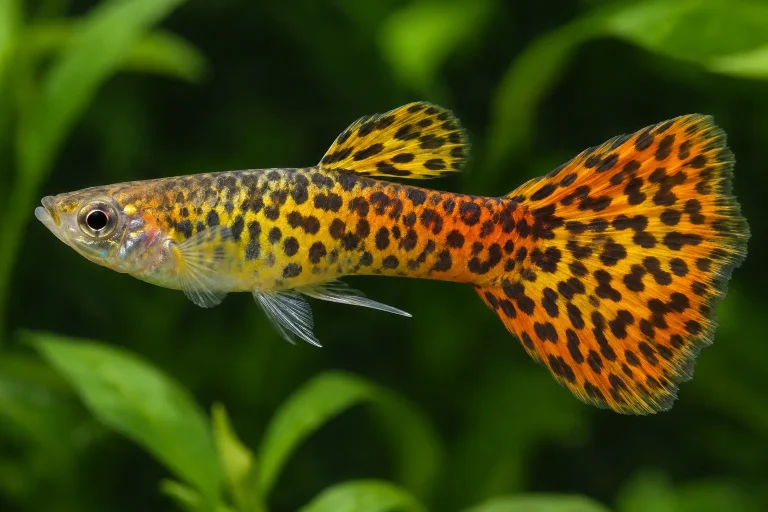
Poecilia reticulata var. "Leopard"