






Species profile
Grass Guppy
Poecilia reticulata var. "Grass"
Common names: Grass Guppy, Grass Tail Guppy
Pattern varietyGuppies
Adult size
Up to 6 cm
Typical adult length 3–6 cm.
Up to 6 cm
Countries of origin
Good fit for your tank?
Good fit for
- A quiet community tank with hard, alkaline water
- A first breeding project
- A keeper who enjoys colourful males and frequent fry
Think carefully if
- Your water is soft and acidic, which often causes poor health in livebearers
- You keep fin nippers, or a betta, which may attack long-tailed males
- You want a guaranteed look from every fry, because fancy lines need careful selection
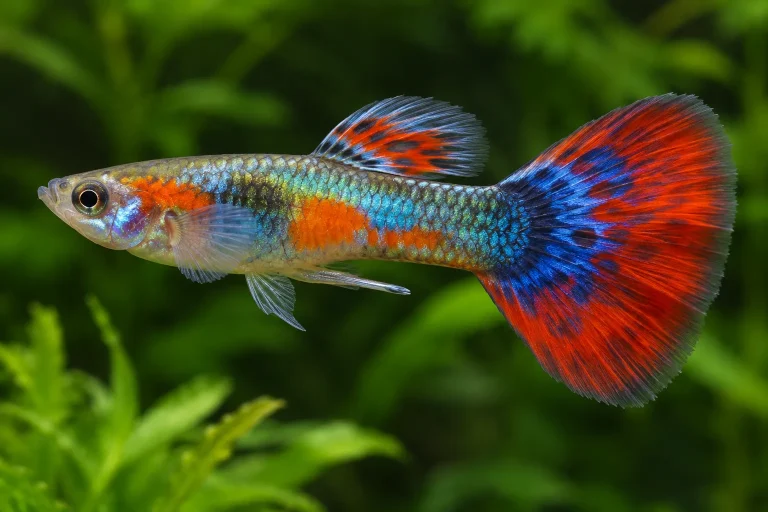
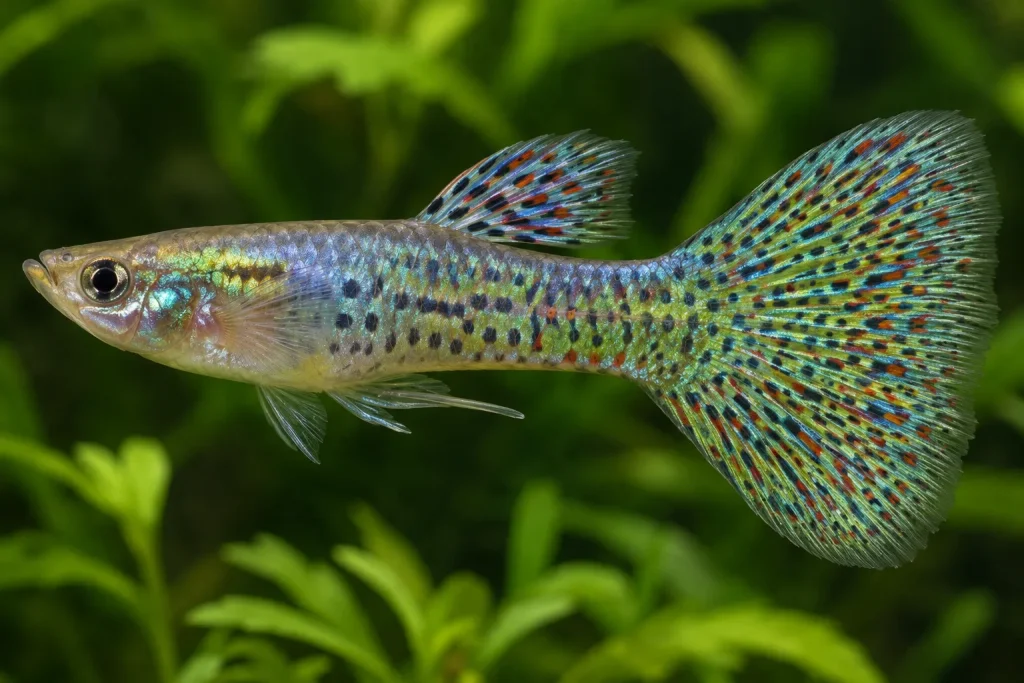
A tail covered in fine, multicoloured vertical lines and dots, like blades of grass. It is a form of the common Guppy, with the same care: hard, alkaline water and more females than males.
Appearance and Identification
A tail covered in fine, multicoloured vertical lines and dots, like blades of grass. Males show this best. Females are larger, plumper and mostly silver-grey, with some tail colour in fancy lines.
Finer and more even than the Mosaic pattern. Breeders use strain names loosely, so photos and breeder descriptions are the best guide.
Males are more colourful, with elongated fins and a gonopodium, which is a modified anal fin used for mating. Females are larger, plumper and duller.
Tank Requirements
- Suggested filter
- About 160–200 litres an hour
- Minimum tank volume
- 40 litres
- Minimum tank length
- 45 cm
- Minimum group size
- 3
- Recommended group size
- 6
- Activity level
- Active
- Flow preference
- Low to moderate
- Planting preference
- Heavily planted
- Hiding places
- Yes
- Lid recommended
- Yes
- Jumping risk
- Moderate
Provide dense plants or floating cover, to give females a break from males and to protect fry. Keep the flow gentle, because long tails make swimming harder. Guard filter intakes, so that fry are not pulled in.
Behaviour and Tankmates
Very peaceful and active. Males display to females constantly and can pester them if there are too few females.
Keep in a group, with at least two or three females for every male. A single-sex group of males also works if you want to avoid fry.
Not territorial. Males compete for females, but this rarely causes injury.
Suits quiet tanks with platies, corydoras and small peaceful fish that like similar water. Long fins attract nippers, so avoid fin nippers, and avoid bettas, which may attack long-tailed males. Adults may eat shrimplets. Guppies from different lines will interbreed, which matters if you want to keep a strain true.
Water Parameters
Hard, alkaline water suits guppies best. Fancy strains are usually happiest at about 22 to 26 °C.
Parameter caveat
Heavily line-bred strains can be less hardy than wild guppies, so buy from a healthy, well-kept stock where you can.
Feeding
- Diet types
- Algae Grazer, Insectivore, Omnivore
- Feeding frequency
- Once or twice daily
- Preferred foods
- Quality flake or micro pelletsA good staple. Feed small amounts, because guppies overeat readily.
- Frozen or live daphnia and brine shrimpOffer a few times a week for colour and condition.
- Algae or vegetable flakeInclude some plant matter, as guppies graze naturally.
An omnivore that eats small invertebrates, algae and plant matter, and readily takes prepared foods.
Feed small amounts, because guppies overeat readily. Crush the food for mixed groups with fry.
Breeding
- Breeding type
- Livebearer
- Breeding difficulty
- Very easy
- Brood or egg count
- 5 to 100 live young per brood
- Parental care
- None
- Baby foods
- Crushed flake or powdered fry foodFry can eat this from birth.
- Newly hatched brine shrimpSpeeds up growth in the first weeks.
A livebearer that breeds readily with no special setup. Gestation takes 4 to 6 weeks, and females store sperm, so a female can have several broods from one mating. Provide dense plants or a separate tank, because adults eat their young. To keep a strain true, keep it apart from other guppies, and avoid heavy inbreeding, which can weaken the fish.
Habitat and Origin
- Geographic origin
- Antigua and Barbuda, Barbados, Brazil, Captive Bred, Caribbean, Guyana, South America, Trinidad and Tobago, Venezuela
- Natural habitat
- Ditch, Freshwater Stream, Pond, Vegetated Shoreline
- Aquarium contexts
- Breeding Aquarium, Planted Aquarium
- Audience level
- Beginner
Classification
- Profile type
- Pattern variety
- Genus
- Poecilia
- Family
- Poeciliidae
- Species group
- Fish, Guppies, Livebearers
Have you kept this species?
You can write a note about what worked for you, or send a photograph. We check everything before it appears here.
Share a note or photo
Japan Blue Guppy
Poecilia reticulata var. "Japan Blue"
- Care level
- Beginner
- Adult size
- 3–6 cm
- Minimum tank
- 40 litres
- Temperature
- 17–28 °C
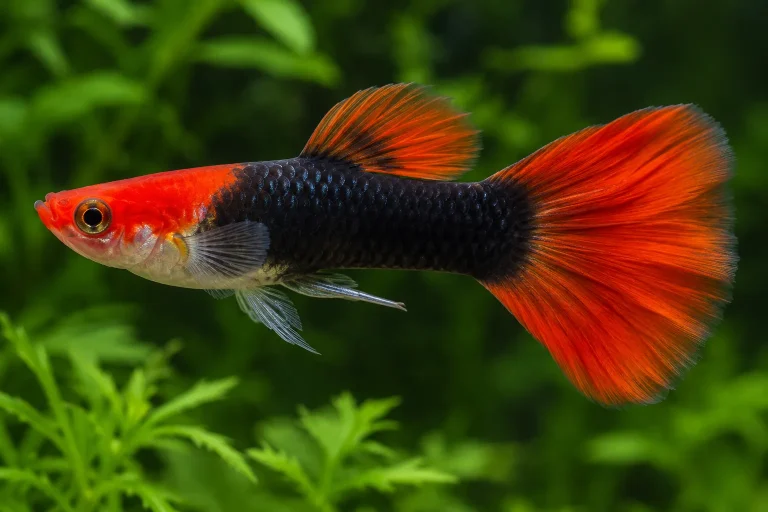
Koi Guppy
Poecilia reticulata var. "Koi"
- Care level
- Beginner
- Adult size
- 3–6 cm
- Minimum tank
- 40 litres
- Temperature
- 17–28 °C
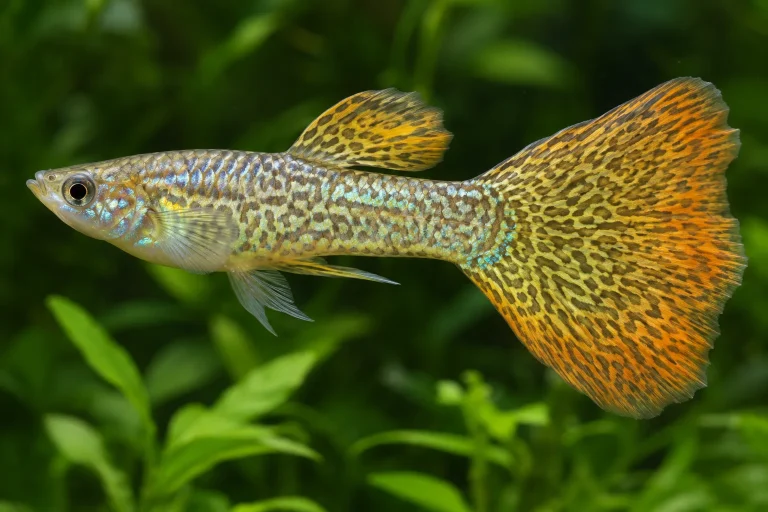
Lace Guppy
Poecilia reticulata var. "Lace"
- Care level
- Beginner
- Adult size
- 3–6 cm
- Minimum tank
- 40 litres
- Temperature
- 17–28 °C