
Care Guide
Neon Tetra Care Guide
Neon tetras are small, peaceful schooling fish that need a group of at least eight to ten in a planted tank of 60 litres or more. Keep the water soft to moderately hard, about 22 to 26 °C and stable, feed small foods, and choose calm tank mates too small to eat them.
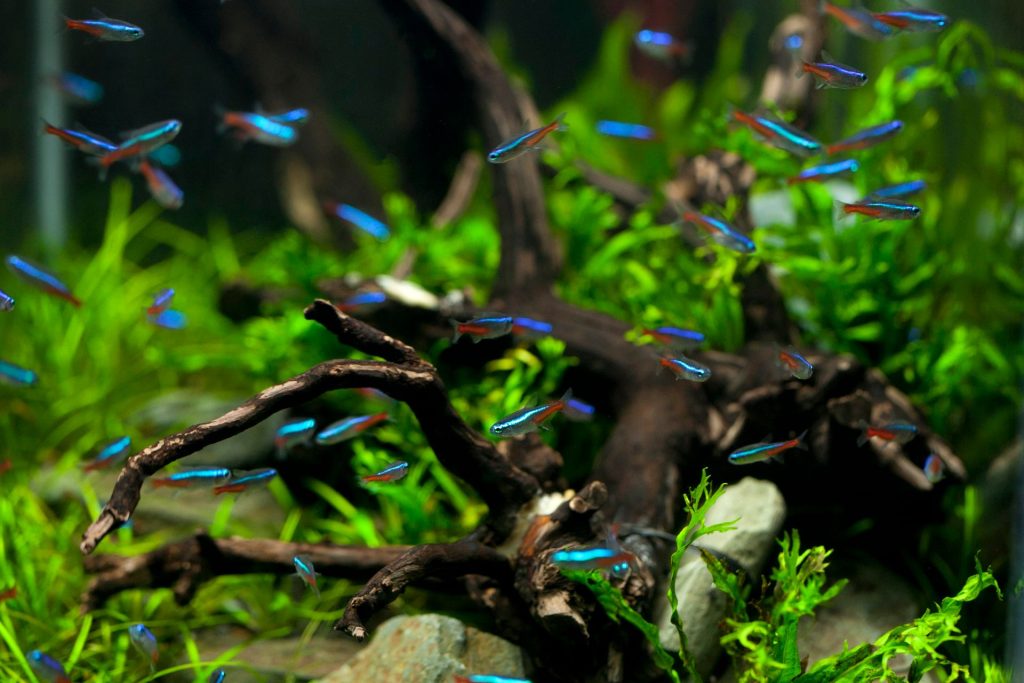
Neon Tetra Basics and Natural Behavior
Neon tetras are small South American characins recognized by their bright blue lateral stripe and red coloration. Their size makes them suitable for modest community aquariums, but they are schooling fish and should not be treated as solitary decorations for tiny bowls.
A group behaves more naturally and usually appears more confident than one or two isolated fish. Plan the aquarium around an appropriate school from the beginning so the combined swimming space and bioload are considered before purchase.
Tank Size and Aquarium Setup
Horizontal swimming length matters. A rectangular aquarium with open midwater and planted cover around the edges gives the school room to move while providing refuge. Dense planting everywhere can reduce usable swimming space despite making the tank look natural.
Neons appreciate subdued areas created by plants, wood, or floating cover. Dark substrate and background can make their colors visually striking, but aesthetics should not reduce maintenance access or water circulation.
Water Conditions and Temperature
Wild neon tetra habitats are generally soft and acidic, although commercially raised fish can adapt to a broader range when conditions are stable. Avoid sudden shifts in pH, hardness, or temperature. Matching the seller’s water during transition can reduce acclimation stress.
Temperature should remain in a suitable tropical range without unnecessary heat. Warmer water increases metabolism and reduces oxygen solubility, so do not raise temperature merely to make fish more active.
Schooling Behavior and Tank Mates
Peaceful small rasboras, Corydoras, gentle dwarf fish, and other compatible community species can work with neons when water and tank size overlap. Avoid large predatory fish and persistent fin nippers.
Schooling does not eliminate the need for hiding places. A stressed group may cluster tightly or remain pale when lighting is harsh, tank mates are intimidating, or the aquarium lacks cover.
What to Feed Neon Tetras
Neon tetras have small mouths and do best with appropriately sized flakes, micro pellets, and small frozen or live foods. Food should reach midwater rather than remaining entirely at the surface or sinking untouched to the bottom.
Feed controlled portions and watch whether shy individuals get access. A varied, nutritionally complete diet supports body condition and coloration better than relying on one treat food.
Acclimation, Stress, and Health
Acclimate new fish to temperature and water differences without extending the process unnecessarily. Quarantine is valuable because schooling fish are often purchased in groups and one introduction can expose an established community to pathogens.
Neon tetra disease is a recognized condition associated with the microsporidian Pleistophora hyphessobryconis. Similar signs can have other causes, so avoid diagnosing by appearance alone. Isolate obviously sick fish when practical and seek qualified aquatic veterinary guidance for persistent disease.
Poor water quality, ammonia or nitrite exposure, aggressive tank mates, and abrupt temperature changes can all produce stress signs that resemble disease. Test environmental conditions before reaching for medication.
Long-Term Neon Tetra Care
Long-term success comes from a cycled aquarium, a proper school, consistent feeding, stable water, and restrained stocking. Neons are small, but a group still adds meaningful bioload and deserves the same planning as larger community fish.
Frequently Asked Questions
How Many Neon Tetras Should Be Kept Together?
Neon tetras are schooling fish and should be kept as a proper group rather than singly or in pairs. The exact group size must fit the aquarium’s swimming space and bioload.
What Tank Size Do Neon Tetras Need?
Choose a rectangular aquarium with enough horizontal swimming length for a school. Tank dimensions, group size, and other livestock matter more than a single minimum-volume number.
What Do Neon Tetras Eat?
Offer appropriately sized complete flakes or micro pellets, supplemented with small frozen or live foods for variety. Make sure shy fish receive food in midwater.
Can Neon Tetras Live With Bettas?
Sometimes, but compatibility is not guaranteed. Tank size, betta temperament, flow, cover, feeding competition, and fin-nipping risk all need consideration.
Do Neon Tetras Need Soft Water?
They originate from soft-water environments, but commercially raised fish can tolerate a broader range. Stable conditions and careful acclimation are more useful than sudden attempts to force pH downward.
Why Are My Neon Tetras Hiding?
New surroundings, harsh light, too small a group, intimidating tank mates, poor water quality, or lack of cover can all cause hiding. Review the environment before assuming disease.
What Is Neon Tetra Disease?
It is a disease associated with the microsporidian Pleistophora hyphessobryconis. Similar signs can have other causes, so suspected cases should not be diagnosed from appearance alone.
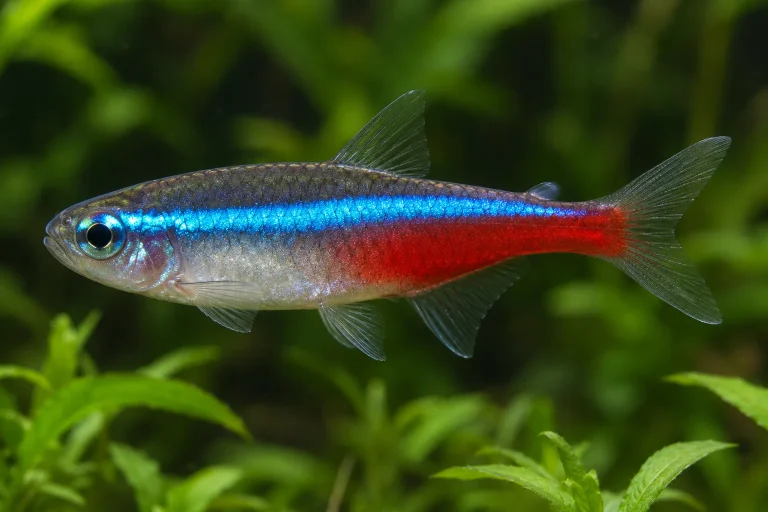
Neon Tetra
Paracheirodon innesi
- Care level
- Beginner
- Adult size
- 2.5–3 cm
- Minimum tank
- 55 litres
- Temperature
- 21–25 °C
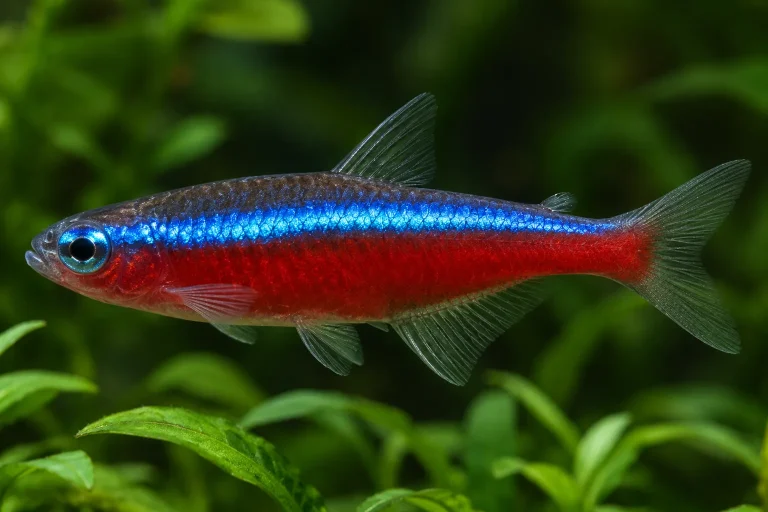
Cardinal Tetra
Paracheirodon axelrodi
- Care level
- Beginner
- Adult size
- 3–3.5 cm
- Minimum tank
- 55 litres
- Temperature
- 23–29 °C
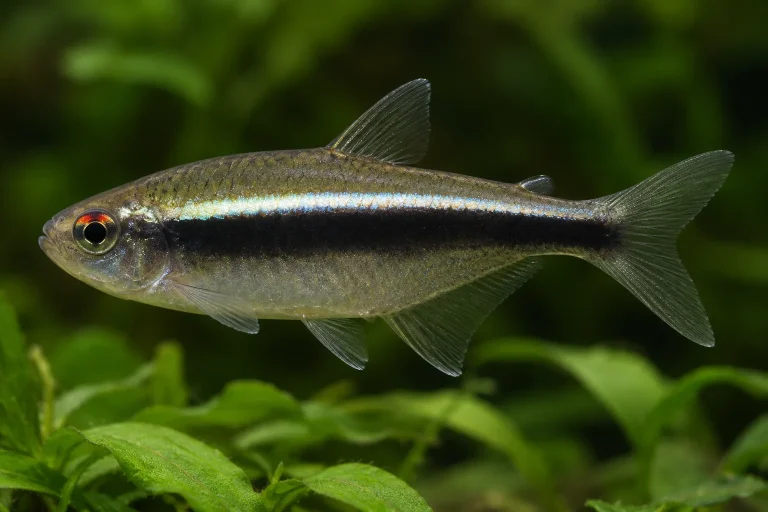
Black Neon Tetra
Hyphessobrycon herbertaxelrodi
- Care level
- Beginner
- Adult size
- 3–3.5 cm
- Minimum tank
- 70 litres
- Temperature
- 20–28 °C
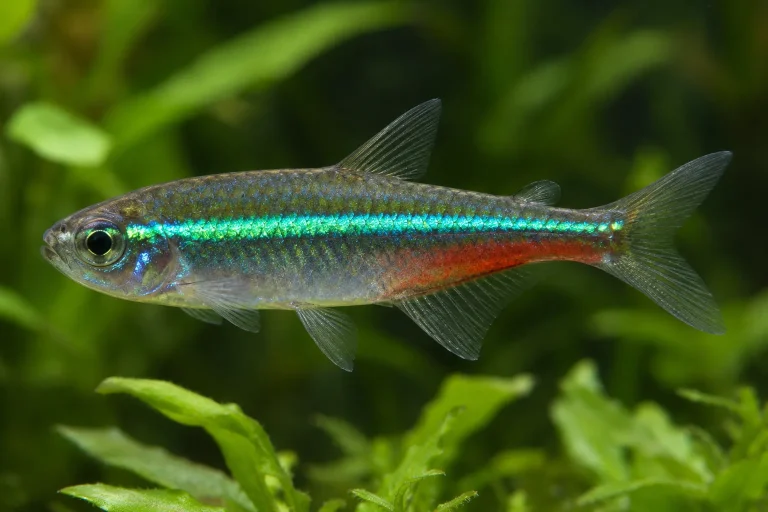
Green Neon Tetra
Paracheirodon simulans
- Care level
- Intermediate
- Adult size
- 2.5 cm
- Minimum tank
- 40 litres
- Temperature
- 24–27 °C