
Care Guide
Mystery Snail Care Guide
Mystery snails are large, peaceful apple snails that need a lidded tank with hard or moderately hard water, a gap above the water line, and deliberate feeding with sinking foods and vegetables. Calcium-rich water keeps the shell strong. Females lay egg clutches above the water, so remove them unless you want babies.

Mystery Snail Basics and Adult Needs
Mystery snails are large freshwater apple snails commonly kept for their visible behavior and colorful shells. They are not maintenance tools that can live on algae alone. Their adult size, appetite, waste production, mineral needs, and ability to leave the water all need to be considered when planning a tank.
Tank Setup and Water Conditions
Temperature affects activity and metabolism. Keep the snail within a suitable tropical freshwater range rather than using heat to make it more active. Rapid temperature or chemistry changes are more stressful than a stable value within an appropriate range.
A secure lid is important because mystery snails regularly travel above the waterline and females lay egg clutches in humid air above the surface. Cover filter openings and cable gaps that could allow a snail to leave the aquarium while maintaining safe gas exchange.
What Mystery Snails Eat
Mystery snails graze biofilm and some soft algae but need deliberate feeding. Suitable foods can include quality snail or invertebrate foods, algae-based wafers, and prepared vegetables offered in controlled portions. Remove food that remains long enough to foul the water.
A varied diet should provide protein and plant material as appropriate rather than relying exclusively on calcium-rich vegetables. Calcium availability matters, but shell formation also depends on overall nutrition and water chemistry.
Shell Growth, Calcium, and Water Chemistry
Stable, appropriately mineralized water supports shell growth. Very soft, acidic water can contribute to shell erosion because calcium carbonate dissolves more readily under acidic conditions. Test GH, KH, and pH when shell condition or source water raises concern.
Shell damage that has already formed does not regenerate like skin. New shell growth appears at the opening as the snail grows, so improvements in husbandry are judged by the quality of new growth rather than expecting old pits or scars to disappear.
Do not add uncontrolled calcium products simply because a shell looks imperfect. Measure water hardness and understand what an additive changes. In a community tank, chemistry adjustments must remain suitable for fish, shrimp, and plants as well as the snail.
Safe Tank Mates and Behavior
Peaceful community fish that do not nip antennae can coexist with mystery snails. Avoid dedicated snail predators and fish known to harass slow invertebrates. A snail that stays tightly closed whenever fish approach may be experiencing repeated disturbance.
Mystery snails use a breathing siphon to take atmospheric air and may climb near the surface regularly. This behavior alone is not proof of poor water quality, although unusual group behavior should still prompt a check of temperature, ammonia, nitrite, and oxygen conditions.
Mystery Snail Breeding and Egg Clutches
Males and females are separate, but females can store sperm and may lay fertile clutches after purchase. Egg masses are deposited above the water. If you do not want juveniles, remove unwanted clutches responsibly before development progresses.
Breeding should be intentional because one clutch can produce many young snails requiring food, space, and homes. Do not allow repeated hatching without a realistic plan for the resulting population.
Common Problems and Long-Term Care
Common concerns include shell erosion, cracked shells, prolonged inactivity, floating, failure to eat, and escape attempts. Some resting and floating can be normal, but persistent changes should be evaluated alongside water quality, temperature, food, and visible injury.
Copper-containing medications can be dangerous to aquatic invertebrates. Read medication labels and active ingredients before treating a tank containing snails. When treatment is necessary, follow qualified veterinary or manufacturer guidance rather than guessing a reduced dose.
Frequently Asked Questions
Do Mystery Snails Eat Algae?
They graze some algae and biofilm but usually need supplemental food. They should be kept as animals with their own nutritional needs, not as maintenance equipment.
Why Does My Mystery Snail Climb Above the Water?
Mystery snails naturally explore above the water and females lay eggs there. Use a secure lid and also verify water quality if escape behavior becomes unusually persistent.
Do Mystery Snails Need Calcium?
They need appropriately mineralized water and a balanced diet for shell growth. Test hardness before adding supplements so chemistry remains suitable for the whole aquarium.
Can Mystery Snails Live With Shrimp?
They often can when water requirements overlap and food is adequate. Account for the snail’s larger waste output and make sure neither animal is exposed to incompatible medication.
Why Is My Mystery Snail Floating?
Mystery snails can occasionally trap air or float while moving or resting. Persistent abnormal behavior should prompt checks of water quality, temperature, food, injury, and overall responsiveness.
Will Mystery Snail Eggs Hatch Underwater?
Mystery snails normally lay their clutches above the waterline. Submerging a clutch is not the normal incubation condition and can prevent successful development.
Can Fish Medication Hurt Mystery Snails?
Yes. Copper-containing and some other medications can be dangerous to aquatic invertebrates. Check active ingredients and follow qualified treatment guidance.
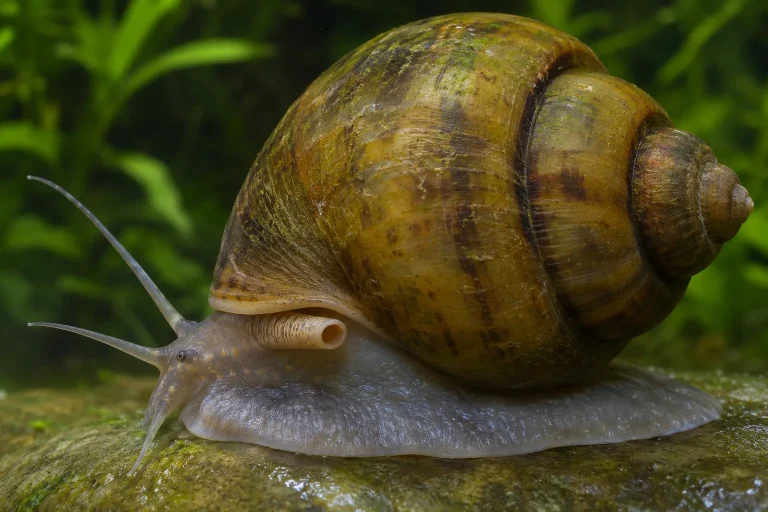
Apple Snail
Pomacea canaliculata
- Care level
- Intermediate
- Adult size
- 4–6 cm
- Minimum tank
- 75 litres
- Temperature
- 20–28 °C
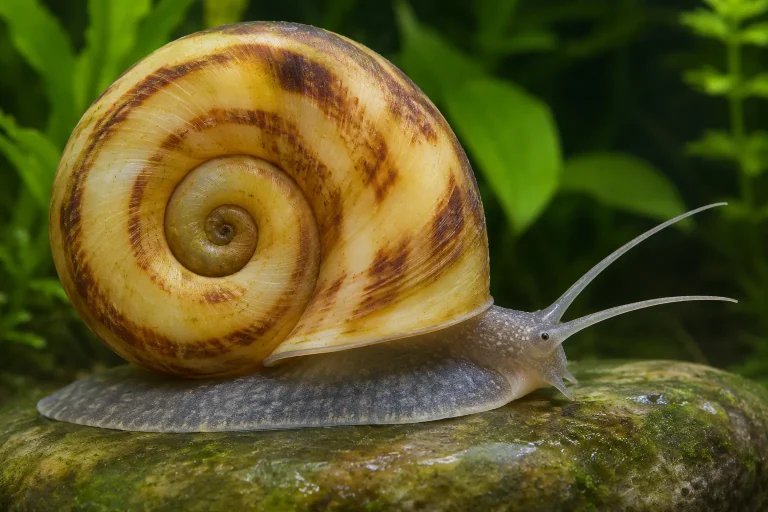
Giant Colombian Ramshorn Snail
Marisa cornuarietis
- Care level
- Advanced
- Adult size
- 4–6 cm
- Minimum tank
- 80 litres
- Temperature
- 22–28 °C