
Care Guide
Keeping Snails with Shrimp
Keeping snails with shrimp can make a freshwater aquarium surprisingly interesting. Both animals spend much of their time exploring surfaces, grazing on biofilm, investigating plants, and picking through places that fish often ignore.
For beginners, shrimp and snails can also be a good combination because many commonly kept species are peaceful and can share similar freshwater conditions. That does not mean every shrimp can live with every snail, though. You still need to consider water requirements, adult size, feeding, reproduction, and the amount of food available in the aquarium.
The key is to treat both animals as residents that need proper care—not simply as a “clean-up crew.” Snails and shrimp may eat algae, biofilm, leftover food, and decaying organic material, but they still create waste and need a stable, cycled aquarium.
If you plan the tank around the needs of both, a snail and shrimp aquarium can be peaceful, active, and very enjoyable to watch.
Can Snails and Shrimp Live Together?
Yes, many freshwater snails and freshwater shrimp can live together successfully when their environmental requirements are compatible.
Common aquarium shrimp are generally not interested in attacking healthy snails, and most peaceful aquarium snails do not hunt shrimp. Instead, the two animals often spend their time feeding in different ways on the same surfaces.
You may see shrimp picking at biofilm on a piece of wood while a snail slowly moves across the same area grazing. They might also meet around sinking food without causing any real conflict.
Compatibility is about more than peaceful behavior, however. Both animals still need suitable:
- Water temperature
- pH and hardness
- Water quality
- Food
- Space
- Oxygenation
- Hiding and grazing areas
Before combining species, compare their care requirements rather than assuming that all freshwater invertebrates need the same conditions.
Why Snails and Shrimp Can Work Well Together
One reason this combination works well is that shrimp and snails tend to use the aquarium differently.
Shrimp are constantly moving their small feeding appendages over plants, wood, rocks, substrate, and filter surfaces. They often graze on biofilm, microorganisms, soft algae, and tiny pieces of organic matter.
Snails move more slowly but may spend long periods grazing on glass, hardscape, leaves, and other surfaces.
This can make the aquarium feel active without the territorial behavior that sometimes comes with fish.
There is another advantage for people who enjoy planted aquariums: both shrimp and many popular snail species make excellent viewing animals around mosses, wood, rocks, and dense plant growth.
Still, neither animal should be added purely because you want something to clean the tank. An aquarium containing snails and shrimp still needs water changes, filtration, water testing, and routine maintenance.
Which Snails Can You Keep with Shrimp?
Several commonly kept freshwater snails can share an aquarium with shrimp. The best choice depends on your tank size, water conditions, feeding routine, and whether you want the snails to reproduce.
Nerite Snails
Nerite snails are popular in planted and shrimp aquariums because they spend a lot of time grazing on hard surfaces.
One feature that appeals to many aquarium keepers is that nerite larvae require conditions different from a normal freshwater aquarium to complete their development. As a result, you generally do not end up with a growing population of young nerites in an ordinary freshwater shrimp tank.
Adult females may still leave small eggs on hard surfaces, so that is worth knowing before choosing them.
Mystery Snails
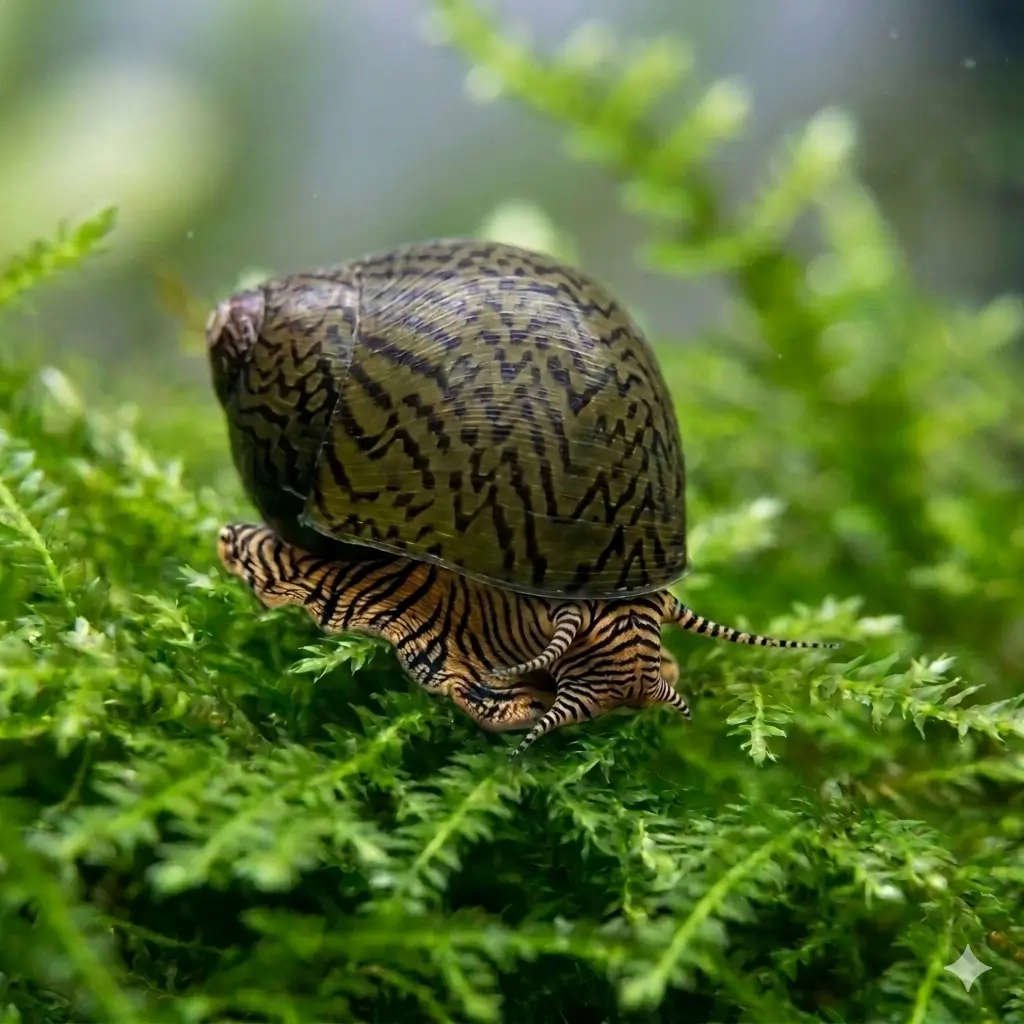
Mystery snails are considerably larger and more noticeable than many small aquarium snails. Their size and behavior make them interesting animals in their own right rather than something that disappears into the background.
They can live with peaceful shrimp when both species’ water requirements are compatible.
Because mystery snails are larger, they also eat and produce more waste than tiny snails. Make sure your aquarium and filtration can comfortably support them rather than assuming every snail has a negligible effect on stocking.
Ramshorn Snails
Ramshorn-type snails are common in freshwater aquariums and often arrive on plants.
They can coexist peacefully with shrimp and spend much of their time grazing on surfaces and organic material.
Unlike nerite snails, however, ramshorn snails can reproduce readily in freshwater. Their population often becomes more noticeable when plenty of food is available.
Bladder and Pond-Type Snails
Small hitchhiking snails are sometimes treated as unwanted pests, but they can also live peacefully alongside shrimp.
The main concern is usually population growth rather than aggression. If a tank provides large amounts of uneaten food, snail numbers may increase quickly.
Instead of immediately blaming the snails, look at feeding and available food within the aquarium.
Water Quality for Snails and Shrimp
Water quality is one of the most important parts of keeping freshwater invertebrates successfully.
Both snails and shrimp should be kept in an established aquarium with functioning biological filtration. Ammonia and nitrite should not be allowed to accumulate.
The exact temperature, pH, and hardness you need depends on the species you keep. Avoid choosing a single set of numbers and assuming it works for every snail and shrimp combination.
Hardness deserves particular attention because snails need minerals to maintain their shells, while shrimp also rely on appropriate mineral conditions as they grow and molt.
Very soft or unsuitable water can create challenges for some species, but that does not mean you should begin adding minerals or altering chemistry without knowing what your source water already contains.
Test your water first, then compare the results with the requirements of the specific animals you want to keep.
Why a Cycled Tank Matters
Shrimp and snails should not be treated as animals you can add to a freshly filled aquarium just because they are small.
A new tank still needs biological filtration capable of processing waste. During the aquarium nitrogen cycle, microorganisms establish themselves and help convert ammonia to nitrite and then nitrate.
Ammonia and nitrite are toxic, so adding livestock before biological filtration is ready can expose them to poor water conditions.
A mature aquarium can also offer something particularly useful to shrimp and grazing snails: established surfaces covered in biofilm and other natural food.
This is one reason a spotless-looking brand-new tank isn’t always the ideal environment for them. A visually mature aquarium often provides more grazing opportunities than a tank that has only just been assembled.
How to Feed Snails and Shrimp Together
One of the easiest mistakes is assuming that shrimp and snails can survive entirely on whatever algae happens to grow in the aquarium.
Natural grazing is valuable, but the amount of available food changes from tank to tank. A heavily established planted aquarium may offer much more biofilm than a newer or very clean setup.
Depending on the species, you may need to offer suitable prepared foods and vegetables or other foods recommended for those particular invertebrates.
When feeding a mixed snail and shrimp tank, watch who actually gets the food.
Shrimp can sometimes swarm food quickly, while larger snails may take much longer to reach it. On the other hand, a large snail sitting on a food item can make it difficult for smaller shrimp to access that exact spot.
You can spread food across more than one area when necessary so both animals have an opportunity to feed.
Remove unnecessary leftovers rather than continually adding more food. Excess feeding can contribute to declining water quality and encourage rapidly reproducing snail populations.
Do Snails Eat Shrimp Food?
Yes, snails will often investigate food intended for shrimp.
That is usually not a problem when both species are receiving an appropriate diet. In a shared aquarium, it is normal for different invertebrates to feed from the same food source.
The important question is whether each animal’s nutritional needs are being met.
Do not assume that a food sold specifically for one animal automatically provides a complete diet for every species living in the tank. Research the feeding requirements of your particular shrimp and snails.
Will Snails Eat Baby Shrimp?
Healthy aquarium snails are not active predators of baby shrimp.
Most commonly kept grazing snails move too slowly and feed in ways that make them very different from predatory aquarium animals.
Snails may investigate dead animals or organic remains, which can sometimes make it appear that the snail caused the death when it arrived afterward.
If baby shrimp are disappearing, look at the complete aquarium rather than assuming the snail is responsible. Fish and other tank mates, water quality, filtration intakes, food availability, and the overall health of the shrimp population may all deserve attention.
Protecting Baby Shrimp in a Snail Tank
Baby shrimp are tiny, so the aquarium should provide plenty of safe surfaces and fine cover.
Mosses, dense plants, wood, rocks, leaf litter appropriate for aquarium use, and other complex surfaces can provide grazing areas and places where young shrimp spend time.
Filter intake design also matters. Very small shrimp can potentially be drawn toward an unprotected intake.
A shrimp-safe filter setup or suitable intake protection can reduce that risk while still maintaining water movement and biological filtration.
Snails generally do not need to be separated from baby shrimp simply because young shrimp are present.
Why Are Snails Multiplying in My Shrimp Tank?
If you keep species that reproduce readily in freshwater, it can sometimes seem as if snails suddenly appeared everywhere.
Usually, the population is responding to available resources.
A tank receiving more food than its residents consume provides extra nutrition for reproducing snails. Algae, decaying leaves, and other organic material may also contribute.
This doesn’t mean you should starve the tank to control snail numbers. Shrimp still need appropriate nutrition.
Instead, look at your feeding habits. If food remains in the aquarium long after feeding or large amounts are being added “just in case,” reduce waste and monitor how much the animals actually consume.
Choosing a snail species that does not readily reproduce in freshwater is another option for people who do not want a growing snail population.
Do Snails and Shrimp Clean the Aquarium?
Snails and shrimp can graze on algae, biofilm, leftover food, microorganisms, and decaying organic material, depending on the species.
That can make them useful members of an aquarium community, but calling them cleaners can create the wrong expectation.
They do not remove waste from the aquarium. Food they consume is eventually processed and contributes to the biological load of the system.
You will still need to:
- Test the water
- Perform appropriate partial water changes
- Maintain the filter
- Remove excess debris when needed
- Manage feeding
- Observe the animals for problems
Think of shrimp and snails as grazing animals, not replacements for aquarium maintenance.
Plants and Hiding Places for Snails and Shrimp
A planted aquarium can work particularly well for a snail and shrimp community.
Plants add surface area for grazing and create sheltered areas, especially for shrimp. Mosses and fine-leaved plants can be particularly interesting places to watch shrimp feeding.
Wood, rocks, and other aquarium-safe hardscape provide additional surfaces for biofilm to develop.
Make sure decorations are stable and suitable for the aquarium. Snails can squeeze into surprising spaces, so avoid gaps where a larger snail could become trapped.
Also remember that some snails may climb above the waterline. A secure lid can be useful depending on the species you keep.
Be Careful with Medications and Invertebrates
One important difference between an invertebrate aquarium and a fish-only tank is that you cannot assume every aquarium treatment is safe for shrimp and snails.
Some treatments and products containing copper can be harmful to aquatic invertebrates.
Before adding medication, algae treatment, fertilizer, or another chemical product to a tank containing shrimp or snails, read the label carefully and confirm that the product is appropriate for the exact animals in your aquarium.
Do not guess based on whether the product is described as generally safe for freshwater fish.
Common Mistakes When Keeping Snails with Shrimp
Adding Them to an Uncycled Aquarium
Shrimp and snails still require stable water quality. Their small size does not make ammonia or nitrite harmless.
Buying Species Without Comparing Water Needs
“Freshwater” covers a wide range of environments. Make sure both species can live comfortably under the same conditions.
Depending on Algae as the Only Food
Some tanks simply do not grow enough natural food to support their inhabitants. Monitor body condition, behavior, and food availability and provide an appropriate diet when needed.
Overfeeding to Make Sure Everyone Eats
More food can mean more waste and, with reproducing snail species, potentially many more snails.
Treating Them Only as a Clean-Up Crew
Both animals have their own care requirements. They should be chosen because you can provide suitable conditions, not because you want to avoid cleaning the aquarium.
Using Products Without Checking Invertebrate Safety
Always check whether medications and other aquarium chemicals are suitable for shrimp and snails before they enter the tank.
Keeping Snails with Shrimp FAQ
Can Shrimp and Snails Live in the Same Tank?
Yes. Many commonly kept freshwater shrimp and snails can coexist peacefully when their temperature, water chemistry, feeding, and other care requirements overlap.
What Snails Are Good for a Shrimp Tank?
Nerite snails, mystery snails, ramshorn-type snails, and some small hitchhiking freshwater snails are commonly kept with shrimp. The right choice depends on your tank conditions, available space, and whether you want the snail population to reproduce.
Will Snails Hurt Freshwater Shrimp?
Most commonly kept grazing aquarium snails do not hunt healthy shrimp. They may feed on dead organic material, including an animal that has already died, but this should not be confused with active predation.
Will Snails Eat Baby Shrimp?
Typical peaceful grazing snails are not active predators of healthy baby shrimp. Providing dense plants, moss, and other complex surfaces gives young shrimp additional cover and grazing space.
Can Snails and Shrimp Eat the Same Food?
They may share some foods, and snails often investigate food offered to shrimp. However, you should still make sure the diet meets the needs of each species rather than assuming one food is nutritionally complete for everything in the aquarium.
Do Shrimp and Snails Need a Cycled Tank?
Yes. A properly established biological filter helps prevent toxic ammonia and nitrite from accumulating. Cycling and water testing are important before stocking a freshwater invertebrate aquarium.
Why Are There Suddenly So Many Snails in My Shrimp Tank?
Species that reproduce readily in freshwater can increase in number when plenty of food is available. Review how much food is entering the aquarium and how much remains uneaten rather than immediately treating the snails themselves as the underlying problem.
Do Snails Keep a Shrimp Tank Clean?
Snails may graze on algae, biofilm, leftover food, and organic material, but they do not replace aquarium maintenance. Water changes, filtration, testing, and sensible feeding are still necessary.
Do Shrimp Need Hiding Places From Snails?
Shrimp generally do not need hiding places specifically to escape peaceful aquarium snails. However, plants, moss, wood, and other structured surfaces are valuable because they provide cover and additional grazing areas, particularly for young shrimp.
Can I Use Aquarium Medication With Shrimp and Snails?
Not automatically. Invertebrates can react differently from fish to aquarium treatments, and some products containing copper may be harmful. Always check the product label and confirm that a treatment is safe for the particular shrimp and snails you keep.
Conclusion
Keeping snails with shrimp can work very well when you choose compatible species and build the aquarium around the needs of both.
The basic approach is simple: start with a cycled aquarium, maintain good water quality, provide plenty of grazing surfaces, feed appropriately, and avoid sudden changes to water conditions.
Remember that neither shrimp nor snails are maintenance tools. They are living aquarium residents with their own dietary and environmental needs. They may help graze algae, biofilm, and leftover organic material, but you will still need to test the water, maintain the filter, and perform regular partial water changes.
For a beginner, the easiest setup is often a simple, established planted tank with peaceful shrimp, a carefully chosen snail species, and enough natural surfaces for both to explore.
Once the tank settles in, you may find that some of the most interesting moments happen away from the fish entirely—a shrimp carefully picking through moss while a snail slowly works its way across the glass nearby.