Skip to content
Menu

Species profile

Ramshorn Snail

Planorbella duryi

Common names: Ramshorn Snail
Recognized speciesRamshorn Snails
Ramshorn Snail (Planorbella duryi)

Adult size

Up to 3 cm

Typical adult length 1.5–3 cm.

Up to 3 cm

Countries of origin

  • See all stock from United States

Good fit for your tank?

Good fit for

  • Mature planted aquarium setups
  • Beginner shrimp keepers
  • Peaceful nano aquariums
  • Breeding colonies

Think carefully if

  • The aquarium contains shrimp-eating fish
  • The tank is newly cycled
  • Water conditions change frequently

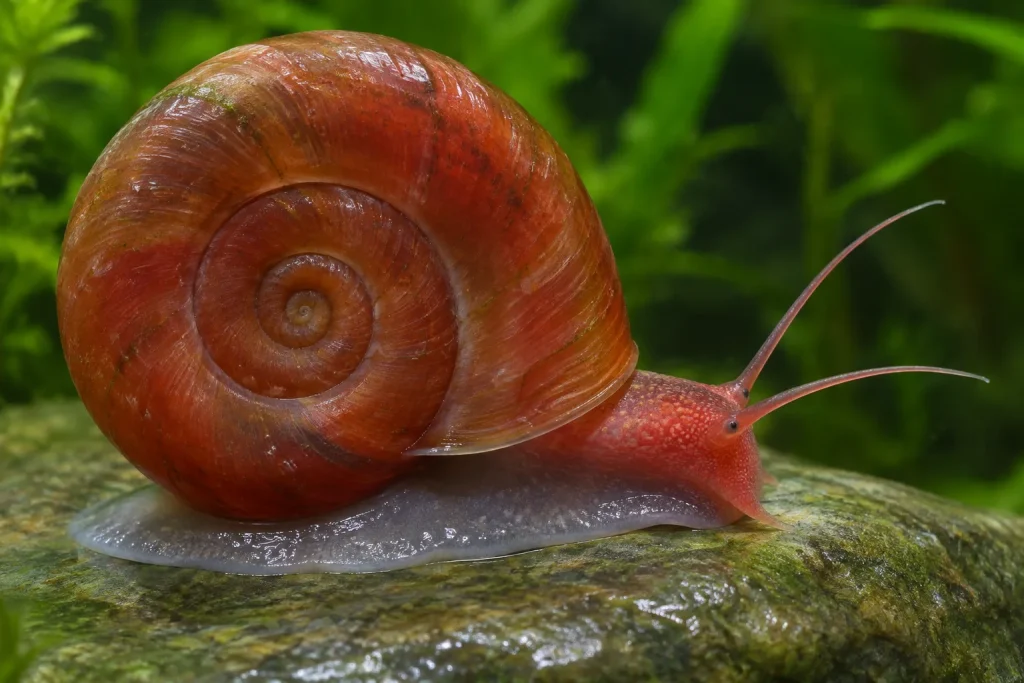
A common aquarium ramshorn available in numerous red, pink, blue, brown, and patterned colour forms.

Appearance and Identification

Flat planispiral shell with visible coiling; captive colour varieties include brown, red, pink, blue, and leopard-patterned forms.

Planorbella duryi is a common aquarium ramshorn, but other planorbid snails can look similar. Exact species identification may require shell and anatomical details.

External sex differences are subtle or unreliable without species-specific examination.

Tank Requirements

Suggested filter
About 20–30 litres an hour
Suggested heater
About 25–50 W for this tank
Minimum tank volume
10 litres
Minimum tank length
20 cm
Minimum group size
1
Recommended group size
3
Activity level
Low
Flow preference
Low
Planting preference
Heavily planted
Hiding places
Yes
Jumping risk
Low

Provide stable water, mineral availability for shell growth, secure décor, and enough natural grazing surface.

Behaviour and Tankmates

Peaceful freshwater snail that spends much of its time grazing or searching for food.

Usually non-territorial and may be kept singly or with compatible conspecifics when food and space are adequate.

Not normally territorial.

Suitable with peaceful tankmates that do not nip, crush, or prey on snails.

Check tankmates for this species

Water Parameters

Temperature
20–28 °C
pH
6.8–8.2
GH
6–18
KH
3–12
TDS
150–350
Stability importance
Important

Keep in neutral to alkaline water with adequate calcium for shell growth. Numbers can increase quickly when excess food is available.

Parameter caveat
Stable conditions are more important than chasing exact numbers.

Feeding

Diet types
Algae Grazer, Detritivore, Omnivore
Feeding frequency
Daily
Preferred foods
  • Mature biofilmPrimary natural grazing resource.
  • Algae-based sinking foodSupplement when natural growth is insufficient.
  • Softened vegetables or complete snail foodFeed in small amounts and remove leftovers.

Omnivorous grazer and detritivore. Supplement natural biofilm and algae with appropriate sinking foods.

Avoid overfeeding; excess food can cause rapid snail population growth and poor water quality.

Breeding

Breeding type
Direct Developer, Egg Layer
Breeding difficulty
Very easy
Breeding temperature
23 °C
Breeding pH
7.5
Brood or egg count
Small gelatinous egg clutch
Incubation
14 days
Parental care
None
Baby foods
  • Mature biofilm and fine natural foodsProvide stable grazing surfaces suitable for juveniles or hatchlings.

Hermaphroditic egg layer that deposits clear gelatinous egg masses on plants, glass, and décor. Reproduction accelerates when food is abundant.

Habitat and Origin

Geographic origin
North America, United States
Natural habitat
Pond, Slow River, Wetland
Aquarium contexts
Freshwater Community, Nano Aquarium, Planted Tank, Snail Tank
Audience level
Beginner

Classification

Profile type
Recognized species
Genus
Planorbella
Family
Planorbidae
Species group
Ramshorn Snails

Have you kept this species?

You can write a note about what worked for you, or send a photograph. We check everything before it appears here.

Share a note or photo

JPG, PNG, or WebP, up to 5 MB.