Skip to content
Menu

Species profile

Green Lace Shrimp

Atyoida pilipes

Common names: Green Lace Shrimp, Green Lace Filter Shrimp, Green Filter Shrimp
Recognized speciesFan Shrimp
Green Lace Shrimp (Atyoida pilipes)

Adult size

Up to 5 cm

Typical adult length 3–5 cm.
Up to 5 cm

Countries of origin

  • See all stock from Fiji
  • See all stock from French Polynesia
  • See all stock from Indonesia
  • See all stock from New Caledonia
  • See all stock from Palau
  • See all stock from Papua New Guinea
  • See all stock from Philippines
  • See all stock from Samoa
  • See all stock from Taiwan

Good fit for your tank?

Good fit for

  • Mature planted aquarium setups
  • Advanced shrimp keepers
  • Peaceful nano aquariums

Think carefully if

  • The aquarium contains shrimp-eating fish
  • The tank is newly cycled
  • Water conditions change frequently

A small peaceful fan shrimp that feeds from suspended particles in steady, oxygenated current.

Appearance and Identification

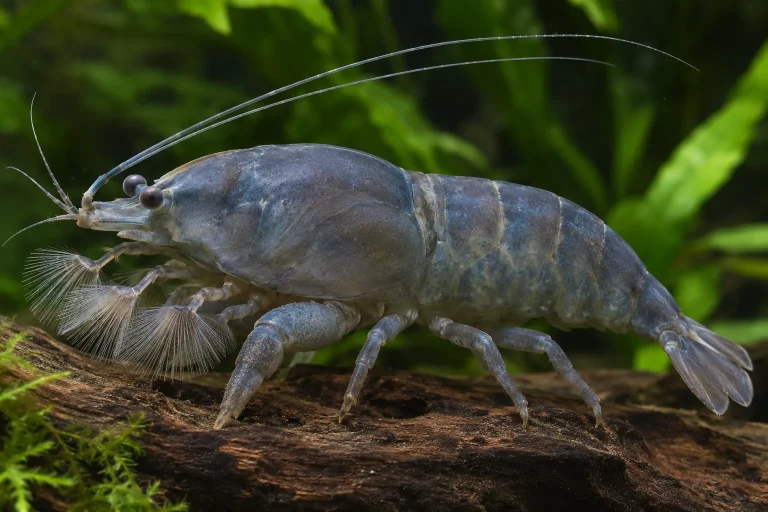
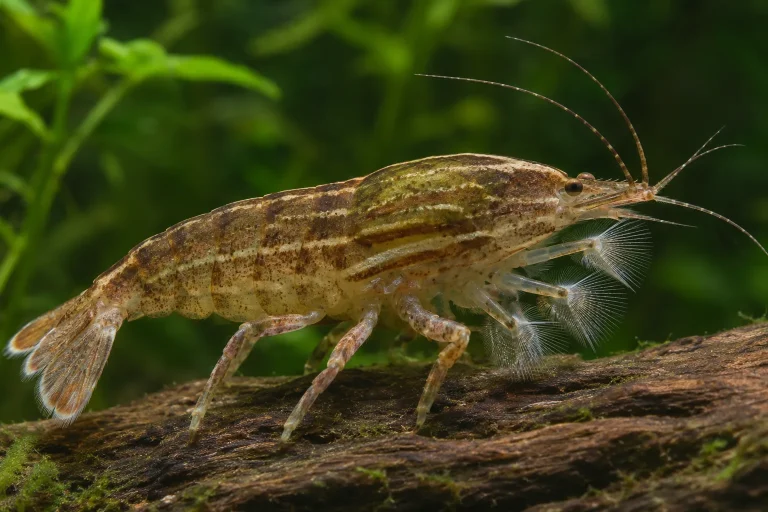
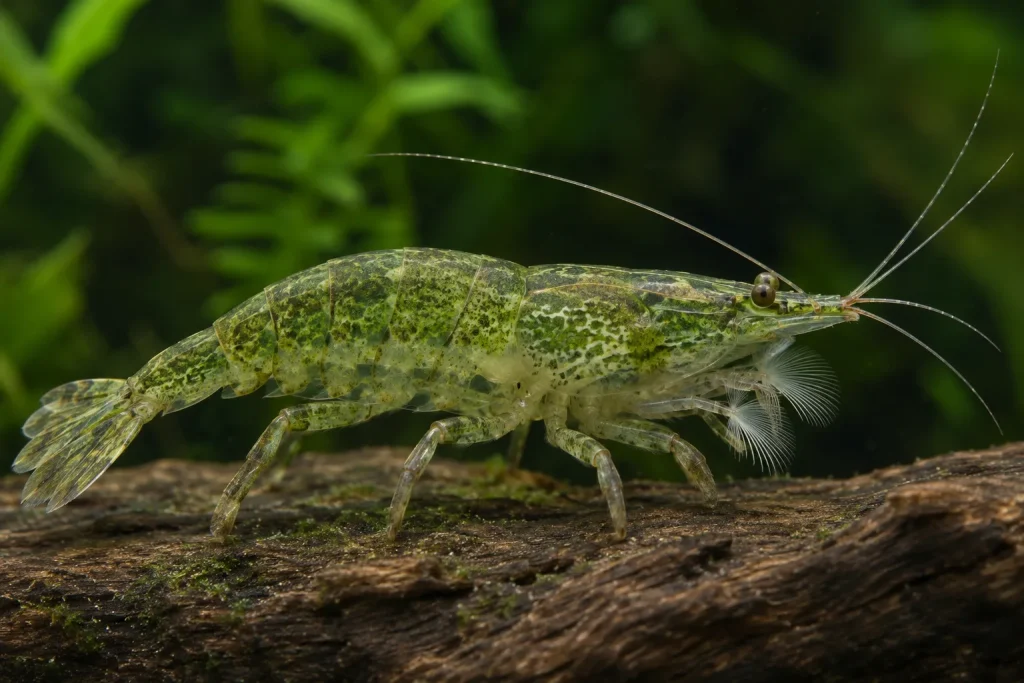
Slender fan shrimp with variable green, olive, tan, brown, or mottled coloration and delicate filtering appendages.

Recognized species Atyoida pilipes. Distinguish it from juvenile Atyopsis and other fan shrimp using adult size, body form, rostrum, appendages, and provenance rather than colour alone.

Sexual differences are subtle and should not be identified from colour alone.

Tank Requirements

Suggested filter
About 200–250 litres an hour
Suggested heater
About 50–75 W for this tank
Minimum tank volume
50 litres
Minimum tank length
60 cm
Minimum group size
1
Recommended group size
2
Activity level
Moderate
Flow preference
High
Planting preference
Moderately planted
Hiding places
Yes
Lid recommended
Yes
Jumping risk
Moderate

Provide strong oxygenation, stable current, elevated feeding perches, shelter, and unobstructed access to suspended food.

Behaviour and Tankmates

Peaceful filter feeder that positions itself in current and extends fan-like feeding appendages to capture suspended particles.

Can be kept singly or in a small peaceful group when adequate feeding stations and food are available.

Not normally territorial, although individuals may compete for the best feeding position.

Avoid aggressive or predatory tankmates and species that prevent the shrimp from feeding safely in open current.

Check tankmates for this species

Water Parameters

Temperature
22–27 °C
pH
6.5–7.8
GH
6–12
KH
2–8
TDS
140–260
Stability importance
Very important

Provide a mature aquarium with moderate current, high oxygen, and suspended microscopic foods. Protect filter intakes and avoid copper.

Parameter caveat
A strong current is only useful when the shrimp can reach secure feeding perches and receive appropriately sized suspended food.

Feeding

Diet types
Filter Feeder, Omnivore
Feeding frequency
Daily
Preferred foods
  • Fine suspended invertebrate foodDeliver upstream of the shrimp's feeding perch in small amounts.
  • Microalgae and fine organic particlesNatural suspended particles supplement prepared foods.

Specialized filter feeder requiring fine suspended foods delivered into flowing water. A visually clean aquarium can still leave the shrimp underfed.

Do not rely on food settling on the substrate. Observe fan use and body condition to confirm successful feeding.

Breeding

Breeding type
Larval Development
Breeding difficulty
Very difficult
Breeding temperature
25 °C
Breeding pH
7.2
Brood or egg count
Numerous small eggs
Incubation
28 days
Parental care
Maternal care
Baby foods
  • Microscopic suspended larval foodLarval feeding and salinity requirements need a dedicated rearing system.

Produces free-swimming larvae rather than miniature benthic juveniles. Captive rearing is difficult and may require salinity management.

Habitat and Origin

Geographic origin
Asia, Fiji, French Polynesia, Indonesia, New Caledonia, Palau, Papua New Guinea, Philippines, Samoa, Southeast Asia, Taiwan
Natural habitat
Fast-Flowing Stream, River
Aquarium contexts
Freshwater Community, High-Flow Aquarium, Shrimp Tank
Audience level
Advanced

Classification

Profile type
Recognized species
Genus
Atyoida
Family
Atyidae
Species group
Fan Shrimp

Have you kept this species?

You can write a note about what worked for you, or send a photograph. We check everything before it appears here.

Share a note or photo

JPG, PNG, or WebP, up to 5 MB.