
July 23, 2026
Why Aquarium Plants Melt
Plant melt can make a newly planted aquarium look as if everything is going wrong at once. Leaves turn transparent, soften, develop holes, or seem to dissolve while the plant that looked healthy at the shop suddenly collapses underwater.
Sometimes that really does mean the plant is struggling. But in many cases, especially with newly purchased aquarium plants, leaf loss is part of the transition from growth above water to growth below it. The useful question is whether the plant is producing healthy new submerged growth or continuing to decline.
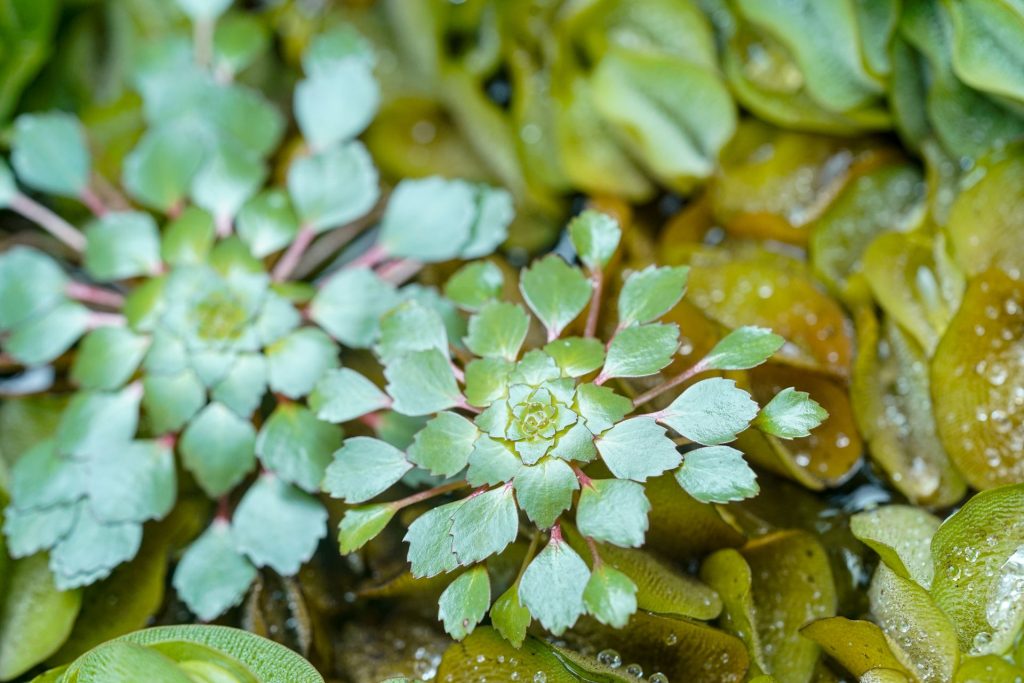
What Is Aquarium Plant Melt?
“Melt” is a hobby term for rapid deterioration of existing leaves. Tissue may become translucent, soft, brown, or detached. Melt describes an appearance, not one single diagnosis.
Emersed to Submerged Transition
Many aquarium plants are amphibious and can grow both above and below water. Commercial nurseries often grow them emersed. When submerged, some species replace old emersed leaves with new leaves better suited to underwater conditions.
Tropica describes substantial changes in leaf form and color as plants move between these growth environments.
How to Recognize Normal Adaptation
Look at the growing point, roots, rhizome, and new leaves. If old leaves deteriorate while fresh submerged growth appears, the plant may be adapting rather than dying.
Why Cryptocoryne Is Famous for Melting
Cryptocoryne species are well known among aquarists for losing leaves after environmental changes. Stable conditions are more useful than repeatedly moving or replanting the plant in response to every lost leaf.
Shipping and Handling Stress
Plants may experience darkness, compression, temperature changes, and periods of reduced moisture during shipping and store handling. Some damage only becomes obvious after the plant is placed in the aquarium. Leaves that were already weakened can melt even when the new tank conditions are reasonable.
Separate shipping damage from ongoing husbandry by watching what happens to new leaves produced after the plant has settled.
How Melt Can Look Different by Plant Type
Stem plants may lose lower leaves while their growing tips continue producing new submerged foliage. Rosette plants may lose outer leaves while the crown pushes out replacement growth. Rhizome plants can shed older leaves yet remain viable as long as the rhizome stays firm and healthy.
Understanding the plant’s growth form prevents unnecessary disposal. A plant with ugly old leaves can still be recovering if the structure that produces new growth remains healthy.
Can Poor Lighting Cause Melt?
Insufficient light can cause weak growth and loss of leaves over time, while excessive light can create imbalance when carbon and nutrients cannot support the growth demand. Match lighting to the species rather than assuming brighter is always better.
Nutrients and Plant Decline
Plants require macronutrients and micronutrients. Deficiencies may produce pale growth, yellowing, holes, or weak tissue. Tropica notes that micronutrient shortage can lead to pale leaves in Hygrophila difformis, but that does not mean every melting plant needs more fertilizer.
Nutrient Deficiency vs. Transition Melt
Transition melt often begins soon after planting and primarily affects leaves formed under the previous growing conditions. Nutrient problems are more likely to continue affecting new growth if the underlying shortage remains. Timing and symptom location are therefore useful clues, although they are not perfect diagnostic tools.
Do not respond to every newly purchased plant by dramatically increasing fertilizer. First identify whether the plant is simply replacing old tissue with submerged growth.
CO2 and Carbon Availability
Some plants grow well without added CO2, while demanding species may perform poorly without greater carbon availability. Choose plants that match the level of equipment and maintenance you want to provide.
Planting Mistakes That Cause Decline
Different plant forms need different planting methods. Rhizome plants such as Anubias and Microsorum should not have the rhizome buried deeply because this can encourage rot.
Water Conditions
Temperature, hardness, pH, and nutrient availability influence plant growth. Avoid constantly adjusting water chemistry in response to one damaged leaf.
Can Water Flow Affect Plant Recovery?
Plants need access to dissolved nutrients and carbon, and reasonable circulation helps distribute them through the aquarium. A plant sitting in a stagnant pocket behind dense hardscape may experience very different conditions from a plant in the open even when the water tests are identical.
At the same time, extremely strong direct flow can physically damage delicate leaves or keep newly planted stems from establishing. Aim for circulation that moves water throughout the tank without constantly battering the plant.
How to Help a Melting Plant Recover
- Confirm the species and its needs.
- Check whether it was grown emersed.
- Inspect the crown, rhizome, roots, and new growth.
- Remove fully decayed leaves.
- Correct planting mistakes.
- Review light, nutrients, and CO2 where relevant.
- Keep conditions stable long enough to judge new growth.
When Melt Is Not Just Transition
Continuous deterioration with no new growth, rotting crowns or rhizomes, severe symptoms across several species, or major water-quality problems suggest something beyond normal adaptation.
Should You Replant a Melting Plant?
Constantly uprooting a struggling plant can damage new roots and reset the adjustment process. Replant only when the original placement is clearly wrong—for example, a rhizome is buried, the plant is being uprooted by fish, or the location does not provide suitable light or space.
How Long Should You Evaluate Recovery?
Plant recovery should be judged through new growth rather than whether damaged leaves become attractive again. Once tissue has melted, it usually will not return to its original condition. Give the plant enough time to produce a new set of leaves before deciding that a sensible adjustment failed.
Weekly photographs are especially useful because they make slow improvement easier to see than daily inspection.
Frequently Asked Questions
Why Did My New Aquarium Plant Melt?
Many nursery plants were grown emersed and lose old leaves while producing submerged growth. Other causes include unsuitable light, nutrients, planting, or water conditions.
Should I Remove Melting Leaves?
Fully decayed leaves can be removed while healthy new growth should remain.
Will Melted Plants Grow Back?
They can if the crown, rhizome, roots, or growing point remains healthy.
Does Melt Mean I Need More Fertilizer?
Not necessarily. Nutrient deficiency is only one possible cause.
Can Too Much Light Cause Problems?
Yes. High light increases demand for carbon and nutrients.
Why Are My Anubias Leaves Dying?
Check that the rhizome is not buried and that the plant has suitable light and stable conditions.
Conclusion
Aquarium plant melt is a symptom, not a single disease. In newly planted tanks it is often part of the transition from emersed nursery growth to submerged growth, but lighting, nutrients, planting technique, and water conditions can also contribute.
Judge the plant by what happens next. Healthy new leaves, roots, or shoots are encouraging even when old leaves are disappearing.
Sources
About Emerse Production of Aquarium Plants — Tropica: Explains that many aquarium plants grow both above and below water and can change leaf form as they adapt to submerged conditions.
The Right Start With Your Aquarium — Tropica: Provides planted-aquarium guidance on nutrition, fertilizers, planting, and common plant-care questions.
Hygrophila difformis — Tropica: Notes that micronutrient shortage can cause pale leaves, supporting nutrient-deficiency troubleshooting.
Planting in the Aquarium — Tropica: Explains correct placement of rhizome plants, mosses, floating plants, and other aquarium plant forms.

Cryptocoryne Parva
Cryptocoryne parva
- Care level
- Intermediate
- Placement
- Foreground
- Light
- Low, Medium
- CO₂
- Optional
Cryptocoryne Lutea
Cryptocoryne walkeri
- Care level
- Beginner
- Placement
- Foreground, Midground
- Light
- Low, Medium
- CO₂
- Optional
Cryptocoryne Yujii
Cryptocoryne yujii
- Care level
- Specialist
- Placement
- Foreground, Midground
- Light
- Medium
- CO₂
- Optional
Cryptocoryne Nurii
Cryptocoryne nurii
- Care level
- Specialist
- Placement
- Foreground, Midground
- Light
- Medium
- CO₂
- Optional