
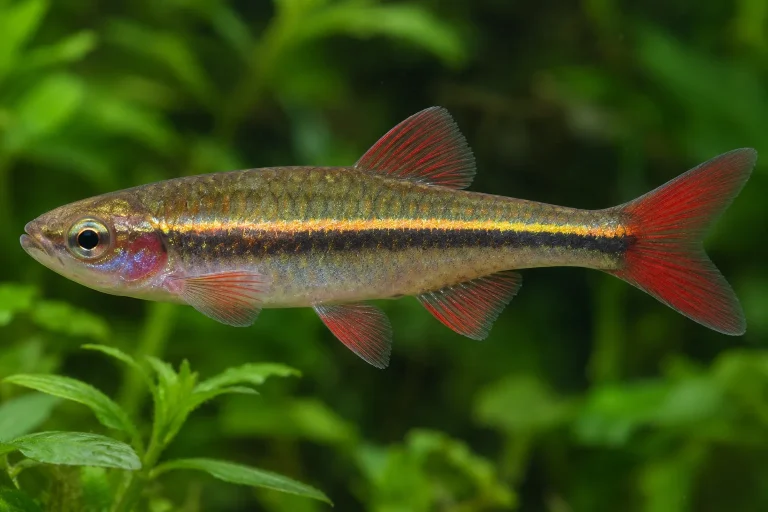
White Cloud Mountain Minnow
Tanichthys albonubes
- Care level
- Beginner
- Adult size
- 3–4 cm
- Minimum tank
- 55 litres
- Temperature
- 14–22 °C
Species profile
Hypseleotris cyprinoides
Common names: Tropical Carp Gudgeon
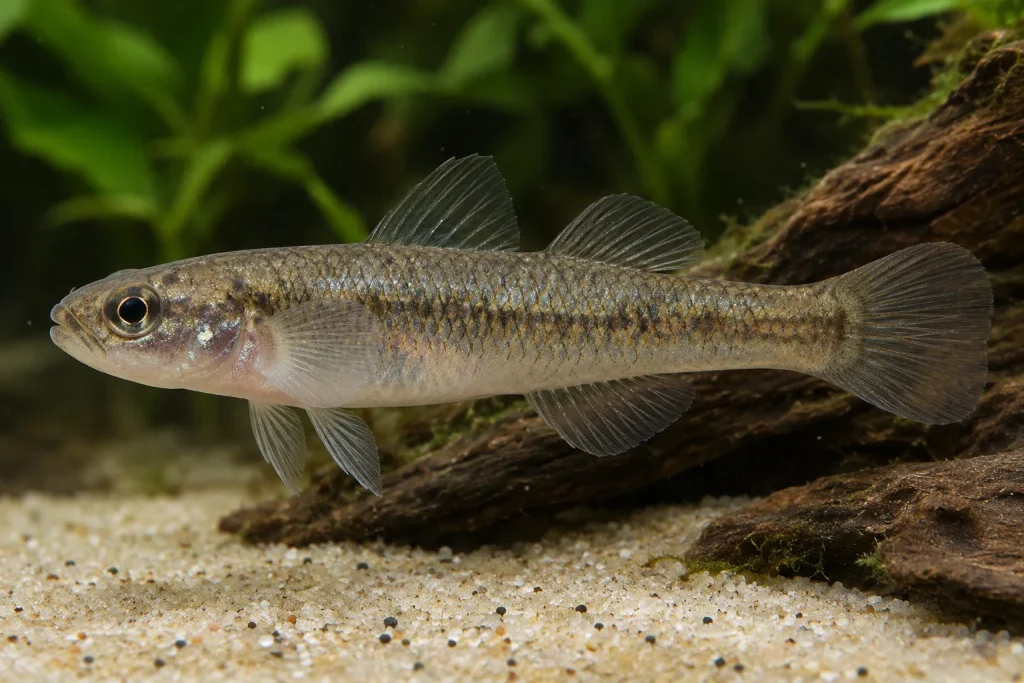
Up to 8 cm
Typical adult length 5–8 cm.















Tropical Carp Gudgeon is a a small, slender carp gudgeon with a translucent silver-brown body, fine scale patterning, understated fins, and stronger contrast in mature displaying fish.
Tropical Carp Gudgeon is a small, slender sleeper with a translucent silver-brown body, fine dark-edged scales, and understated clear to dusky fins. Mature displaying fish may develop stronger contrast and warmer fin tones. Its delicate pattern is most visible in a planted aquarium with subdued lighting and a darker background.
A widespread amphidromous Hypseleotris associated with vegetated stream margins near estuaries. Because small Hypseleotris are difficult to identify, locality and supplier documentation are important.
Clear aquarium sexing guidance is limited. Mature males may become more strongly marked and more territorial during courtship, while females may develop a fuller abdomen. A group of mature fish is more likely to contain both sexes than a pair selected from young, lightly coloured specimens.
Keep a group in a mature aquarium with dense marginal plants, submerged wood, smooth stones, and open lower- to mid-water swimming space. Gentle to moderate current and good oxygenation are suitable. Adults can be maintained in freshwater, but their natural amphidromous life cycle means that breeding and larval rearing may require separate brackish or marine conditions.
This is a small insect-feeding gudgeon that forages around vegetation and shallow margins. It is expected to remain loosely social, with individuals hovering in the lower half of the aquarium and moving quickly after small prey. Males may become more territorial when a spawning site is available.
Maintain at least six, preferably eight or more, with enough cover and feeding space for subordinate fish.
Usually mild outside breeding, although males may defend a small spawning site or display area.
Choose peaceful fish of similar size that do not dominate the lower water levels or consume all food immediately. Very small fish fry and shrimplets are likely to be eaten. Aggressive cichlids, large predators, and forceful bottom dwellers are poor companions for this relatively small species.
Some links may earn us a commission on qualifying purchases, at no extra cost to you. Check suitability, price and availability with the seller. How affiliate links work
 Xilong XL-803D canister filter – up to 100 L
An external-filter option for the moderate-flow setup described above. The seller lists a 400 L/h pump and an aquarium capacity of up to 100 litres.
Check the volume of your actual aquarium and the needs of its complete stocking. Use the flow control or spray bar to avoid a concentrated current. A larger tank or a species requiring strong river flow needs a different filter selection.
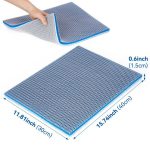 Cut-to-fit aquarium filter media pad
A cut-to-fit pad for compatible filter compartments. The listing describes a sheet approximately 16 by 12 inches; check the offered variant and the space inside your filter.
The seller description varies between five and eight layers, so confirm the actual sheet before ordering. Keep the filter manufacturer’s media arrangement and avoid obstructing the flow.
 Xinyou ceramic filter rings – 300 g
A biological-media option for a filter with a suitable media basket. This listing is a 300 g pack of ceramic rings.
Check the ring size and available basket space. Installing new media does not make a new aquarium instantly cycled, and these rings do not replace routine water-quality checks.
Warm, clean freshwater is suitable for adults when matched to their source conditions. Wild populations occur across fresh, brackish, and marine-connected systems.
Some links may earn us a commission on qualifying purchases, at no extra cost to you. Check suitability, price and availability with the seller. How affiliate links work
 Manual aquarium siphon and gravel cleaner
A manual siphon for routine aquarium water changes and accessible waste removal. The seller lists a hose approximately 1.6 m long.
Control the flow and keep the intake clear of fish and delicate planting. Clean the areas appropriate for your substrate and layout rather than disturbing the entire planted bed.
Offer small sinking or slowly falling pellets with frequent frozen or live insect larvae, cyclops, Daphnia, and Artemia. Moving foods are especially useful because the species naturally feeds on aquatic insect larvae. Feed small portions in several locations so shy individuals can eat without approaching dominant fish.
Feed small portions once or twice daily and ensure food reaches the lower half of the tank. Avoid letting frozen food collect in dense plants.
Detailed captive breeding information is scarce. The species is amphidromous, so adults may deposit eggs in fresh or lightly brackish habitat while the minute larvae develop farther downstream in more saline water. A serious breeding attempt would need separate larval tanks, controlled salinity, microalgae, rotifers, and careful observation of each developmental stage.
You can write a note about what worked for you, or send a photograph. We check everything before it appears here.
Tanichthys albonubes
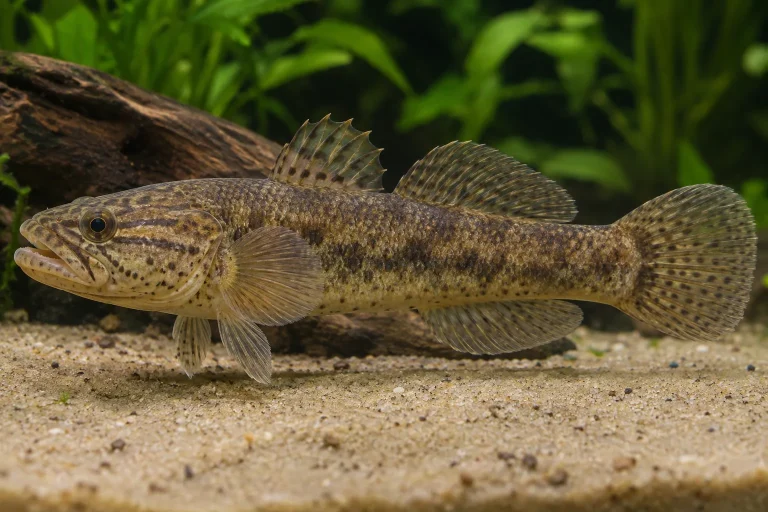
Giuris charpini
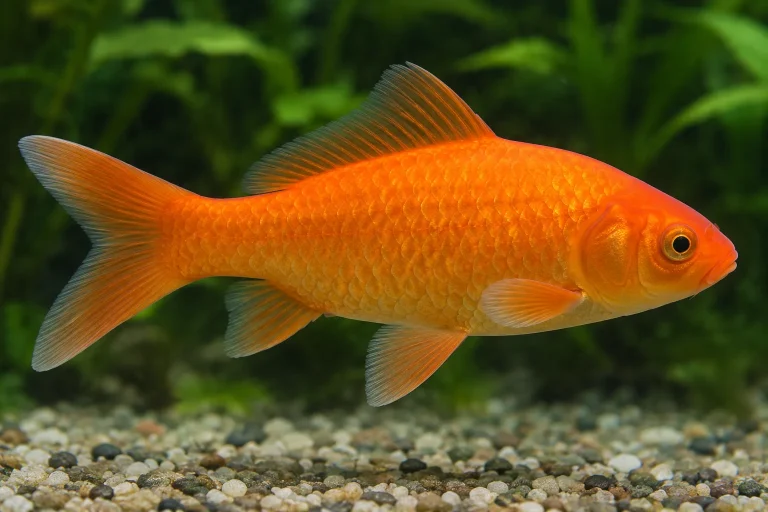
Carassius auratus
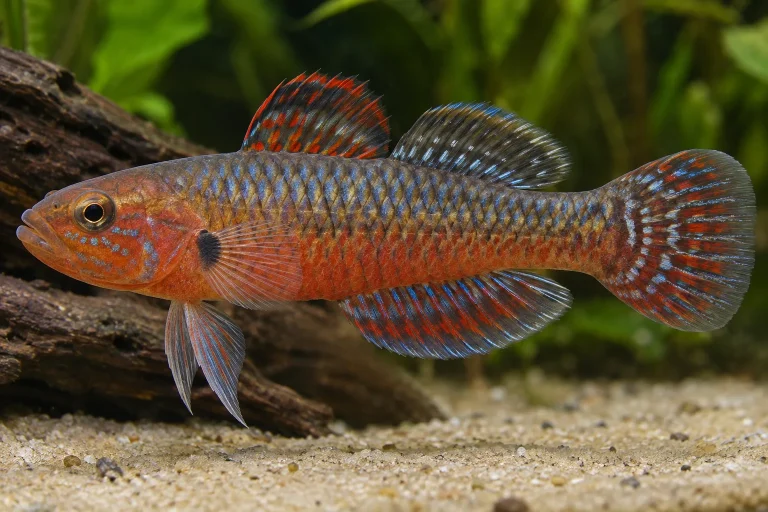
Hypseleotris compressa