
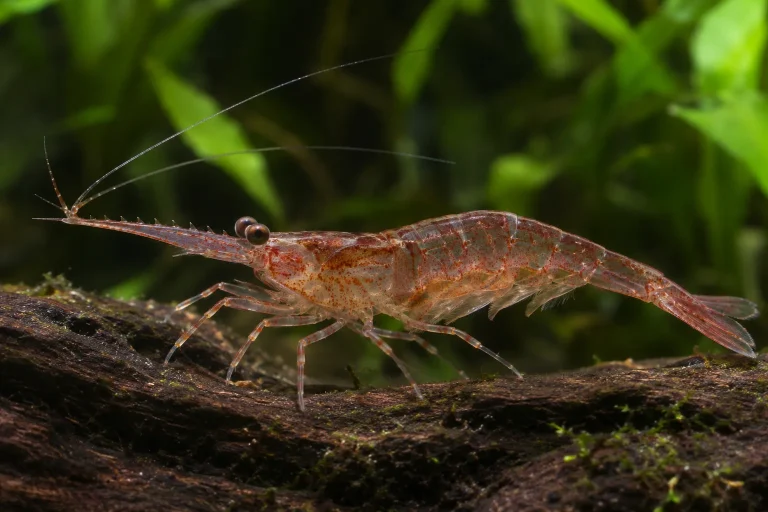
Ninja Shrimp
Marosina serratirostris
- Care level
- Advanced
- Adult size
- 2–3.5 cm
- Minimum tank
- 20 litres
- Temperature
- 22–27 °C
Species profile
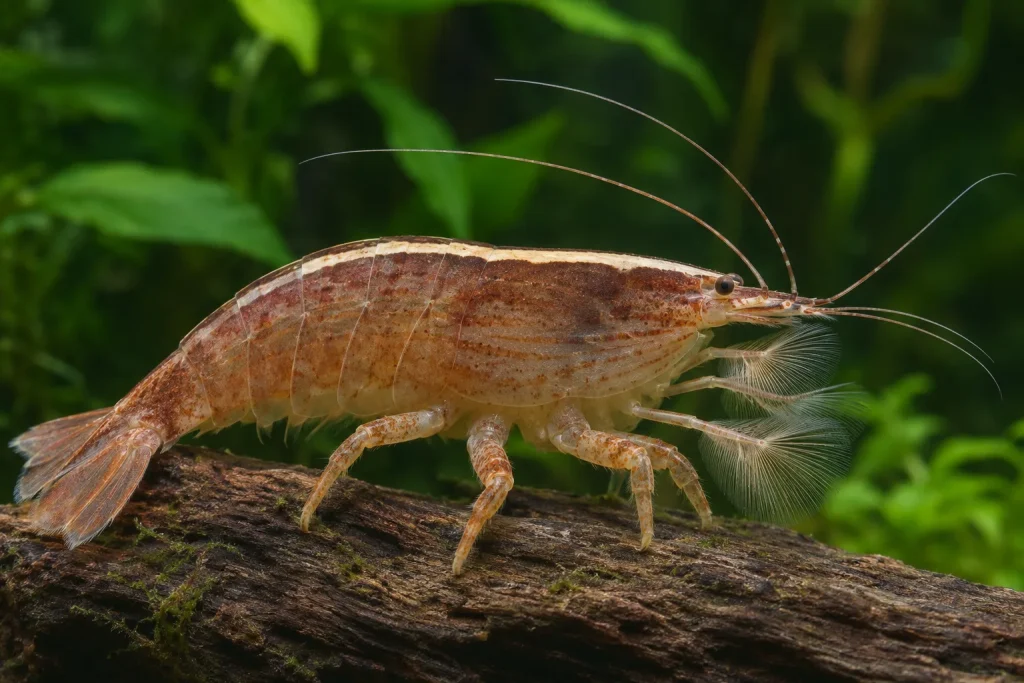
Atyopsis moluccensis
Common names: Bamboo Shrimp, Wood Shrimp, Asian Filter Shrimp, Singapore Flower Shrimp
Up to 9 cm
Typical adult length 6–9 cm.




A large, peaceful Southeast Asian fan shrimp that feeds by filtering fine suspended particles from strong, oxygen-rich current.
A robust fan shrimp with colour ranging from tan and rusty brown to greenish or reddish shades. Many individuals show a pale dorsal stripe or patterned flanks. The front limbs end in feathered fans used to catch suspended food.
Frequently confused with Atyopsis spinipes in the aquarium trade. Reliable separation requires examination of the rostrum and other morphological details; A. moluccensis typically has more ventral rostral teeth.
Adult males usually develop a much thicker first pair of walking legs and may grow larger. Mature females have a broader abdomen for carrying eggs.
Provide a mature aquarium with strong, oxygen-rich current and elevated perches directly in the flow. Wood, rounded rocks, caves, and sheltered molting areas are important. A new or overly sterile tank can lead to starvation.
Peaceful and non-predatory. It normally sits on a rock, root, or filter outlet facing the current and repeatedly sweeps its feeding fans through the water.
Can be kept alone or in a small group. Multiple specimens need several well-fed current stations so one shrimp does not monopolize the best perch.
Not strongly territorial, although individuals may compete for the most useful feeding position when suitable current-facing perches are limited.
Suitable for peaceful community aquariums with fish that will not nip the fans or attack a molting shrimp. Avoid large cichlids, puffers, crayfish, crabs, and other aggressive or predatory tank mates.
Keep in a mature, well-oxygenated aquarium with steady current and suspended fine foods. Avoid rapid parameter changes and copper exposure.
An obligate suspension feeder that captures microscopic algae, plankton, fine detritus, and powdered foods from moving water. Visible substrate sifting often indicates that too little suspended food is reaching the fans.
Do not place dry powder directly onto the shrimp. Disperse food into the current. A mature aquarium supplies background microorganisms, but most captive tanks still need careful supplemental feeding.
Adults reproduce in freshwater, but the planktonic larvae naturally develop downstream in brackish or marine water before returning upstream as juveniles. Successful captive breeding requires a separate larval system with controlled salinity, microscopic foods, and a gradual return to freshwater.
You can write a note about what worked for you, or send a photograph. We check everything before it appears here.
Marosina serratirostris
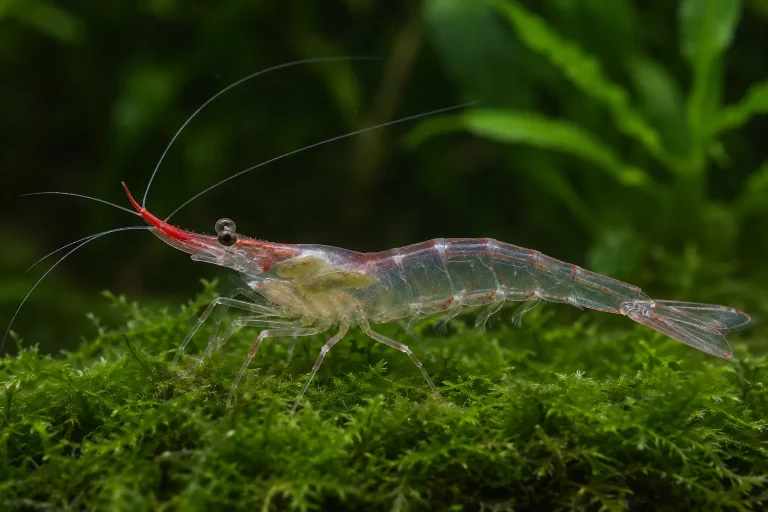
Gracidina gracilirostris
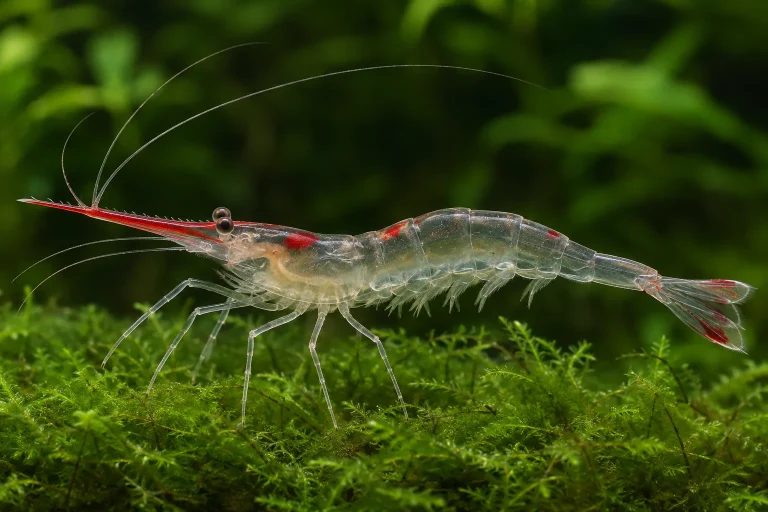
Gracidina gracilirostris
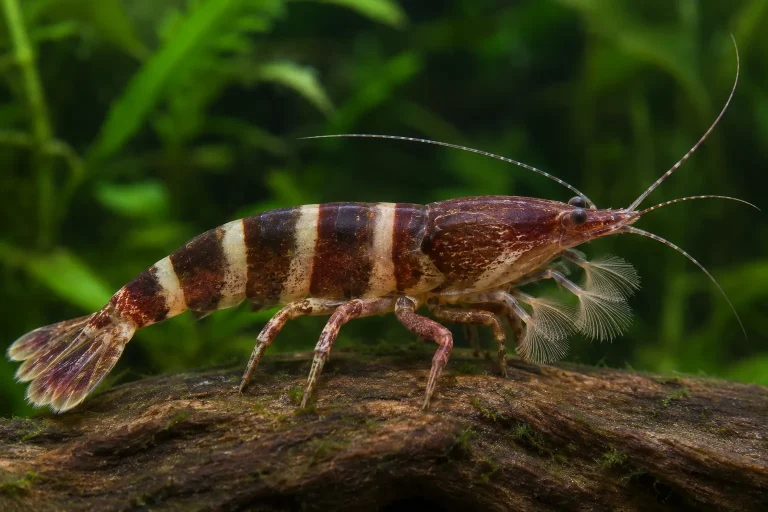
Australatya obscura