
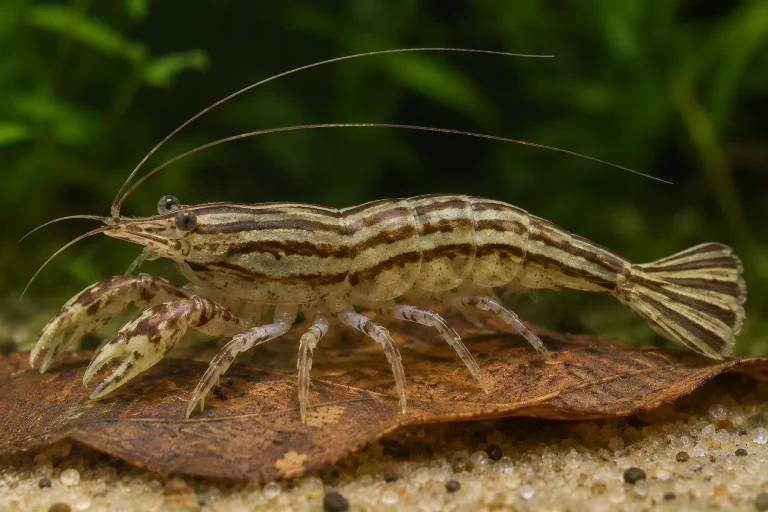
Amazon Zebra Shrimp
Euryrhynchus amazoniensis
- Care level
- Specialist
- Adult size
- 1.5–3 cm
- Minimum tank
- 30 litres
- Temperature
- 22–27 °C
Species profile
Australatya obscura
Common names: Taiwanese Bamboo Shrimp, Taiwan Fan Shrimp
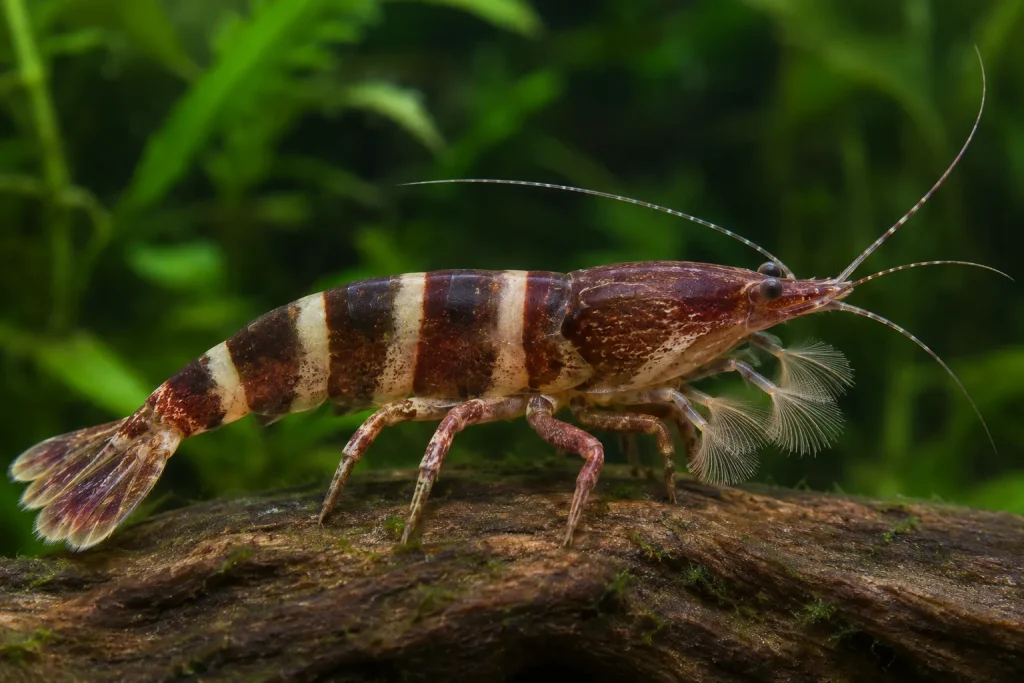
Up to 6.5 cm
Typical adult length 4–6.5 cm.



A rare, banded filter-feeding shrimp from coastal streams of Taiwan, the Philippines, and the southern Ryukyu Islands.
A comparatively small fan shrimp with a dark reddish-brown to brown body and bold pale and dark bands across the abdominal segments. The first limbs carry feathered fans used for suspension feeding.
The sharply banded live coloration is distinctive, but confirmed identification should use morphological characters. The species differs from Australatya striolata in body size, rostral proportions, carapace form, leg setation, and fifth-leg dactyl structure.
Females become broader through the abdomen when mature and may be identified when carrying eggs. Reliable sexing of unberried specimens can be difficult.
Use a mature, highly oxygenated aquarium with strong directional flow, current-facing rocks or wood, and secure molting shelters. Larger water volume makes suspended feeding and stable water quality easier to manage.
Peaceful filter feeder that selects a perch in moving water and opens its fans to collect suspended food. It retreats into cover during disturbance and molting.
May be kept singly or in a small group. Each shrimp should have access to a useful feeding perch within the current.
Not considered aggressive, although competition for the strongest feeding station can occur when the aquarium provides too few perches.
Keep with peaceful fish and invertebrates that will not attack a molting shrimp or nip its feeding fans. A specialist shrimp aquarium is preferred for rare stock.
Keep in a mature, well-oxygenated aquarium with moderate current and suspended microscopic foods. Avoid placing this filter feeder in a sterile new tank.
Feeds primarily by filtering microscopic algae, fine detritus, microorganisms, and prepared powder from flowing water. Continuous access to suitably sized suspended particles is essential.
A shrimp that spends long periods scraping the substrate may not be receiving enough food in suspension. Increase feeding carefully rather than adding a large single dose.
Captive breeding is poorly documented. Its occurrence in separate coastal island systems is consistent with an amphidromous life cycle, so the larvae should be treated as likely requiring brackish or marine development until species-specific breeding evidence establishes otherwise.
You can write a note about what worked for you, or send a photograph. We check everything before it appears here.
Euryrhynchus amazoniensis
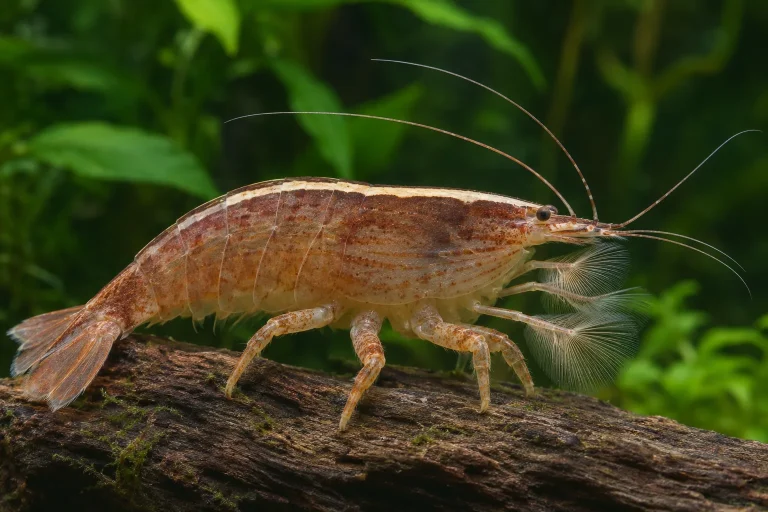
Atyopsis moluccensis
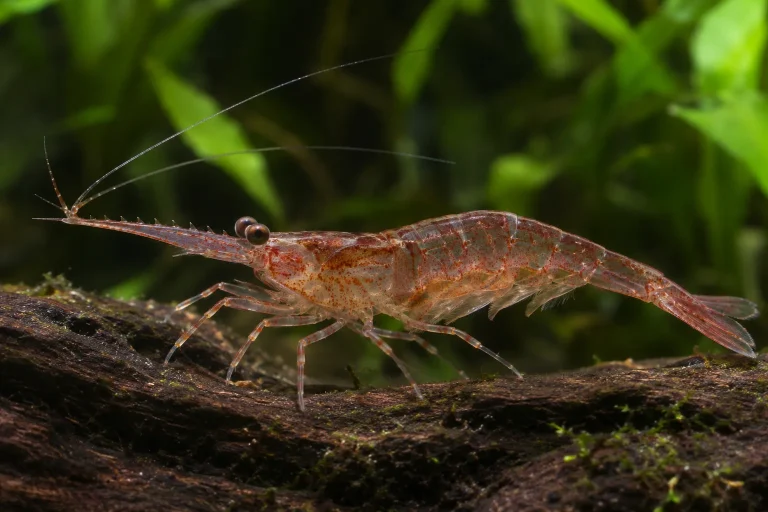
Marosina serratirostris
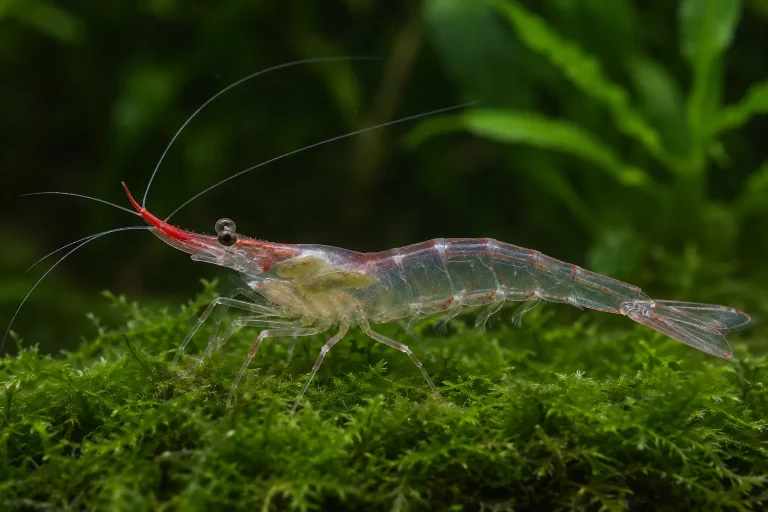
Gracidina gracilirostris