
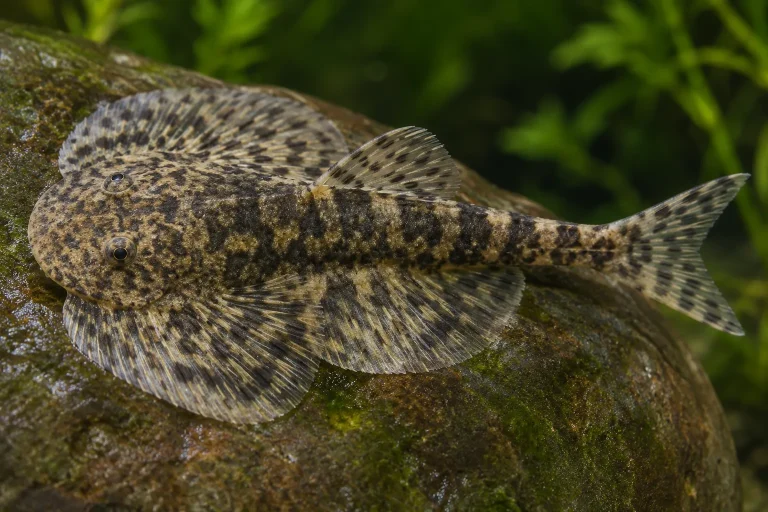
Chinese Hillstream Loach
Pseudogastromyzon cheni
- Care level
- Specialist
- Adult size
- 4.2–6 cm
- Minimum tank
- 60 litres
- Temperature
- 18–24 °C
Species profile
Vaillantella cinnamomea
Common names: Brown Fork Tail Loach
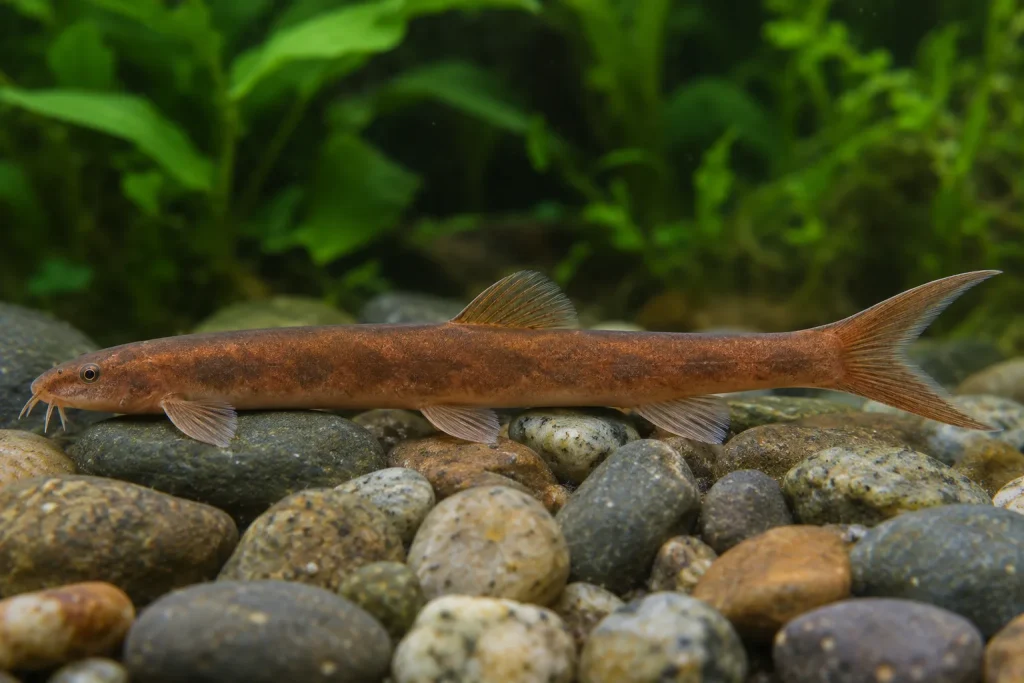
Up to 20 cm
Typical adult length 14–20 cm.


A long, cinnamon-brown loach that spends much of its time close to cover. It needs a mature aquarium at least 150 cm long, with soft sand, subdued lighting, stable water, and enough sheltered space for a small group.
A long, narrow loach with cinnamon-brown colouring, a small head, darker shading along the body, and a deeply forked tail.
A long, secretive forest-stream loach whose narrow body and reserved behaviour set it apart from the heavier, more active botiid loaches commonly seen in aquariums.
The sexes are difficult to tell apart outside breeding condition. Mature females may become fuller through the abdomen, but there are no dependable external differences for routine sexing.
Use a mature aquarium at least 150 cm long, with soft sand, leaf litter, tangled wood, shaded planting, and plenty of narrow retreats. Keep the lighting subdued and provide gentle to moderate filtration without leaving the bottom open and exposed.
A shy loach that spends much of the day beneath wood, leaf litter, or overhanging cover. It usually becomes more active around dusk and may forage quickly once it feels secure.
Keep at least three together, with five being preferable when space and cover allow. The aquarium should be large and heavily structured, and each fish should be watched for repeated exclusion from food or hiding places.
Usually shy rather than openly aggressive, although fish kept in cramped conditions may compete for the darkest and most secure retreats.
Choose calm midwater fish that will not dominate the aquarium or feeding areas. Avoid boisterous botiid loaches, aggressive bottom dwellers, very small shrimp, and bright tanks with little cover.
Keep the water clean, stable, and well oxygenated within the stated range. Low organic waste and gradual acclimation matter more than holding the aquarium at one exact pH or hardness value.
Some links may earn us a commission on qualifying purchases, at no extra cost to you. Check suitability, price and availability with the seller. How affiliate links work
 Manual aquarium siphon and gravel cleaner
A manual siphon for routine aquarium water changes and accessible waste removal. The seller lists a hose approximately 1.6 m long.
Control the flow and keep the intake clear of fish and delicate planting. Clean the areas appropriate for your substrate and layout rather than disturbing the entire planted bed.
Offer small sinking foods rich in aquatic invertebrate protein. Use a reliable prepared pellet as the regular food, supported with frozen or live insect larvae, Artemia, Daphnia, and similar foods.
Place small portions in several parts of the aquarium. This gives shy or lower-ranking fish a better chance to feed and prevents one individual from guarding the only feeding spot.
Captive breeding is still poorly documented. The species is thought to scatter or place small eggs among gravel, stones, or vegetation, with no care given afterward. Seasonal temperature changes, increased flow, and conditioning with live foods may be useful, although these methods have not been reliably confirmed for this fish.
You can write a note about what worked for you, or send a photograph. We check everything before it appears here.
Pseudogastromyzon cheni
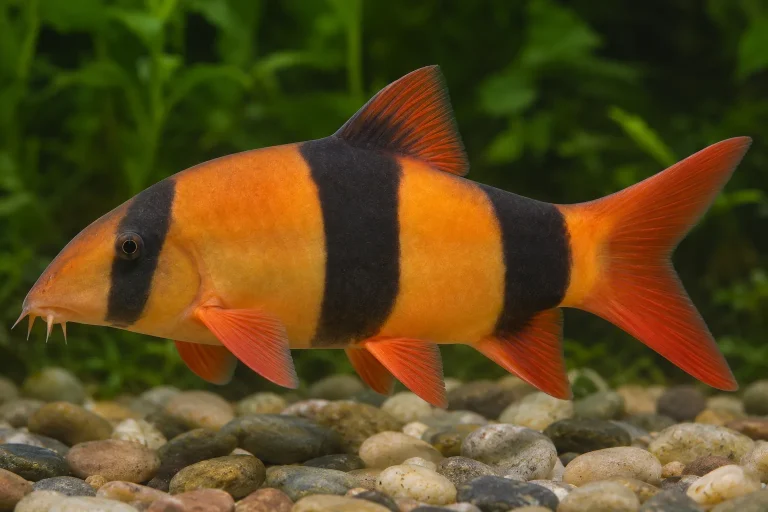
Chromobotia macracanthus

Neogastromyzon crassiobex
Schistura sp. Crimson