
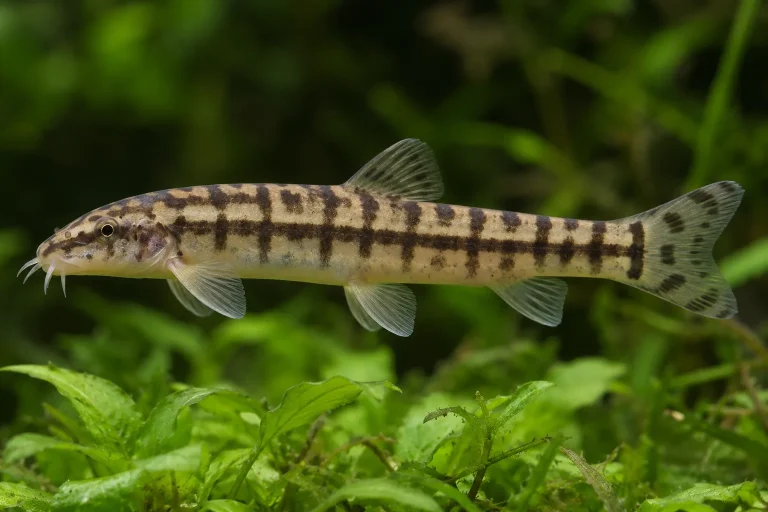
Hovering Zebra Loach
Yunnanilus cruciatus
- Care level
- Intermediate
- Adult size
- 2.8–4 cm
- Minimum tank
- 45 litres
- Temperature
- 22–27 °C
Species profile
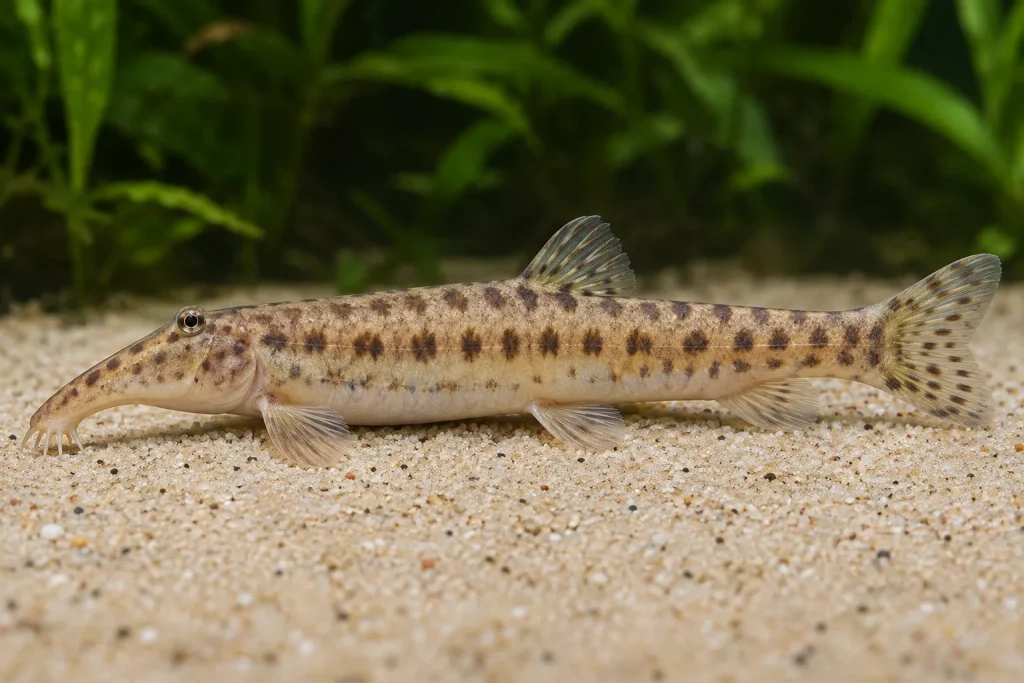
Acantopsis dialuzona
Common names: Horseface Loach
Up to 25 cm
Typical adult length 17.5–25 cm.










Horseface Loach is a bottom-dwelling loach requiring a 150 cm or longer aquarium, suitable substrate, stable water, and species-appropriate social housing.
An elongated sand-burrowing loach with a long downturned snout, pale tan body, and rows of dark spots or short bars.
Needs deep, fine sand and is easily stressed or injured on coarse gravel.
Mature females are generally larger and fuller through the abdomen. Males may show thicker or modified pectoral-fin rays, but the details vary by species and are not always visible in aquarium fish.
Provide an aquarium at least 150 cm long with a deep layer of fine, smooth sand for burrowing, rounded wood and stone, shaded cover, and no sharp gravel. Seal filter and lid gaps because loaches can enter narrow openings.
Horseface Loach is a substrate-oriented forager that probes sand and may bury most of its body when resting or alarmed. Activity increases in a secure group, during feeding, and under subdued light.
Maintain at least 3, preferably 5 where practical. A group encourages normal foraging without requiring constant close contact.
Generally non-territorial. Competition is more likely at feeding time than around fixed territories.
Peaceful community fish are suitable when they share the same temperature requirements. Avoid coarse substrate, aggressive bottom fish, and tankmates that consume all sinking food.
Maintain stable, clean water within the stated range. Oxygenation, low organic waste, and gradual acclimation are more important than forcing an exact pH or hardness value.
Some links may earn us a commission on qualifying purchases, at no extra cost to you. Check suitability, price and availability with the seller. How affiliate links work
 Manual aquarium siphon and gravel cleaner
A manual siphon for routine aquarium water changes and accessible waste removal. The seller lists a hose approximately 1.6 m long.
Control the flow and keep the intake clear of fish and delicate planting. Clean the areas appropriate for your substrate and layout rather than disturbing the entire planted bed.
Provide small sinking foods after the fish are active. Use quality pellets or wafers with regular frozen or live invertebrates. Place some food near cover so shy or burrowing individuals are not outcompeted.
Do not assume these fish can live on leftovers. Confirm that food reaches them, especially in busy community aquariums.
An egg-scattering spawner with no parental care. Seasonal changes, abundant live food, and mature adults may trigger spawning among plants or over fine substrate. Protect eggs from adults and filtration, then begin the fry on microscopic foods.
You can write a note about what worked for you, or send a photograph. We check everything before it appears here.
Yunnanilus cruciatus
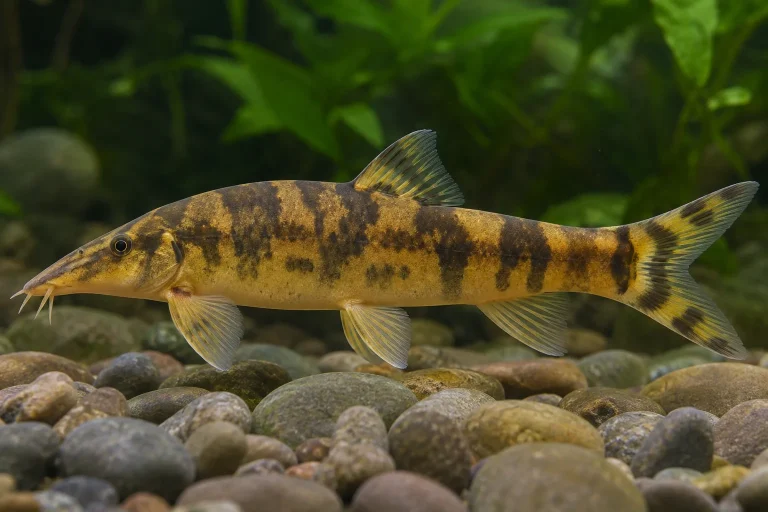
Parabotia kiangsiensis
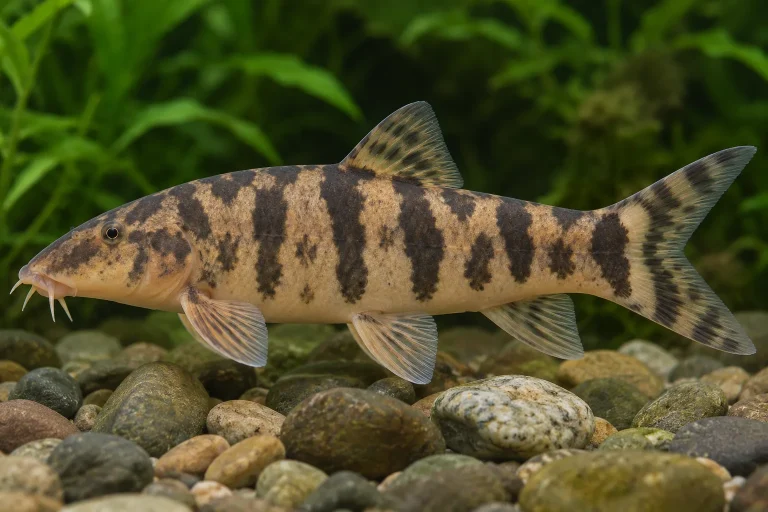
Sinibotia robusta

Gastromyzon katibasensis