Skip to content
Menu

Species profile

Gold Rabbit Snail

Tylomelania gemmifera

Common names: Gold Rabbit Snail, Golden Rabbit Snail, Golden Antenna Rabbit Snail
Recognized speciesRabbit Snails
Gold Rabbit Snail (Tylomelania gemmifera)

Adult size

Up to 9 cm

Typical adult length 5–9 cm.

Up to 9 cm

Countries of origin

  • See all stock from Indonesia

Good fit for your tank?

Good fit for

  • Mature planted aquarium setups
  • Advanced shrimp keepers
  • Peaceful nano aquariums
  • Breeding colonies

Think carefully if

  • The aquarium contains shrimp-eating fish
  • The tank is newly cycled
  • Water conditions change frequently

A Sulawesi rabbit snail associated with Lake Poso and sold in several gold, orange, or spotted trade forms.

Appearance and Identification

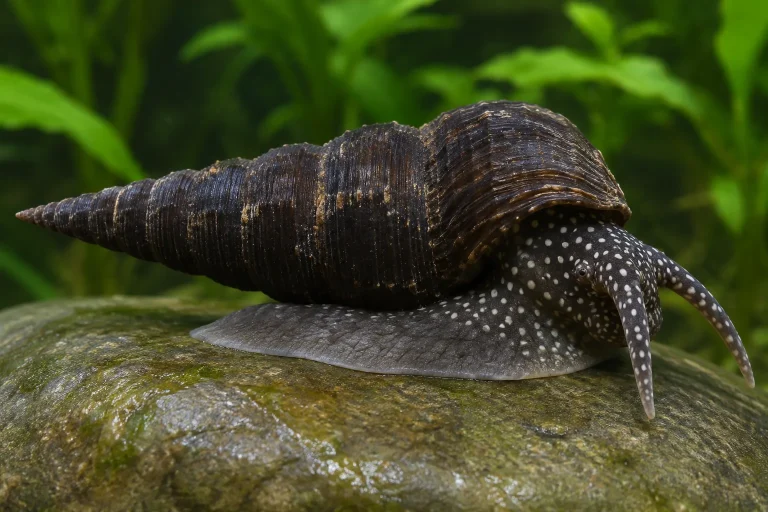
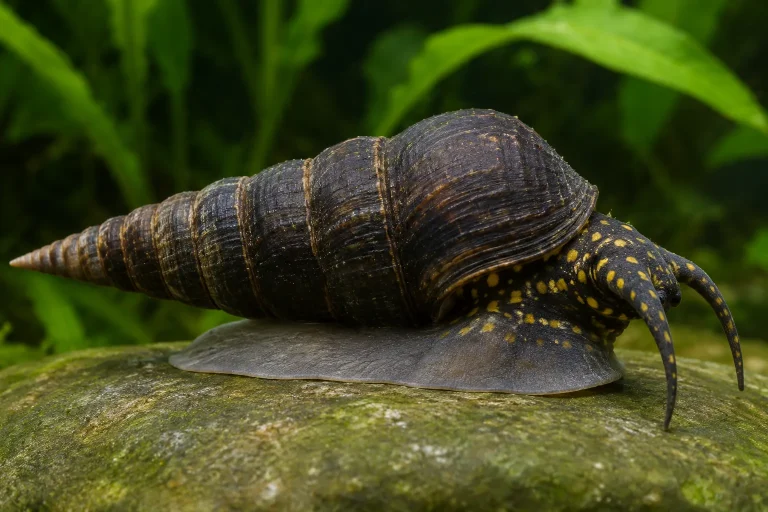
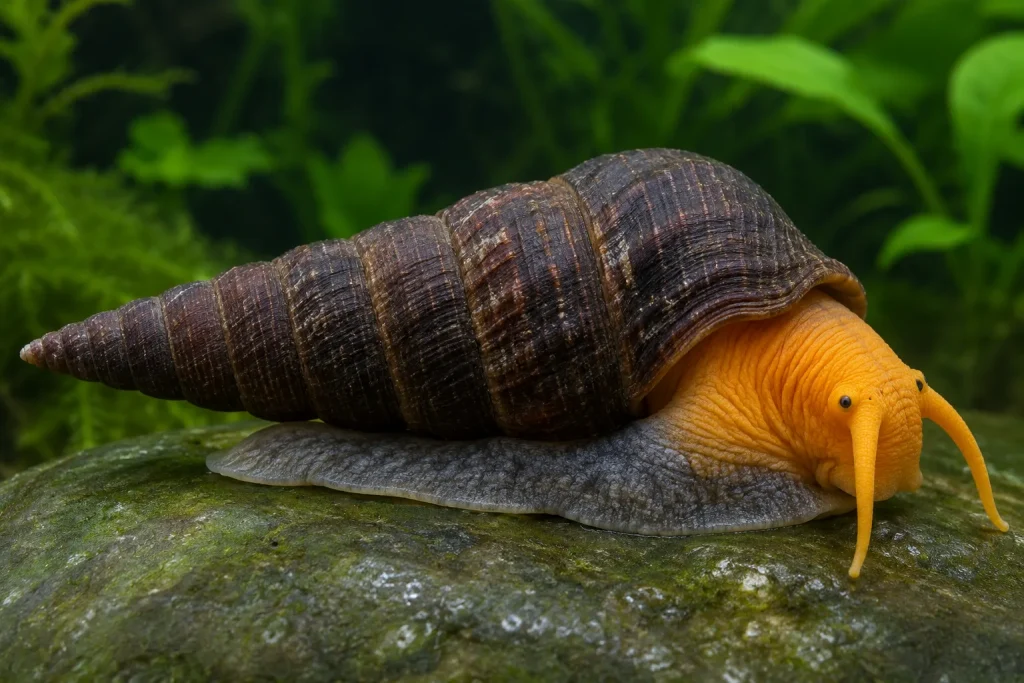
Elongated dark shell with a contrasting golden, orange, yellow, or spotted soft body depending on the trade line.

Trade colour names are inconsistent. Confirm that the stock is genuinely Tylomelania gemmifera rather than identifying it from body colour alone.

External sex differences are subtle or unreliable without species-specific examination.

Tank Requirements

Suggested filter
About 120–180 litres an hour
Suggested heater
About 50–100 W for this tank
Minimum tank volume
60 litres
Minimum tank length
60 cm
Minimum group size
1
Recommended group size
3
Activity level
Low
Flow preference
Low
Planting preference
Moderately planted
Hiding places
Yes
Lid recommended
Yes
Jumping risk
Low

Maintain warm, alkaline, mineral-rich water with stable oxygenation and abundant grazing surfaces. Avoid sudden temperature or chemistry changes.

Behaviour and Tankmates

Peaceful freshwater snail that spends much of its time grazing or searching for food.

Usually non-territorial and may be kept singly or with compatible conspecifics when food and space are adequate.

Not normally territorial.

Suitable with peaceful tankmates that do not nip, crush, or prey on snails.

Check tankmates for this species

Water Parameters

Temperature
25–30 °C
pH
7.2–8.5
GH
8–20
KH
4–15
TDS
180–400
Stability importance
Important

Maintain warm, alkaline, mineral-rich water with excellent oxygenation. Avoid acidic conditions, which can damage the shell.

Parameter caveat
Stable conditions are more important than chasing exact numbers.

Feeding

Diet types
Aufwuchs Grazer, Detritivore, Omnivore
Feeding frequency
Daily
Preferred foods
  • Mature biofilmPrimary natural grazing resource.
  • Algae-based sinking foodSupplement when natural growth is insufficient.
  • Softened vegetables or complete snail foodFeed in small amounts and remove leftovers.

Slow-growing grazer and detritivore. Provide mature biofilm, leaf litter, vegetables, and complete sinking foods.

Because they grow and reproduce slowly, monitor feeding competition and ensure food reaches the snail.

Breeding

Breeding type
Direct Developer, Livebearer
Breeding difficulty
Difficult
Breeding temperature
28 °C
Breeding pH
8
Brood or egg count
Usually one large juvenile at a time
Incubation
42 days
Parental care
Maternal care
Baby foods
  • Mature biofilm and fine natural foodsProvide stable grazing surfaces suitable for juveniles or hatchlings.

Separate sexes. Females brood a small number of large developing young and release fully formed juveniles.

Habitat and Origin

Geographic origin
Indonesia, Sulawesi
Natural habitat
Lake, Rocky Shoreline, Sand/Mud Substrate
Aquarium contexts
Snail Tank, Sulawesi Aquarium
Audience level
Advanced

Classification

Profile type
Recognized species
Genus
Tylomelania
Family
Pachychilidae
Species group
Rabbit Snails

Have you kept this species?

You can write a note about what worked for you, or send a photograph. We check everything before it appears here.

Share a note or photo

JPG, PNG, or WebP, up to 5 MB.