Skip to content
Menu

Species profile

Rudolph Shrimp

Gracidina gracilirostris

Common names: Rudolph Shrimp, Red Nose Shrimp, Pinocchio Shrimp, Red-Nosed Shrimp
Recognized speciesOther Shrimp
Rudolph Shrimp (Gracidina gracilirostris)

Adult size

Up to 4.5 cm

Typical adult length 3–4.5 cm.
Up to 4.5 cm

Countries of origin

  • See all stock from Australia
  • See all stock from India
  • See all stock from Indonesia
  • See all stock from Madagascar
  • See all stock from Palau
  • See all stock from Philippines
  • See all stock from Thailand

Good fit for your tank?

Good fit for

  • Mature planted aquarium setups
  • Intermediate shrimp keepers
  • Peaceful nano aquariums

Think carefully if

  • The aquarium contains shrimp-eating fish
  • The tank is newly cycled
  • Water conditions change frequently

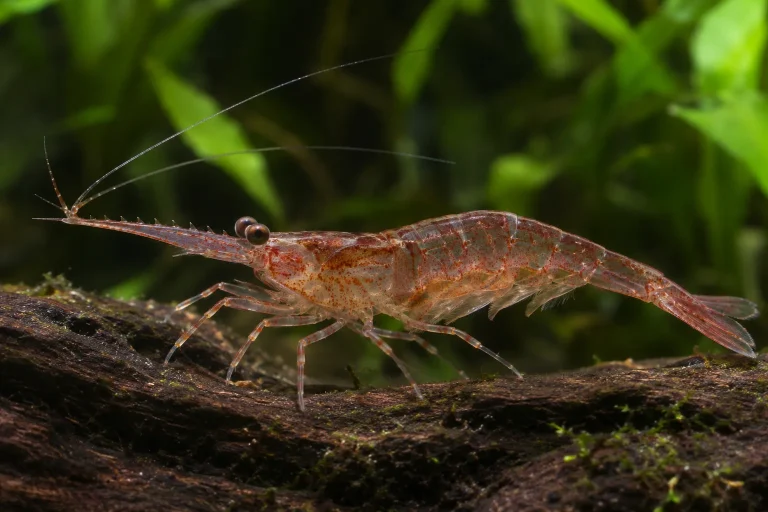
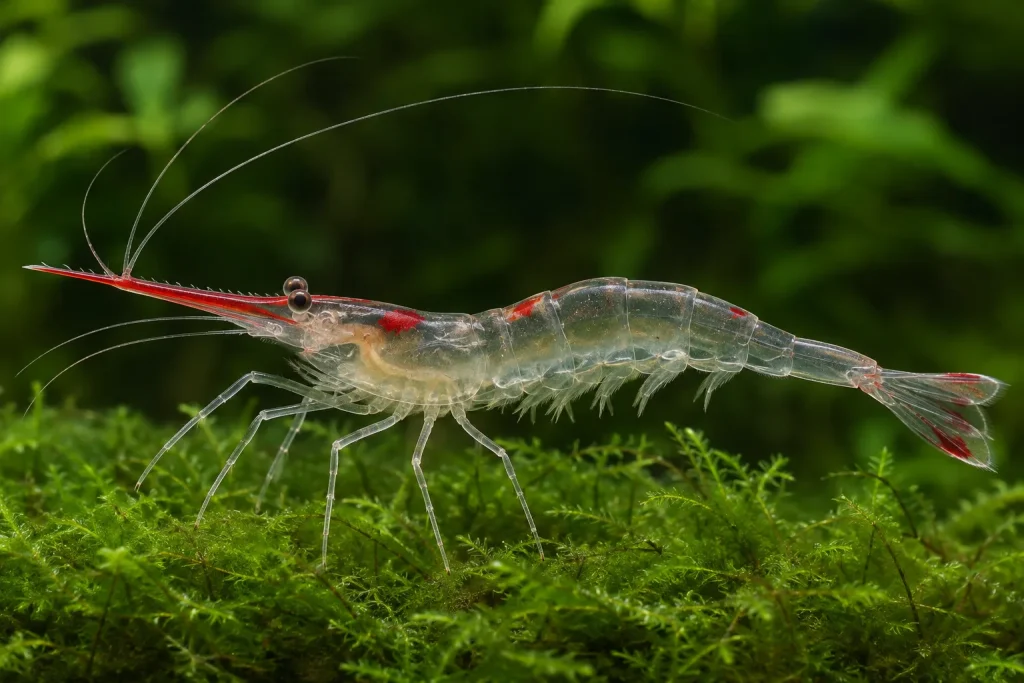
A slender red-nosed shrimp now classified as Gracidina gracilirostris and known for its long red rostrum.

Appearance and Identification

Slender, mostly translucent shrimp with a long narrow rostrum carrying conspicuous red pigmentation. Additional red markings may appear along the body and tail.

Rudolph Shrimp is not a Neocaridina colour line. It is the species now accepted as Gracidina gracilirostris, formerly Caridina gracilirostris. Distinguish it from other long-rostrum shrimp using morphology and provenance.

Females are generally larger and deeper-bodied. The red rostrum is present in both sexes and is not a reliable sex marker.

Tank Requirements

Suggested filter
About 180–230 litres an hour
Suggested heater
About 50–75 W for this tank
Minimum tank volume
45 litres
Minimum tank length
60 cm
Minimum group size
6
Recommended group size
10
Activity level
Moderate
Flow preference
Moderate
Planting preference
Moderately planted
Hiding places
Yes
Lid recommended
Yes
Jumping risk
Moderate

Use a mature, covered aquarium with stable water, open grazing areas, plants, oxygenation, and secure filter intakes.

Behaviour and Tankmates

Peaceful, active grazer that moves across plants, substrate, and hardscape in search of algae, biofilm, and fine foods.

Best kept in a peaceful group with non-predatory tankmates.

Not territorial.

Avoid aggressive fish and strong predators. Small shrimplets are not produced directly in normal freshwater aquariums.

Check tankmates for this species

Water Parameters

Temperature
22–28 °C
pH
6.5–8
GH
5–15
KH
2–10
TDS
120–300
Stability importance
Very important

Keep in clean, oxygenated freshwater with moderate mineral content. Captive reproduction is difficult because larval development generally requires brackish water.

Parameter caveat
Avoid abrupt acclimation changes. Successful larval rearing requires a dedicated salinity transition rather than ordinary freshwater care.

Feeding

Diet types
Algae Grazer, Detritivore, Omnivore
Feeding frequency
Daily
Preferred foods
  • Mature biofilmCore natural grazing resource.
  • Fine complete shrimp foodFeed sparingly and remove excess.
  • Algae-based foodUseful supplement where natural grazing is limited.

Omnivorous grazer that consumes biofilm, algae, detritus, and fine prepared foods.

Maintain continuous natural grazing surfaces and avoid heavy feeding.

Breeding

Breeding type
Brackish Larval Stage, Larval Development
Breeding difficulty
Very difficult
Breeding temperature
25 °C
Breeding pH
7.2
Brood or egg count
Numerous small eggs
Incubation
28 days
Parental care
Maternal care
Baby foods
  • Microscopic suspended larval foodLarvae require specialized feeding and salinity management.

Produces free-swimming larvae rather than miniature benthic shrimplets. Successful captive rearing generally requires specialized brackish or marine-phase larval care followed by transition back to freshwater.

Habitat and Origin

Geographic origin
Asia, Australia, India, Indo-Pacific, Indonesia, Madagascar, Palau, Philippines, Thailand
Natural habitat
Estuary, Freshwater Stream, Mangrove
Aquarium contexts
Freshwater Community, Planted Tank, Shrimp Tank
Audience level
Advanced, Intermediate

Classification

Profile type
Recognized species
Genus
Gracidina
Family
Atyidae
Species group
Other Shrimp
Previous scientific names
Caridina gracilirostris, Former generic combination widely used in aquarium and scientific literature before the 2026 genus revision.

Have you kept this species?

You can write a note about what worked for you, or send a photograph. We check everything before it appears here.

Share a note or photo

JPG, PNG, or WebP, up to 5 MB.