
Care Guide
Shrimp Breeding Guide
Breeding freshwater shrimp can sound like something that requires a separate breeding room, special equipment, and a lot of experience. With Neocaridina shrimp, it can be much simpler than that.
Give a healthy colony stable water, enough food, safe places to graze, and suitable males and females, and you may eventually notice a female carrying a cluster of eggs beneath her abdomen.
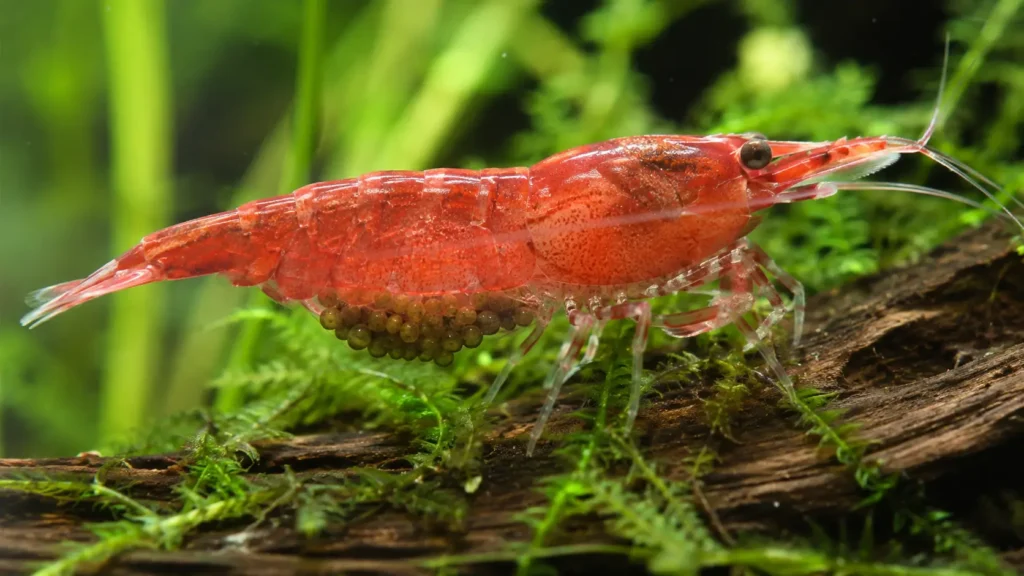
That is usually the moment a beginner realizes the shrimp are doing more than simply surviving in the aquarium.
Neocaridina shrimp can complete their reproductive cycle entirely in freshwater. Their young emerge as tiny shrimp rather than going through the type of free-swimming larval stage that makes some other shrimp species much more difficult to breed at home.
You still need to provide the right environment. Poor water quality, unsuitable tank mates, inadequate food, unprotected filter intakes, and constant changes to the aquarium can all work against a growing colony.
This shrimp breeding guide explains how Neocaridina reproduce, how to recognize males and females, what a berried shrimp looks like, how to prepare the aquarium, and what to do when baby shrimp finally appear.
Are Freshwater Shrimp Easy to Breed?
Some freshwater shrimp are much easier to breed in home aquariums than others.
Neocaridina shrimp are among the more beginner-friendly choices because their reproductive cycle can be completed in freshwater. Once a healthy breeding population is established, you do not normally need to move larvae into a separate brackish-water system.
That is very different from species such as Amano shrimp, whose reproductive requirements are more complicated.
This distinction is important because the phrase “freshwater shrimp breeding” covers animals with very different life cycles.
If you are a beginner who wants to watch a colony reproduce naturally, Neocaridina are a practical species to start with.
How Do Neocaridina Shrimp Breed?
Neocaridina reproduce sexually, so a breeding colony needs mature males and females.
Reproduction is closely connected with the female’s molting cycle. Around a receptive female’s molt, males may become noticeably more active and swim around the aquarium searching for her.
After successful mating, eggs are carried beneath the female’s abdomen. She holds them there during development rather than scattering them around the aquarium.
You may notice her regularly moving the swimmerets beneath her abdomen while carrying the eggs.
Eventually, the young emerge as miniature shrimp.
You do not normally need to remove the eggs or manually interfere with the female. A stable, mature aquarium is usually more useful than repeatedly disturbing her.
Male vs. Female Neocaridina Shrimp
Learning to recognize males and females helps you understand what is happening in a breeding colony.
Mature female Neocaridina are generally larger and have a deeper, more rounded abdomen than males. Depending on the color line, females may also develop stronger coloration.
Males tend to have a slimmer body shape and a straighter-looking underside.
These differences can be difficult to see in very young shrimp, so do not worry if you cannot identify the sex of every animal when you first buy them.
Once the colony matures, the differences usually become easier to recognize.
The most obvious confirmation that you have a mature female is eventually seeing her carrying eggs underneath the abdomen.
What Is a Shrimp Saddle?
Before a female becomes berried, you may notice a colored area behind her head and toward the upper part of the body.
Aquarium keepers commonly call this the saddle because its position can resemble a small saddle sitting across the shrimp’s back.
What you are seeing is associated with developing eggs inside the female.
The saddle may be easier to see in transparent or lightly colored shrimp and harder to spot in strongly colored individuals.
Seeing a saddle can tell you that a female is reproductively mature, but it does not guarantee that she will immediately become berried.
What Is a Berried Shrimp?
A female carrying eggs beneath her abdomen is commonly described as berried.
The name comes from the cluster of small eggs, which can resemble tiny berries underneath the shrimp.
A berried female carries the eggs between and around the swimmerets under her abdomen. She may regularly move these appendages while the eggs develop.
Beginners sometimes become worried when they see this movement and assume the female is trying to remove the eggs. In many cases, it is simply normal egg-carrying behavior.
Avoid repeatedly catching or moving a berried female unless there is a genuine husbandry reason to do so. Transport and unnecessary handling create additional disturbance at a time when stable conditions are preferable.
How to Set Up a Shrimp Breeding Tank
A Neocaridina breeding tank does not need to be elaborate.
The most useful setup is usually a mature, stable aquarium that provides plenty of grazing area and shelter.
A basic breeding setup can include:
- A properly cycled aquarium
- Shrimp-safe biological filtration
- Stable, species-appropriate water conditions
- A thermometer
- Live plants
- Moss or other fine cover
- Wood, rocks, or other aquarium-safe grazing surfaces
- A suitable substrate
- Appropriate shrimp food
- Water-testing supplies
You do not need complicated equipment simply because you want the shrimp to reproduce.
In fact, a simple tank that remains stable can be easier to manage than a heavily modified aquarium where water chemistry is constantly being adjusted.
Why a Mature Tank Helps Shrimp Breeding
A mature aquarium offers something especially valuable to breeding shrimp: established grazing surfaces.
Biofilm and microorganisms develop on plants, wood, rocks, substrate, filter surfaces, and other submerged materials.
Adult shrimp graze on these surfaces throughout the day, but they become particularly useful once tiny shrimplets appear.
A newborn shrimp does not need to travel across the aquarium to find one large pellet if edible material is available across many surfaces.
A mature aquarium should also have established biological filtration capable of processing the waste produced by its inhabitants.
Do not confuse “mature” with “dirty.” You still need sensible maintenance and good water quality. The goal is a biologically established aquarium, not an aquarium full of decomposing waste.
What Filter Is Best for Breeding Shrimp?
Filtration becomes especially important when baby shrimp are expected.
Newly emerged shrimplets are extremely small. A filter intake that is harmless to an adult shrimp may present a risk to tiny young.
Sponge filters are popular in breeding tanks because they provide biological filtration without a large exposed intake. Shrimp also spend plenty of time grazing across the sponge surface.
Other filter types can work, but their intakes should be made safe for very small shrimp where necessary.
Do not turn filtration off simply because babies are present. The aquarium still needs biological filtration and suitable water movement.
Plants and Cover for Breeding Shrimp
Live plants can make a breeding tank much more suitable for both adults and young shrimp.
Mosses are especially useful because their fine structure creates a large amount of surface area for grazing and shelter.
Other dense aquarium plants can provide similar benefits.
Wood, rocks, and suitable natural materials add even more surfaces where shrimp can explore and feed.
Do not feel that you need to create an expensive aquascape. From the shrimp’s perspective, a tangled patch of healthy moss may be more useful than a perfectly arranged decorative layout.
Give young shrimp places to disappear into, particularly if the aquarium contains other animals.
Water Quality for Breeding Shrimp
Breeding success begins with the same thing as ordinary shrimp care: suitable water quality.
Ammonia and nitrite should not be allowed to accumulate in an established shrimp aquarium. Temperature, pH, GH, KH, and other conditions should be appropriate for the species you keep.
For Neocaridina, avoid becoming obsessed with forcing the aquarium toward one exact number when your shrimp are already living and reproducing successfully in stable, appropriate conditions.
Test your source water before adding products intended to change hardness or pH.
If adjustments really are necessary, consistency matters. Replacement water that is dramatically different from the aquarium can create sudden changes every time you perform maintenance.
A breeding colony benefits from predictability.
Does Temperature Affect Shrimp Breeding?
Temperature affects crustacean metabolism, growth, egg development, and reproduction, so it can influence a shrimp colony.
However, warmer is not automatically better.
Scientific research on red cherry shrimp has shown that temperature can affect growth, reproduction, and embryo development. That does not mean home aquarists should deliberately push shrimp toward high temperatures simply to make them reproduce faster.
Your goal should be a suitable and stable temperature for the species rather than maximum reproductive speed.
Use a thermometer to monitor the actual water temperature and avoid unnecessary fluctuations.
How to Feed Breeding Shrimp
A breeding colony needs appropriate nutrition, but breeding is not an excuse to overfeed.
Neocaridina naturally graze on biofilm, microorganisms, algae, and fine organic material around a mature aquarium. Prepared shrimp foods can supplement that natural diet.
Feed according to the size of the colony and how much natural grazing the tank provides.
If large amounts of food regularly remain uneaten, reduce the portion.
This becomes even more important as the colony grows. More shrimp will eventually require more food, but increases should follow actual population growth rather than happen in anticipation of it.
Good nutrition supports the colony. Decomposing excess food does not.
What Should You Do When a Shrimp Is Berried?
Usually, the best thing you can do is very little.
Keep the aquarium stable, continue normal appropriate feeding, and avoid unnecessary changes.
Check that:
- The filter is safe for baby shrimp
- Water quality remains good
- There is plenty of cover
- Tank mates are not likely to eat young shrimp
- The colony has access to suitable food
You do not normally need to move the female to a breeding box or separate container.
Moving a berried female can introduce additional stress and different water conditions. If the main aquarium is already designed as a safe breeding environment, leaving her there is often the simplest approach.
How Long Do Shrimp Carry Eggs?
Egg-development time is not a universal fixed number.
It can vary with species and environmental conditions, particularly temperature.
Instead of trying to predict the exact hatching day, watch the eggs gradually develop and keep the aquarium stable.
As development progresses, changes may become visible when you look closely at a berried female.
Scientific studies of Neocaridina reproduction have demonstrated that incubation temperature can influence developmental timing, which is one reason a single exact number should not be presented as a rule for every aquarium.
Do Neocaridina Shrimp Have a Larval Stage?
Neocaridina are particularly convenient for home breeding because the young emerge in a form resembling miniature shrimp.
You may see extremely small shrimplets sitting on glass, moss, leaves, or other surfaces shortly after they appear.
This is different from shrimp species with free-swimming planktonic larvae that require very different rearing conditions.
Amano shrimp are a well-known example of why it is important to identify the species before following a breeding guide. Their larvae have requirements that make reproduction substantially more complicated in a home aquarium.
Do not apply a Neocaridina breeding method to every freshwater shrimp species.
How to Care for Baby Shrimp
Baby shrimp are tiny, but their basic needs are familiar: clean water, food, shelter, and safe filtration.
A mature aquarium gives them an immediate advantage because they can graze on established surfaces.
Moss, plants, wood, and other complex structures increase the amount of area available for feeding and hiding.
Some keepers also use fine or powdered foods intended for baby shrimp. These can spread food through a larger area, but they are easy to overuse because you cannot easily see or recover every particle.
Feed carefully.
Good water quality is more valuable than covering the aquarium in excess food because you are worried the babies might be hungry.
Do Adult Shrimp Eat Baby Shrimp?
Healthy Neocaridina adults are not normally active hunters of their own young.
Adults and babies can therefore live together in the same shrimp-focused aquarium.
The greater danger often comes from fish.
Even a fish described as peaceful may eat a baby shrimp if the animal is small enough to fit into its mouth.
If your main goal is to grow a large shrimp colony, a shrimp-only tank or carefully selected invertebrate companions can make breeding much easier.
Tank Mates in a Shrimp Breeding Aquarium
A community aquarium can contain healthy adult shrimp without necessarily being a good shrimp breeding aquarium.
The difference is baby survival.
Tiny shrimplets are vulnerable to many fish, including species that would rarely bother a full-grown shrimp.
Dense plants and moss can improve cover, but they cannot guarantee that every baby will survive around fish.
Peaceful freshwater snails are often easier companions in a breeding-focused shrimp tank because many commonly kept aquarium snails do not actively hunt healthy shrimp.
If maximizing colony growth matters to you, keep the livestock list simple.
Why Did My Berried Shrimp Lose Her Eggs?
Sometimes a female no longer appears to be carrying all the eggs you previously saw.
This can happen for several reasons, and it does not automatically mean you did something wrong.
Eggs may fail to develop normally, particularly with inexperienced or newly mature females. Environmental stress or health problems may also play a role.
Before changing the aquarium, check the basics:
- Water quality
- Temperature stability
- Recent water changes
- Recent chemical additions
- Overall behavior of the colony
If one female loses eggs while the rest of the colony appears healthy, avoid rebuilding the entire setup in response.
If the problem repeatedly affects multiple females, investigate the aquarium more closely.
Why Are My Shrimp Not Breeding?
A healthy-looking shrimp colony may still take time to reproduce.
Possible explanations include:
- The shrimp are not yet mature
- You do not have both sexes
- Water conditions are unsuitable
- Temperature is outside a suitable range
- Nutrition is inadequate
- The shrimp are stressed
- The aquarium was recently established
- Tank mates are disturbing the shrimp or eating young
- Breeding is occurring but tiny offspring are going unnoticed
Do not immediately start changing pH, hardness, temperature, and feeding all at once.
Changing several things simultaneously makes it difficult to know what actually helped and can make a previously stable aquarium less stable.
Start with the basics: species identification, mature males and females, good water quality, appropriate food, and patience.
Should You Mix Neocaridina Colors When Breeding?
You can keep different Neocaridina color varieties together, but consider your breeding goal first.
If you simply enjoy shrimp and do not care what colors future generations produce, mixing varieties may not concern you.
If your goal is to maintain a particular color line, keeping that strain separate makes more sense.
Different color varieties can reproduce with one another, and later generations may not consistently display the same strong coloration as the original shrimp.
For a beginner who wants a predictable colony appearance, starting with one established color line keeps things simple.
How Fast Does a Shrimp Colony Grow?
Colony growth varies considerably.
It depends on the number of mature females, temperature, food availability, water quality, survival of young, genetics, and other aquarium conditions.
This means there is little value in promising that a starter colony will become a particular number of shrimp within a certain number of months.
Instead, watch for signs of sustainable growth:
- Regularly berried females
- Young shrimp of several sizes
- Normal molting
- Active grazing
- Good survival
- Stable water quality as the population increases
As the colony becomes larger, remember that the aquarium’s biological load also increases. Feeding and maintenance may need to change gradually with it.
Common Shrimp Breeding Mistakes
Trying to Force Breeding
Constantly changing temperature, water chemistry, or feeding can create instability. Start by providing consistently suitable conditions.
Using an Unprotected Filter Intake
A filter that is safe for adults may not be safe for newly emerged shrimp. Plan filtration with the smallest residents in mind.
Keeping Too Many Fish with Breeding Shrimp
A peaceful community fish can still eat shrimplets. A shrimp-only tank is easier when colony growth is the priority.
Overfeeding Once a Female Is Berried
Eggs under one female do not mean the aquarium suddenly needs twice as much food. Increase feeding only as the growing population actually requires it.
Moving Berried Females Unnecessarily
If the main aquarium is already safe, repeatedly catching and relocating females can create unnecessary disturbance.
Expecting a New Tank to Breed Shrimp Immediately
A mature aquarium provides established biological filtration and natural grazing surfaces that can make life easier for adults and young.
Mixing Color Lines Without Considering the Result
If maintaining a specific Neocaridina color is important, keep the breeding line separate from other color varieties.
Changing Several Parameters at Once
If breeding slows down, investigate methodically. Changing everything at once can create new problems and makes it impossible to identify what mattered.
Shrimp Breeding Guide FAQ
Are Neocaridina Shrimp Easy to Breed?
Neocaridina are among the more beginner-friendly freshwater shrimp to breed because they can complete their reproductive cycle in freshwater and the young emerge as miniature shrimp. Good water quality, appropriate food, cover, and safe filtration remain important.
How Can I Tell If My Shrimp Is Pregnant?
A female carrying eggs beneath her abdomen is described as berried. You can usually see a cluster of eggs held around the swimmerets underneath her body.
What Is the Saddle on a Female Shrimp?
The saddle is the hobby term for the visible area associated with developing eggs inside a mature female before they are carried beneath the abdomen. It is often easiest to see in lightly colored or translucent shrimp.
Do I Need a Separate Breeding Tank for Neocaridina?
Not necessarily. Neocaridina can reproduce in their normal aquarium when it has stable water conditions, appropriate filtration, plenty of cover, suitable food, and no tank mates likely to eat the young.
Should I Move a Berried Shrimp?
Usually there is no need if the main aquarium is already safe for breeding. Unnecessary catching and relocation can disturb the female and expose her to different water conditions.
How Long Does a Shrimp Stay Berried?
Development time varies with species and environmental conditions such as temperature. Rather than relying on one exact number, maintain stable conditions and watch the eggs develop.
What Do Baby Shrimp Eat?
Baby shrimp graze on biofilm, microorganisms, and fine food resources found on established aquarium surfaces. Suitable prepared foods can supplement this natural grazing when necessary.
Do Baby Shrimp Need Special Food?
A mature tank can provide considerable natural grazing. Fine foods intended for baby shrimp may also be useful, but they should be fed carefully because excess fine food can contribute to water-quality problems.
Will Adult Neocaridina Eat Their Babies?
Healthy Neocaridina adults are not generally active predators of their young. Fish and other predatory tank mates are usually a greater concern for tiny shrimplets.
Can Shrimp Breed With Snails in the Tank?
Yes. Many peaceful freshwater snails can coexist with a breeding Neocaridina colony when their water requirements are compatible. Snails are generally easier companions than fish when baby-shrimp survival is important.
Why Are My Neocaridina Not Breeding?
Check that you have mature males and females, suitable and stable water conditions, appropriate nutrition, a mature aquarium, and low-stress tank mates. Avoid changing several parameters at once simply to encourage breeding.
Can Different Neocaridina Colors Breed Together?
Yes. Different Neocaridina color lines can reproduce together. If maintaining a particular color strain is important, keeping that line separately makes the outcome more predictable.
Do Shrimp Need a Heater to Breed?
Not automatically. What matters is whether the aquarium remains within a suitable and stable temperature range for the species. Use a thermometer to monitor the actual water temperature.
Why Did My Shrimp Drop Her Eggs?
Egg loss can occur for several reasons and may occasionally happen with an otherwise healthy colony. Check water quality and recent environmental changes, particularly if the problem repeatedly affects several females.
Conclusion
Shrimp breeding becomes much easier when you stop thinking of it as something you need to force.
With Neocaridina, your main job is to create an aquarium where normal reproduction can happen: stable water, established biological filtration, suitable food, plenty of grazing surfaces, shrimp-safe filtration, and enough cover for tiny offspring.
Once mature males and females are present, you may begin noticing the natural sequence yourself—a female with a visible saddle, increased activity around a molt, a berried female carrying eggs, and eventually tiny shrimplets appearing among the moss and plants.
When a female becomes berried, resist the temptation to change everything. Heavy feeding, unnecessary relocation, and sudden adjustments to water chemistry can make a simple process more complicated.
As the colony grows, adjust feeding and maintenance gradually. More shrimp eventually means more food consumption and more waste for the aquarium to process.
For a beginner, a successful breeding tank does not need to produce shrimp as quickly as possible. A better goal is a stable colony containing healthy adults, berried females, growing juveniles, and new generations appearing naturally over time.
Sources
Effect of Temperature on Biochemical Composition, Growth and Reproduction of the Ornamental Red Cherry Shrimp Neocaridina heteropoda heteropoda — PLOS ONE, 2015: This peer-reviewed study investigated reproduction, embryo incubation, juvenile growth, and temperature in red cherry shrimp. It supports this guide’s explanation that environmental temperature can influence reproductive and developmental processes rather than there being one universal breeding timeline for every aquarium.
Post-embryonic Tail Development Through Molting of the Freshwater Shrimp Neocaridina denticulata — iScience, 2025: This peer-reviewed research followed egg-carrying Neocaridina, hatching, early juvenile development, and subsequent molting. It provides scientific support for the guide’s description of young Neocaridina emerging and continuing development through repeated molts.
How to Look After Freshwater Shrimp and Snails — Ornamental Aquatic Trade Association (OATA): OATA’s freshwater invertebrate care guidance covers aquarium maturity, filtration, water quality, feeding, cover, compatibility, molting, and breeding. It also explains that breeding requirements differ among freshwater shrimp and that some species require more specialized conditions than commonly bred aquarium shrimp.
Epibiont Cohabitation in Freshwater Shrimp Neocaridina davidi — International Journal of Molecular Sciences, 2023: This peer-reviewed study examined aquarium, aquaculture, and wild Neocaridina davidi. Its background literature describes the species as one of the most common ornamental freshwater shrimp and discusses its widespread aquarium breeding, while the research also highlights the importance of monitoring organisms that may be introduced with breeding stock.