
Care Guide
Nerite Snail Care Guide
Nerite snails are excellent algae grazers that need a mature tank, hard or moderately hard water for their shells, and extra food such as algae wafers once natural algae runs low. Fit a lid, because they climb out. They lay hard white eggs, but the young do not survive in fresh water.

Nerite Snail Basics and What They Actually Clean
Nerite snails are popular freshwater algae grazers known for scraping films from glass, rock, and hardscape. Several species and trade varieties are sold, and adult size and pattern vary. They are useful grazers but still require appropriate water, food, minerals, and protection from predators.
Tank Setup and Water Conditions
A mature aquarium is preferable because established surfaces provide algae and biofilm. A spotless newly set-up tank may not produce enough natural food. The snail’s ability to eat algae should never be used as a reason to skip cycling.
Nerites tolerate a range of freshwater conditions depending on species and origin, but stable mineralized water is important for shell preservation. Very soft acidic water can erode calcium carbonate shell material over time.
Algae Grazing and Supplemental Feeding
Natural algae is a major food source, but a tank may eventually become too clean to support the snail. Offer suitable algae wafers, prepared snail foods, or vegetables when grazing surfaces are insufficient. Some individuals are reluctant to accept prepared foods, making a mature tank particularly valuable.
Do not intentionally grow uncontrolled algae by overfeeding fish. Extra nutrients can worsen water quality and produce algae types the snail may not eat. Supplemental feeding is more predictable than deliberately making the aquarium dirty.
Shell Health and Mineral Needs
Shell condition reflects both past and current conditions. Old erosion will remain visible, while healthy new growth at the shell opening indicates improved conditions. Avoid scraping or coating damaged shell areas with unverified household products.
Calcium and magnesium are important components of appropriately hard water, while KH helps buffer pH. Test source water before adding mineral supplements. A community aquarium must remain suitable for all inhabitants.
Tank Mates and Escape Prevention
Peaceful fish and shrimp commonly coexist with nerites. Avoid pufferfish, many loaches, and other dedicated snail predators. Curious fish that repeatedly nip the foot or antennae can also keep a snail closed and stressed.
Use a secure lid because nerites can climb above the waterline and may leave an open aquarium. Keep a small air space where appropriate, cover cable gaps, and check the floor promptly if a snail unexpectedly disappears.
Nerite Eggs and Reproduction
Female nerites can lay hard white egg capsules on wood, rock, equipment, and glass. These eggs generally do not complete development into juvenile nerites in ordinary freshwater aquariums because their life cycle requires different salinity conditions depending on species.
The eggs can be visually annoying but are not evidence that the aquarium will suddenly fill with baby nerites. Removing them from hard surfaces can require scraping, and marks may remain on porous wood.
Common Problems and Long-Term Care
Copper-containing medications and some other treatments can harm aquatic snails. Check active ingredients before medicating a community aquarium. Never assume a product is invertebrate-safe because it is sold for freshwater fish.
A nerite that repeatedly leaves the water, stops grazing for an unusual period, or shows progressive shell damage should prompt a review of water quality, food availability, temperature, predators, and chemistry rather than an immediate assumption of disease.
Snails sometimes remain still for extended periods, particularly after feeding or environmental changes. Check whether the operculum remains attached and whether there is a strong foul odor only when a snail is clearly unresponsive; avoid repeatedly pulling a resting snail from the glass.
Frequently Asked Questions
Do Nerite Snails Eat All Aquarium Algae?
No. They are strong grazers of many surface films but do not reliably eat every algae type. Algae control still requires appropriate light, feeding, nutrient, and maintenance management.
Do Nerite Snails Need Supplemental Food?
They may when natural algae and biofilm are insufficient. Offer suitable prepared foods or vegetables, recognizing that some individuals strongly prefer natural grazing.
Why Is My Nerite Snail Leaving the Water?
Nerites naturally explore above the waterline, but repeated escape attempts should also prompt checks of water quality, food, temperature, and tank conditions. Use a secure lid.
Do Nerite Snail Eggs Hatch in Freshwater?
The hard white capsules commonly seen in freshwater tanks generally do not develop into juvenile nerites under ordinary freshwater aquarium conditions.
Can Nerite Snails Live With Shrimp?
Usually, when water chemistry suits both and no predators are present. Both animals need adequate food and protection from invertebrate-toxic medications.
Why Is My Nerite Snail Shell Turning White?
Old shell can erode in soft or acidic conditions. Test water hardness and pH and judge improvement by the quality of new shell growth rather than expecting old damage to vanish.
Are Nerite Snails Sensitive to Copper?
Yes. Copper-containing medications can harm aquatic snails. Check active ingredients before treating a tank containing nerites.
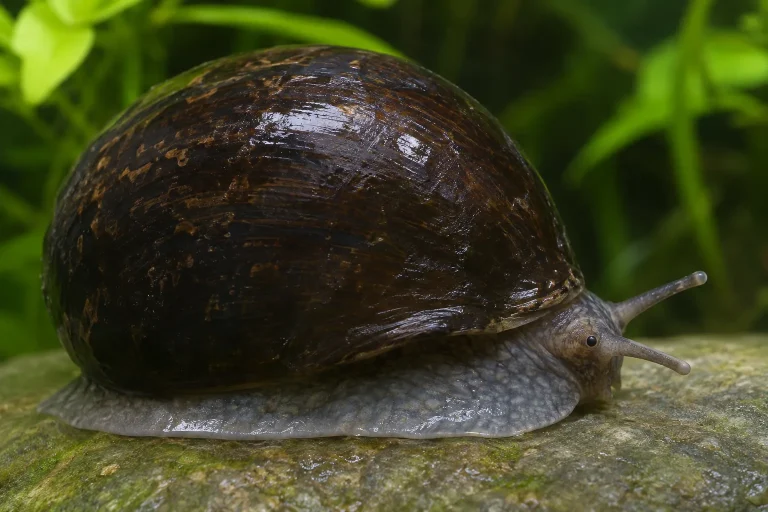
Dusky Nerite Snail
Neritina pulligera
- Care level
- Intermediate
- Adult size
- 2.5–4 cm
- Minimum tank
- 30 litres
- Temperature
- 22–28 °C
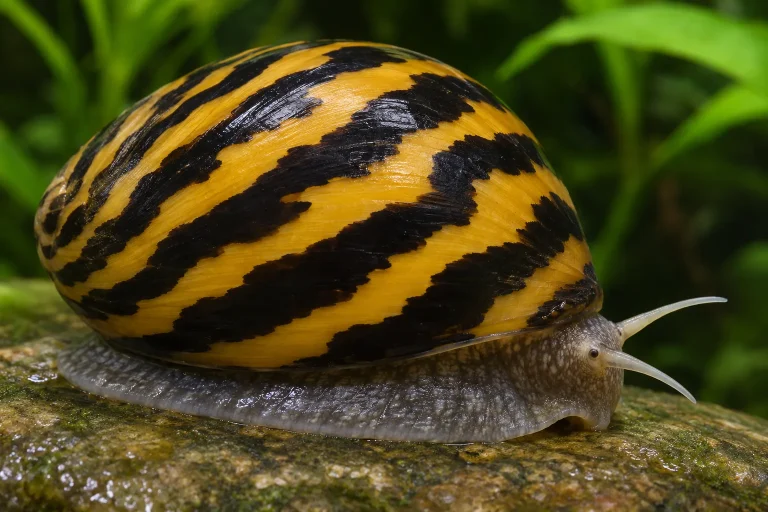
Zebra Nerite Snail
Vittina natalensis
- Care level
- Intermediate
- Adult size
- 2–3 cm
- Minimum tank
- 30 litres
- Temperature
- 22–28 °C
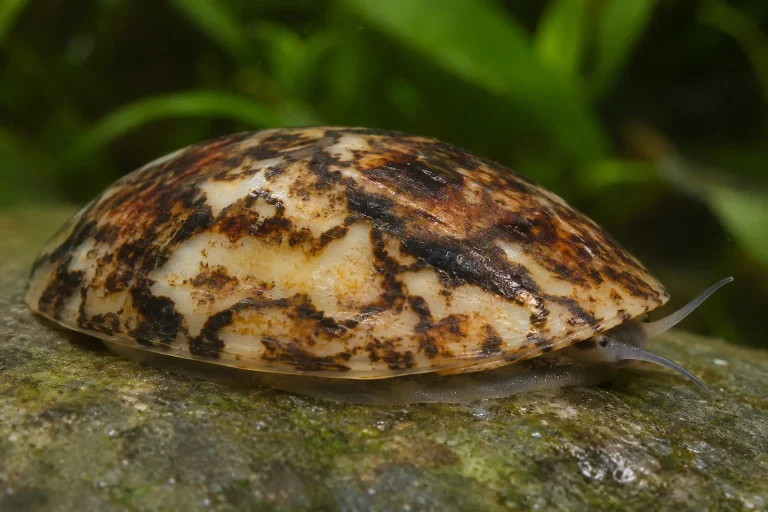
Marbled Limpet Nerite Snail
Septaria porcellana
- Care level
- Intermediate
- Adult size
- 2–3.3 cm
- Minimum tank
- 30 litres
- Temperature
- 22–28 °C