
Explainer
Driftwood Types
Popular aquarium woods include Malaysian driftwood and mopani, which are dense, sink quickly and release a lot of tannins, and spider wood, manzanita and redmoor root, which are lighter and more branching but often float at first. Choose by the shape your layout needs and how much water tint you accept, and prepare every piece by cleaning and soaking.
Why Use Driftwood in an Aquarium?
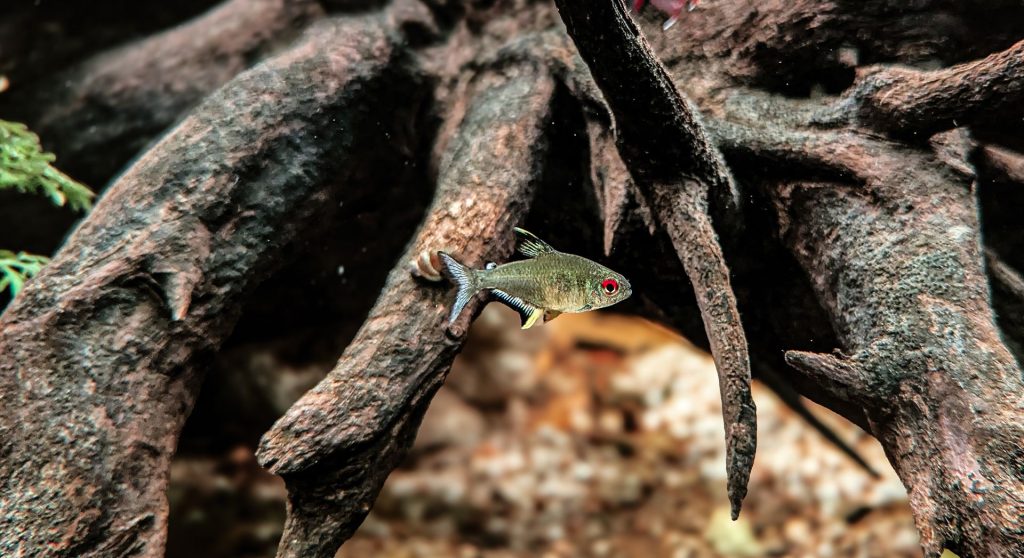
Driftwood gives an aquascape structure and gives fish shade and hiding places. It also provides surfaces for mosses, ferns and Anubias to attach to and for biofilm, which shrimp and many fish graze.
Some fish depend on it. Many plecos rasp wood as part of their diet, and fish from blackwater habitats feel safer with branches and roots around them.
Common Types of Aquarium Driftwood
Malaysian driftwood is dark, dense and sinks almost at once. Mopani is two-toned, very dense and sinks readily. Spider wood, also sold as azalea root, is light and finely branched. Manzanita is hard and branching, with a smooth reddish surface. Redmoor root is light, twisting and branchy. Cholla is the hollow skeleton of a cactus and suits shrimp tanks.
Names vary between sellers, and “bogwood” is a general term for any dark, waterlogged wood.
How Driftwood Types Differ
Density decides whether wood sinks. Malaysian and mopani usually sink straight away, while spider wood, manzanita and redmoor root often float for days or weeks until they absorb water.
Tannin release also differs. Dense woods such as mopani and Malaysian driftwood often tint the water strongly for weeks, while manzanita and spider wood release less. Soft woods break down faster over the years than hard ones.
Choosing Wood for Your Aquascape
Start with the shape you need. Upright, branching pieces suit tall, open layouts; low, chunky pieces suit caves and bottom-dwelling fish. Make sure the wood fits the tank with room for water circulation and cleaning.
Consider your livestock. Plecos benefit from wood they can rasp, shrimp graze the biofilm on fine branches, and fish from blackwater habitats enjoy the tinted water that tannins create.
Preparing New Driftwood
Scrub new wood with a stiff brush and plain hot water, and remove any soft or rotten parts. Never use soap or household cleaners.
Soak the wood until it sinks and the water stays only lightly coloured, changing the water every day or two. Boil pieces that fit in a pot to speed this up. Tie or weigh down light pieces in the tank if they still float.
Tannins, Biofilm, and Water Chemistry
Tannins tint the water yellow to brown. They are natural compounds and are not harmful to most fish; in soft water they can lower pH slightly. Activated carbon and regular water changes reduce the colour if you prefer clear water.
A white or grey fuzzy film often grows on new wood for the first few weeks. It is harmless, fades on its own and is eaten by shrimp and snails.
Safety and Long-Term Maintenance
Use wood sold for aquarium use, or wood you know is a safe, dead hardwood with no rot, sap, paint or pesticide. Avoid resinous softwoods such as pine and cedar.
Check the wood over the years. Soft areas, a bad smell or crumbling pieces mean it is breaking down and should be removed or replaced.
Frequently Asked Questions
What Driftwood Is Best for Aquariums?
There is no single best type. Malaysian driftwood and mopani are popular because they sink easily and last a long time, while spider wood and manzanita suit branching layouts.
Does All Driftwood Release Tannins?
Most driftwood releases some tannins. Dense woods such as mopani and Malaysian driftwood usually release the most, especially when new.
Which Driftwood Sinks Fastest?
Malaysian driftwood and mopani are dense and usually sink almost at once. Lighter woods may need days or weeks of soaking.
Can I Use Wood Collected Outdoors?
It is possible, but risky. The wood must be a dead, dry hardwood with no rot, sap, paint or pesticide, and it needs thorough cleaning and soaking. Wood sold for aquariums is the safer option.
How Do I Prepare Driftwood for an Aquarium?
Scrub it with hot water and a stiff brush, remove soft or rotten parts, then soak it until it sinks and the tannins slow down. Boiling smaller pieces speeds up the process.
Is Driftwood Good for Fish?
Yes, for most species. It provides cover, surfaces for biofilm and, for plecos, part of their diet. Tannins can also benefit fish from soft, blackwater habitats.
How Long Does Aquarium Driftwood Last?
Dense hardwoods can last many years. Softer woods break down faster, so check pieces now and then for soft, crumbling or smelly areas.