
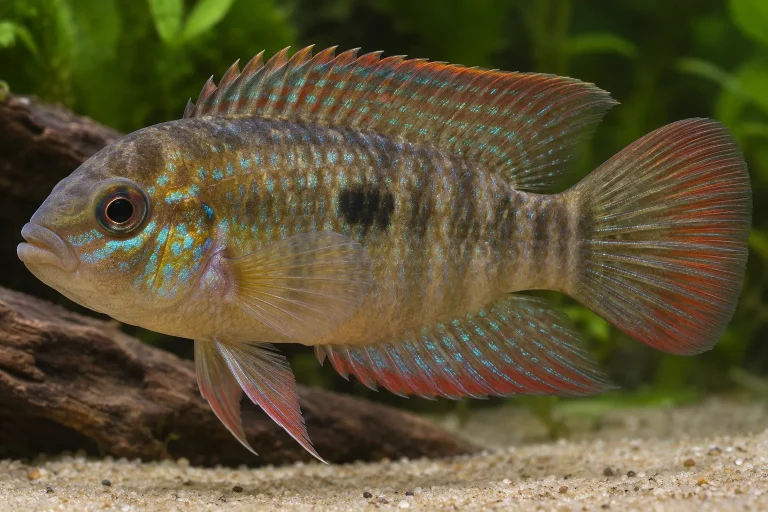
Dwarf Flag Cichlid
Laetacara curviceps
- Care level
- Beginner
- Adult size
- 5–8 cm
- Minimum tank
- 80 litres
- Temperature
- 23–28 °C
Species profile
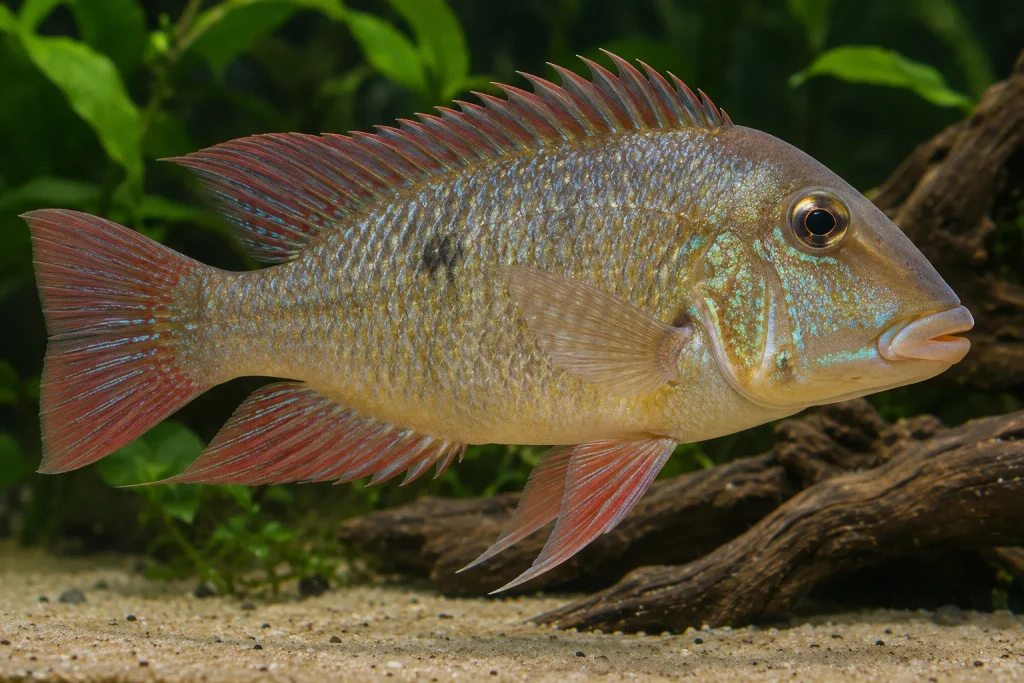
Satanoperca jurupari
Common names: Demon Eartheater, Jurupari Eartheater
Up to 25 cm
Typical adult length 18–25 cm.







A peaceful, social sand-sifting cichlid that needs a large group, pristine water, and a broad bed of fine sand.
A tall silver-gold eartheater with blue-green iridescence, reddish fins, and a small dark flank mark that may be faint.
The Satanoperca jurupari group contains several similar species. Opercular lines, flank spots, fin pattern, locality, and adult morphology should be checked.
Sexes are similar. Mature males may be larger and longer-finned, while ripe females become fuller.
Keep at least five or six over a wide bed of fine sand with powerful filtration, high oxygen, wood, and open swimming room. Avoid sharp substrate and cramped décor.
Peaceful for its size, highly social, and continuously sifts sand for food.
A group forms a hierarchy. Small groups produce persistent bullying and should be avoided.
Pairs defend a temporary spawning area but usually return to group life outside breeding.
Suitable with peaceful medium to large South American fish that do not dominate the bottom. Small fish and shrimp may be eaten.
Stable warm, clean, well-oxygenated water is essential. The species is prone to stress and head-and-lateral-line erosion in poor conditions.
Some links may earn us a commission on qualifying purchases, at no extra cost to you. Check suitability, price and availability with the seller. How affiliate links work
 Manual aquarium siphon and gravel cleaner
A manual siphon for routine aquarium water changes and accessible waste removal. The seller lists a hose approximately 1.6 m long.
Control the flow and keep the intake clear of fish and delicate planting. Clean the areas appropriate for your substrate and layout rather than disturbing the entire planted bed.
An omnivorous benthic sifter taking invertebrates, detritus, seeds, and prepared foods.
Feed several small sinking meals spread across the substrate. Include plant matter and avoid rich protein-only feeding.
A biparental larvophilic mouthbrooder. Eggs are laid on a cleaned surface and guarded; after hatching, parents take larvae into the mouth.
You can write a note about what worked for you, or send a photograph. We check everything before it appears here.
Laetacara curviceps
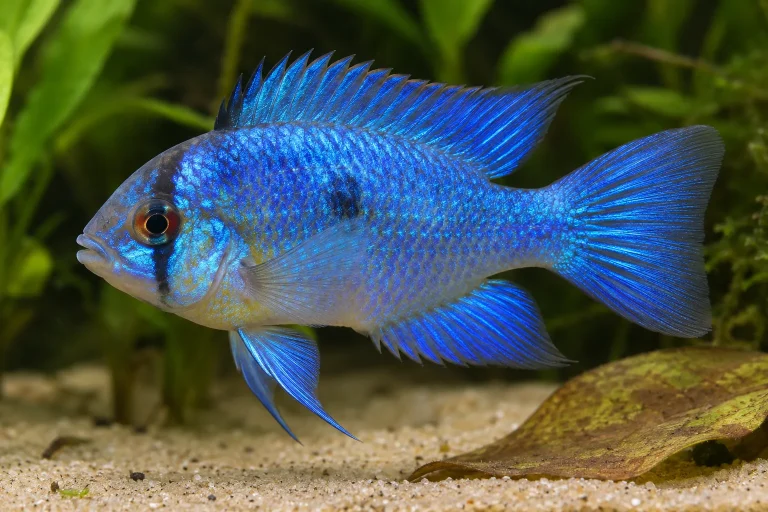
Mikrogeophagus ramirezi var. "Electric Blue"
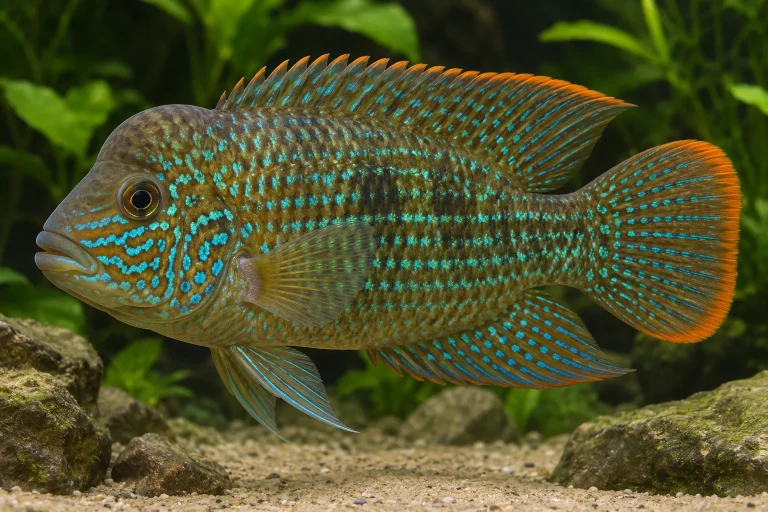
Andinoacara rivulatus
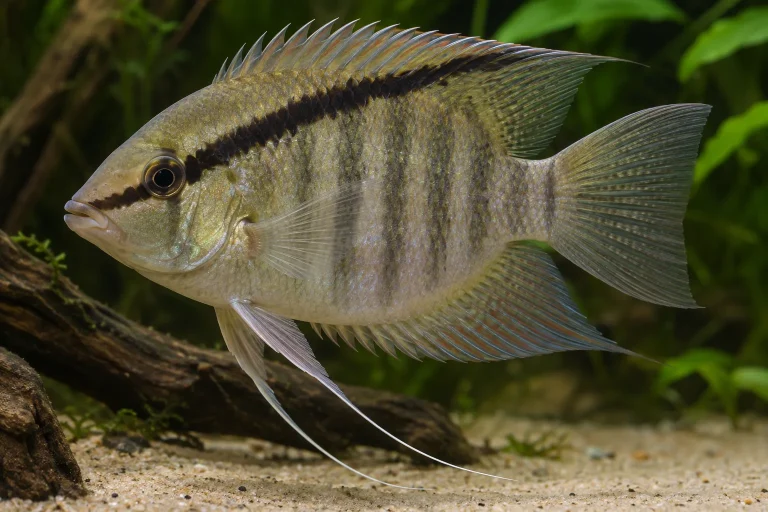
Mesonauta festivus