
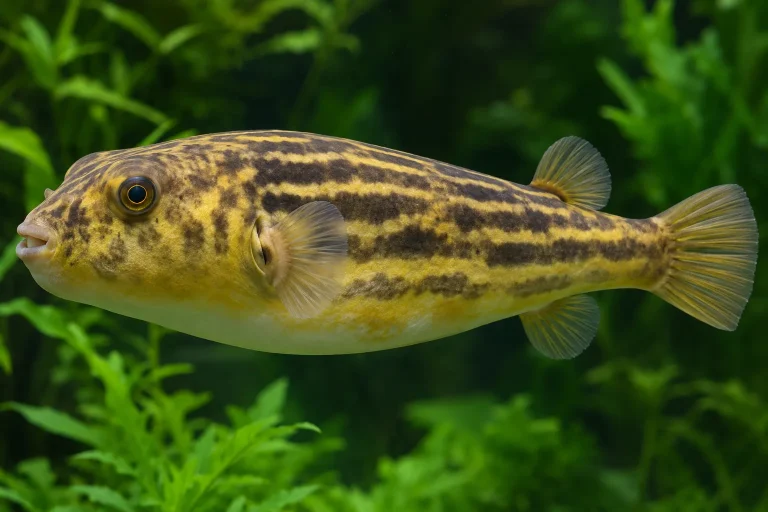
Fahaka Puffer
Tetraodon lineatus
- Care level
- Specialist
- Adult size
- 43 cm
- Minimum tank
- 450 litres
- Temperature
- 24–26 °C
Species profile
Carinotetraodon travancoricus
Common names: Dwarf Puffer, Pea Puffer, Malabar Puffer, Indian Dwarf Puffer
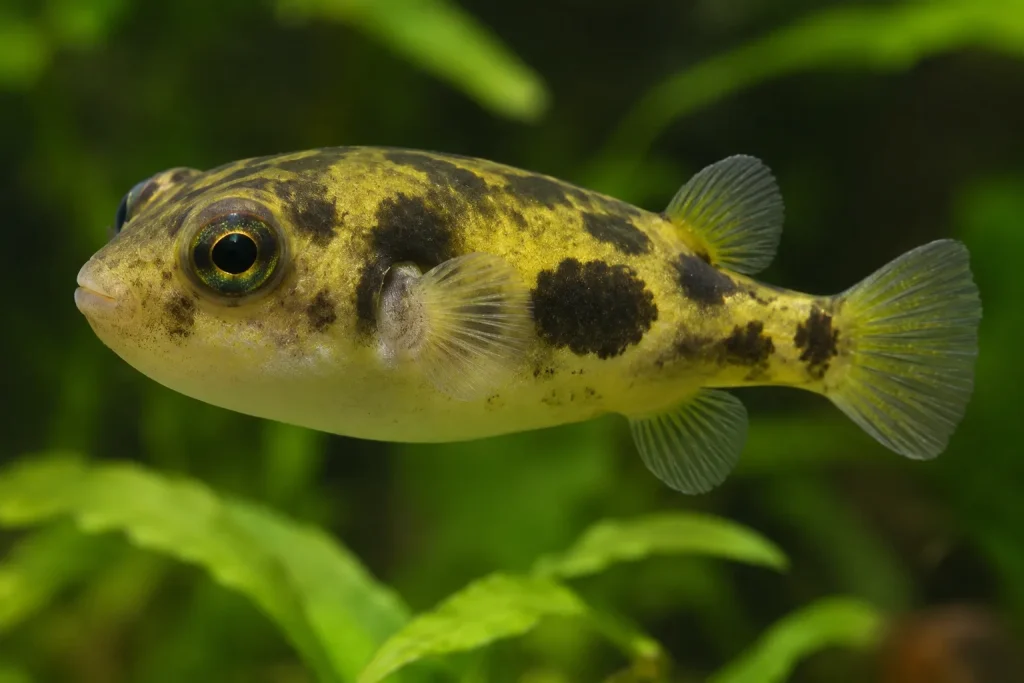
Up to 2.5 cm


The smallest puffer in the hobby at about 2.5 cm. It is full of character, but it nips fins, eats shrimp and snails, and refuses most flake food.
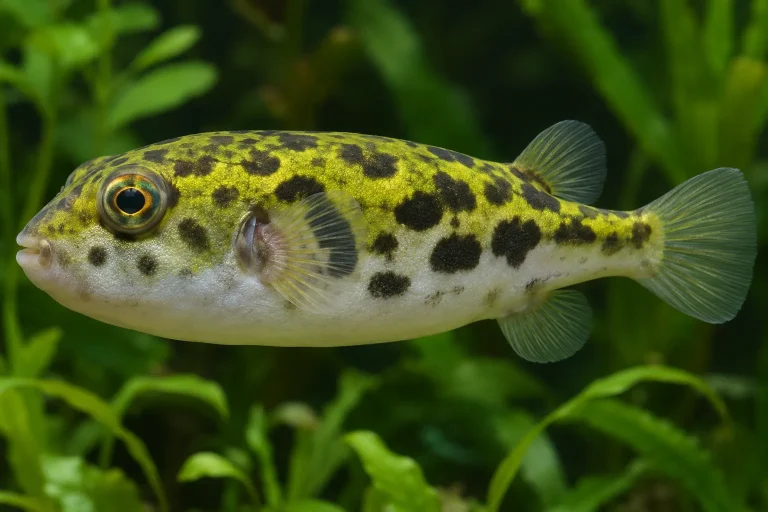
A tiny, rounded puffer in yellow to green with dark blotches on the back and a pale belly. Its eyes move independently, which gives it a watchful look.
Often mixed in shops with the very similar Dwarf Malabar Puffer, Carinotetraodon imitator. Do not confuse it with the Redeye Puffers, which grow larger and are far more aggressive.
Mature males have a clear dark line along the underside, which females lack. Young fish are hard to sex.
Plant it heavily, add roots and floating plants, and keep the flow gentle. Broken sight lines matter most, because they reduce fighting. Sources disagree on space: about 13 litres for one fish (Seriously Fish), about 10 litres per fish (Practical Fishkeeping), and 80 litres for a small group (OATA).
Curious and busy, hovering around plants and inspecting everything. Males can be fierce towards each other, especially in bare tanks.
Can be kept alone, or as one male with several females in a well-planted tank. Rival males have been known to fight to the death, so more females than males is safer.
Males defend territories. Dense planting and sight breaks keep fighting down.
Best in a species tank. It can nip the fins of slow or long-finned fish, and it may nip more when kept with too few places to hide. Its small size also means quick fish can outcompete it for food. It will eat shrimp and snails.
Prefers neutral to moderately hard water. It is freshwater only, and does not need salt, despite old advice.
A carnivore that takes small live and frozen foods, and hunts small snails. Most refuse flake and pellets.
Dwarf puffers are less prone to overgrown beaks than larger puffers, but they still need hard-shelled prey. Wild-caught fish often arrive thin, so feed them well before judging their health.
One of the few puffers bred regularly in aquariums. Use a pair or one male with several females in a densely planted tank. Eggs are scattered among fine plants or moss, and the fry need tiny live food. Adults may eat eggs and fry, so many breeders move them.
You can write a note about what worked for you, or send a photograph. We check everything before it appears here.
Tetraodon lineatus
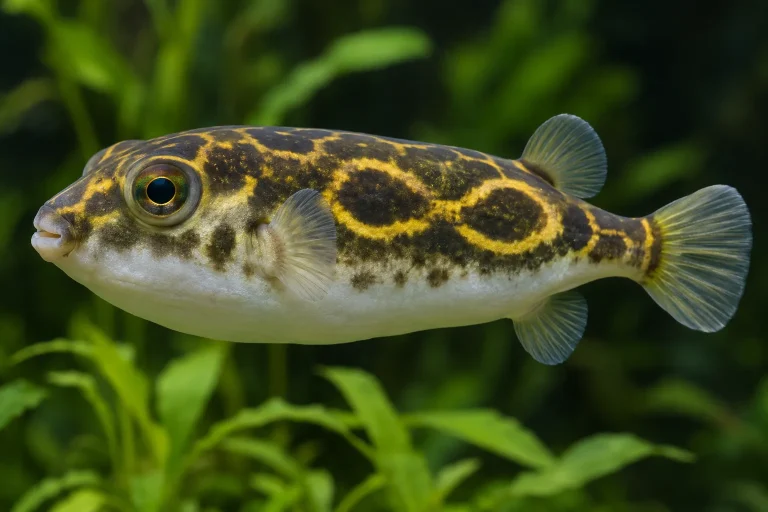
Dichotomyctere ocellatus
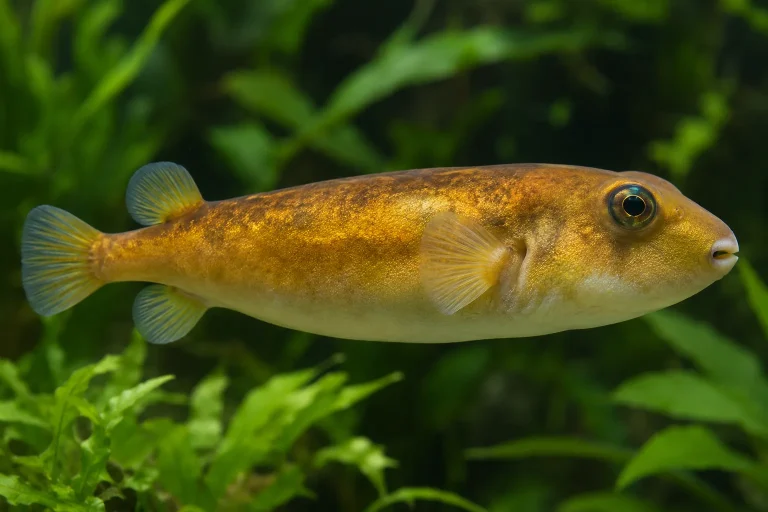
Chonerhinos naritus
Dichotomyctere fluviatilis