Skip to content
Menu

Species profile

Spotfin Hatchetfish

Thoracocharax stellatus

Common names: Spotfin Hatchetfish, Platinum Hatchetfish, Silver Hatchetfish

Recognized speciesHatchetfish

Adult size

Up to 7 cm

Up to 7 cm

Countries of origin

  • See all stock from Argentina
  • See all stock from Bolivia
  • See all stock from Brazil
  • See all stock from Colombia
  • See all stock from Ecuador
  • See all stock from Paraguay
  • See all stock from Peru
  • See all stock from Venezuela

Good fit for your tank?

Good fit for

  • A peaceful community tank with similar-sized fish
  • A keeper with room for a proper group of 10 or more

Think carefully if

  • You only want to keep one or two, because this fish needs a group of 6 or more
  • You cannot provide about 243 litres for a fully grown fish

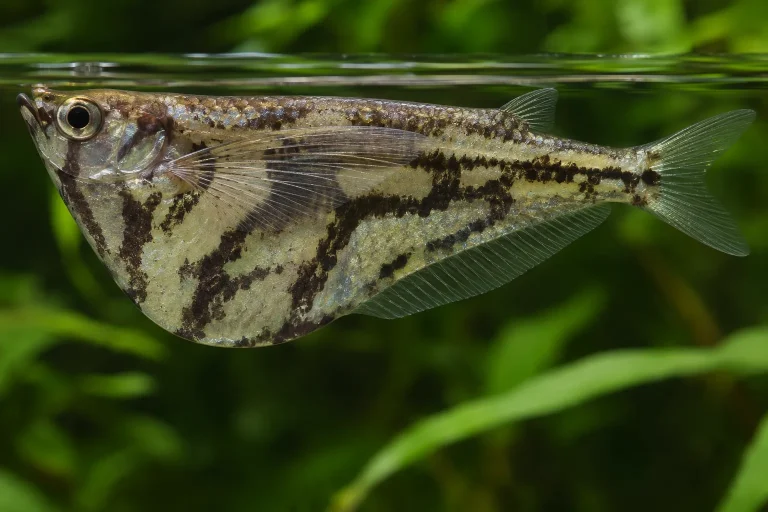
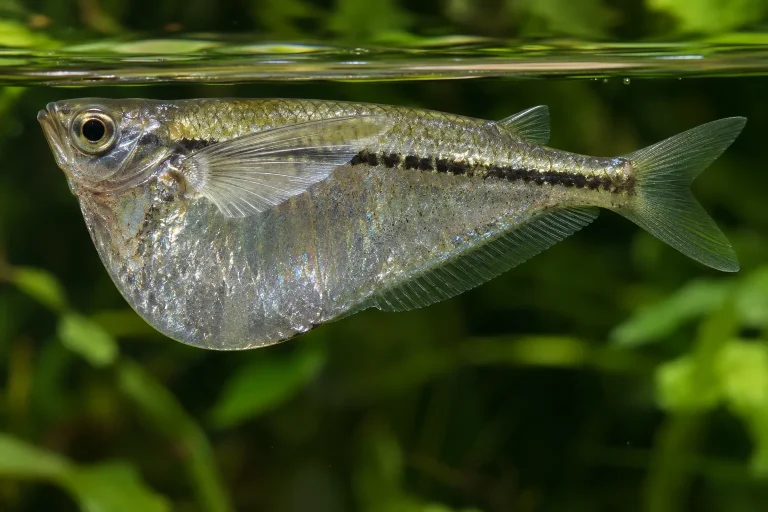
The most widespread hatchetfish in South America, a silver fish with a dark spot on its dorsal fin. Keep a group of at least 6 in 243 litres or more.

Appearance and Identification

The most widespread hatchetfish in South America, a silver fish with a dark spot on its dorsal fin. It grows to about 7 cm and jumps well, so a tight lid is essential.

Check the scientific name when buying, as common names vary between sellers and countries.

Mature females are usually rounder in the belly, and males are usually slimmer and often brighter.

Tank Requirements

Suggested filter
About 970–1,220 litres an hour
Suggested heater
About 250–375 W for this tank
Minimum tank volume
243 litres
Minimum tank length
120 cm
Minimum group size
6
Recommended group size
10
Activity level
Active
Flow preference
Low to moderate
Planting preference
Moderately planted
Lid recommended
Yes
Jumping risk
High

A long tank with open swimming water, plants around the edges and steady filtration suits this fish. A darker substrate and some floating plants usually bring out its colour.

Behaviour and Tankmates

Active and social, and most settled when kept with its own kind.

Keep a group of at least 6, and more if you can. Larger groups are calmer and show better colour and behaviour.

Not territorial, although males may spar and display.

Suits a community of similar-sized, peaceful fish that like the same water. Avoid large predators, which will treat it as food. It may eat baby shrimp.

Check tankmates for this species

Water Parameters

Temperature
20–28 °C
pH
5–7.5
GH
1–12
Stability importance
Important

Fairly tolerant of different water, if it is clean and stable.

Parameter caveat
Keep up regular water changes, and acclimatise new fish slowly.

Feeding

Diet types
Omnivore
Feeding frequency
Daily
Preferred foods
  • Small flake or micro pelletsA good staple. Feed small amounts that are eaten within a couple of minutes.
  • Frozen or live daphnia and brine shrimpOffer a few times a week for colour and condition.
  • Small bloodwormA rich treat rather than a daily food.

A surface-dwelling insect eater. Feed floating flake and pellets with live or frozen mosquito larvae and fruit flies, and keep a tight lid, as it jumps.

Feed small amounts, and remove anything left after a few minutes.

Breeding

Breeding difficulty
Not commonly bred
Parental care
Unknown

Not commonly bred in aquariums, and little has been recorded about how it spawns.

Habitat and Origin

Geographic origin
Argentina, Bolivia, Brazil, Colombia, Ecuador, Paraguay, Peru, South America, Venezuela
Natural habitat
Floodplain, Freshwater Stream
Aquarium contexts
Planted Aquarium
Audience level
Beginner

Classification

Profile type
Recognized species
Genus
Thoracocharax
Family
Gasteropelecidae
Species group
Fish, Hatchetfish

Have you kept this species?

You can write a note about what worked for you, or send a photograph. We check everything before it appears here.

Share a note or photo

JPG, PNG, or WebP, up to 5 MB.