
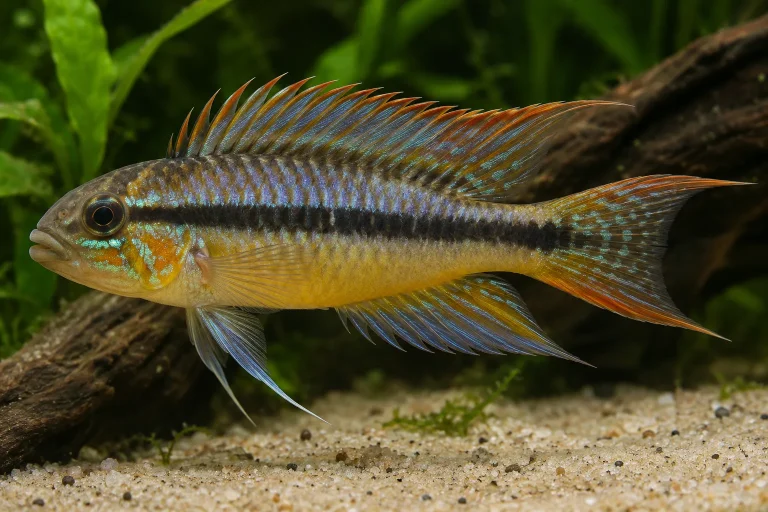
Agassiz’s Apistogramma
Apistogramma agassizii
- Care level
- Intermediate
- Adult size
- 4.5–7.5 cm
- Minimum tank
- 60 litres
- Temperature
- 24–29 °C
Species profile
Apistogramma sp. "Abacaxis"
Common names: Abacaxis Apistogramma, Rio Abacaxis Apistogramma, A227
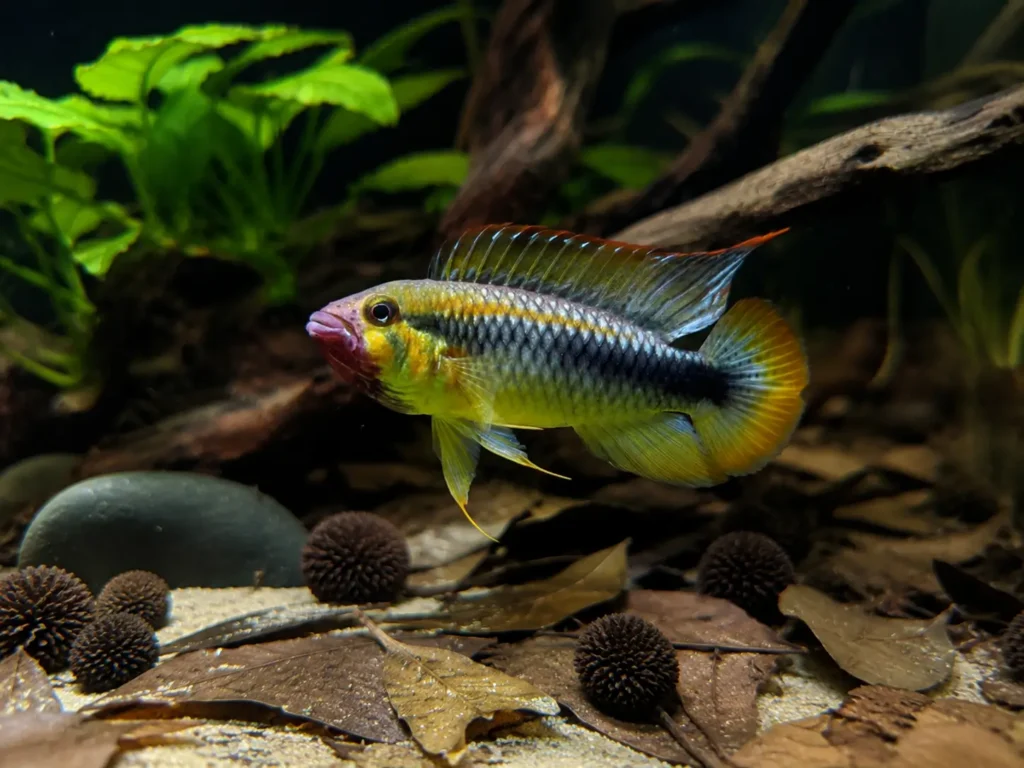
Up to 7.5 cm
Typical adult length 4.5–7.5 cm.


A rare, undescribed Brazilian dwarf cichlid native to the soft, acidic blackwater habitats of the Rio Abacaxis drainage. It is best suited to experienced aquarists who can provide exceptionally stable water conditions, dense cover, and a carefully managed breeding pair.
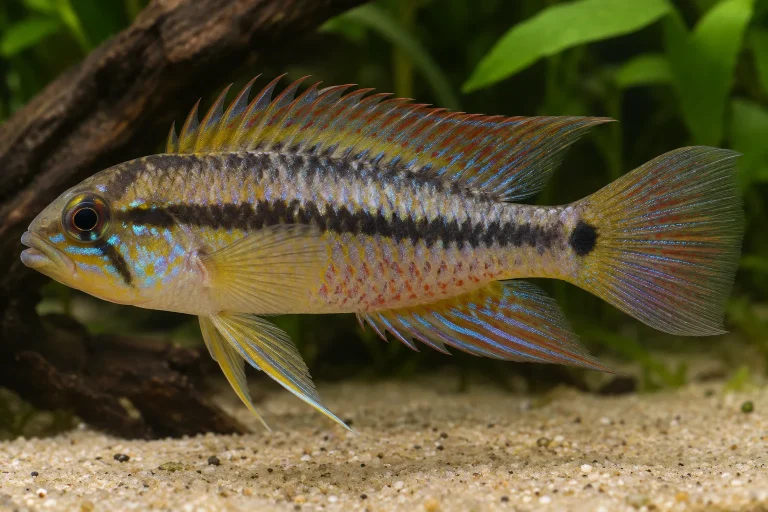
A slender, medium-sized Apistogramma with a broad dark lateral band, strong facial markings, and pronounced sex-based colour differences. Adult males develop elongated dorsal, caudal, and pelvic fin extensions with vivid blue, red, yellow, and purple colouration that varies between populations and individual condition, while females are brownish to yellow when neutral and become bright yellow with bold black brood markings.
Use the name Apistogramma sp. "Abacaxis" for the A227 Rio Abacaxis form. Do not treat "Apistogramma wilhelmi" as a valid described species. The closely related Marimari form, often labelled A228 or Apistogramma cf. sp. "Abacaxis" (Marimari), may differ in caudal pattern and should not be mixed with A227 breeding stock.
Males are substantially larger, more colourful, and have longer dorsal, anal, and pelvic fin extensions. Females are smaller and less colourful outside breeding condition, but become bright yellow with sharply defined black markings when guarding eggs or fry.
Provide a mature, quiet aquarium with fine sand, abundant leaf litter, driftwood, roots, shaded areas, and several narrow caves. Break every direct line of sight so the subordinate fish can retreat. Use gentle filtration and avoid strong current. A compatible pair is safer than an improvised harem in a small aquarium. Keep a divider or spare tank available because pair aggression can escalate.
A territorial dwarf cichlid that spends most of its time near the substrate, caves, leaf litter, and wood. A settled pair may be calm outside breeding, but courtship and brood care can produce intense aggression.
Best maintained as one established pair in a species-focused aquarium. A male and several females require considerably more floor space, separate cave territories, and strong visual barriers. Unrelated or mismatched adults may not form a stable pair.
Both sexes defend shelter areas. A brooding female becomes especially forceful around the cave and fry, while a male may harass an unreceptive female. Avoid combining it with other Apistogramma or bottom-territorial cichlids.
For a display tank with adequate space, small peaceful upper-water fish such as pencilfish or hatchetfish may serve as dithers. Tank mates can eat fry and may be attacked during breeding. Avoid other dwarf cichlids, corydoras in confined breeding tanks, fin-nippers, large aggressive fish, and ornamental shrimp. Small shrimp and shrimplets are likely to be eaten.
This blackwater specialist performs best in very soft water with little measurable carbonate hardness. Routine maintenance can occur near the upper end of the range, but successful egg development often requires lower conductivity and a pH near 5 or below. Warm water near 30°C may contribute to strongly male-biased broods.
Some links may earn us a commission on qualifying purchases, at no extra cost to you. Check suitability, price and availability with the seller. How affiliate links work
 Manual aquarium siphon and gravel cleaner
A manual siphon for routine aquarium water changes and accessible waste removal. The seller lists a hose approximately 1.6 m long.
Control the flow and keep the intake clear of fish and delicate planting. Clean the areas appropriate for your substrate and layout rather than disturbing the entire planted bed.
Primarily a small-invertebrate predator. Offer a varied diet based on live and frozen foods, supported by high-quality small prepared foods once accepted.
Feed small portions once or twice through the day while keeping the substrate clean. Wild or recently imported fish may refuse dry food. A long-term dry-food-only diet is not recommended. Condition breeding fish with varied live foods, but avoid overfeeding rich foods.
A cave-spawning maternal brood-care species. The female lays adhesive eggs on the roof or wall of a narrow cave, guards and fans them, moves larvae if needed, and later leads the free-swimming fry. The male usually guards the wider territory but may need removal if the female attacks him. Soft, low-conductivity, acidic water is the main requirement for reliable fertilisation and hatching.
You can write a note about what worked for you, or send a photograph. We check everything before it appears here.
Apistogramma agassizii
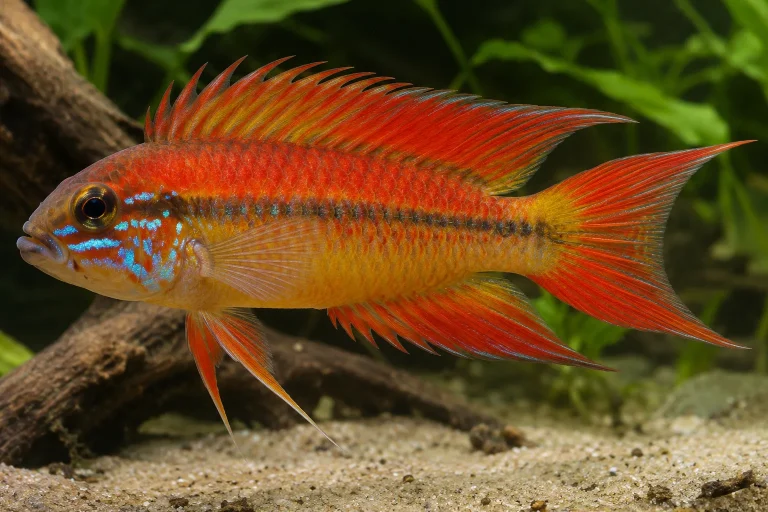
Apistogramma agassizii var. "Fire Red"
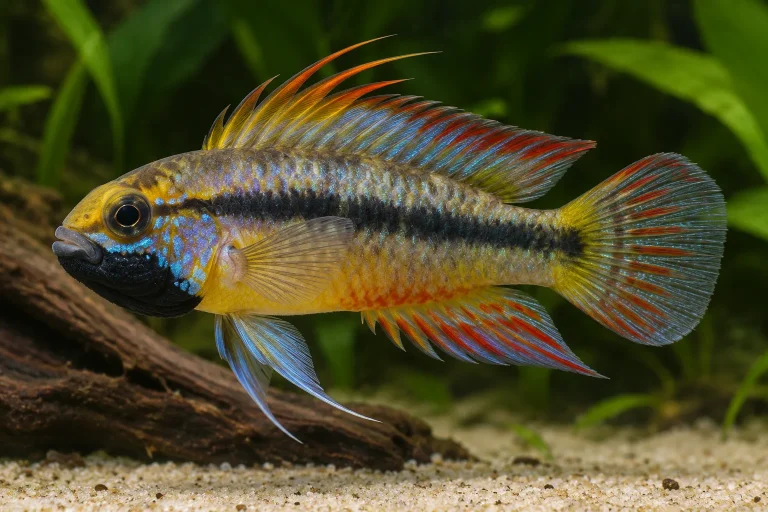
Apistogramma allpahuayo
Apistogramma pertensis