
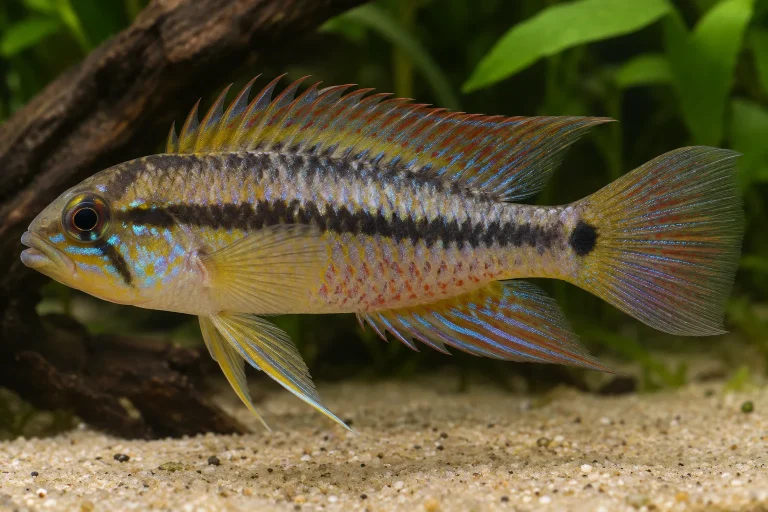
Amazon Dwarf Cichlid
Apistogramma pertensis
- Care level
- Intermediate
- Adult size
- 4–6 cm
- Minimum tank
- 60 litres
- Temperature
- 23–30 °C
Species profile
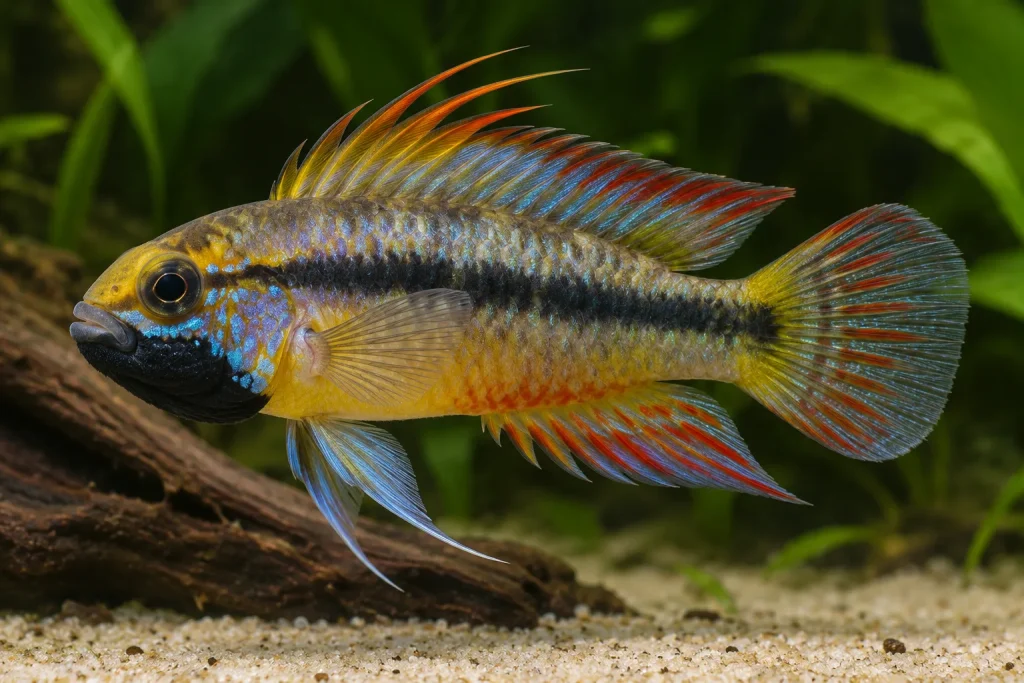
Apistogramma allpahuayo
Common names: Allpahuayo Dwarf Cichlid, Featherfin Dwarf Cichlid, Black-Chin Apistogramma
Up to 6 cm
Typical adult length 4–6 cm.


A small Peruvian blackwater Apistogramma recognised by its black chin marking and tall anterior dorsal fin. It needs warm, very soft acidic water and a cave-rich aquarium.
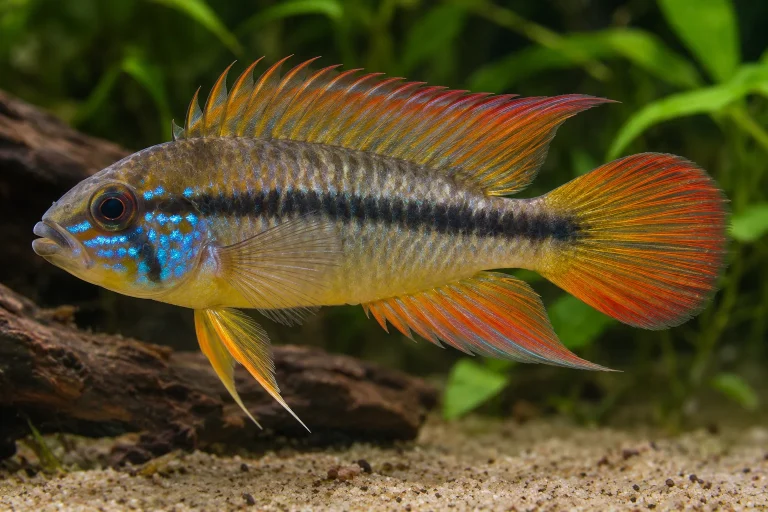
A compact Apistogramma with a conspicuous black chin or throat area, a dark lateral band, and extended anterior dorsal membranes in adult males. Males may show blue, yellow, orange, and red accents, while breeding females turn yellow with strong black markings.
The persistent black chin patch helps separate this species from similar cacatuoides-complex fish. Confirm the separation of the lateral band from the caudal-peduncle spot and do not confuse commercial A. juruensis labels with A. allpahuayo.
Males are larger and develop longer anterior dorsal membranes, more fin extension, and stronger colour. Females are smaller and show yellow-and-black brood colour during spawning and fry care.
Use a mature aquarium with fine sand, abundant leaf litter, wood, roots, dim areas, and multiple tight caves. One male with two females requires more floor space and distinct territories. Gentle filtration and low disturbance are important.
A territorial cave-oriented dwarf cichlid that spends most of its time near leaf litter, wood, and the substrate.
Often kept as one male with one or more females where each female has an independent cave territory. A pair is safer in a smaller aquarium.
Brooding females defend the cave and fry forcefully. Males may harass unreceptive females, so dense visual barriers and escape routes are essential.
Use small peaceful upper-water dithers only in a spacious display. Avoid other dwarf cichlids, intrusive bottom dwellers, aggressive fish, and ornamental shrimp. A species-focused breeding aquarium gives the highest fry survival.
Wild habitats are warm, acidic, and low in dissolved minerals. Long-term care and breeding are most reliable in very soft water near pH 5 to 6, with lower values possible in carefully maintained blackwater systems.
Some links may earn us a commission on qualifying purchases, at no extra cost to you. Check suitability, price and availability with the seller. How affiliate links work
 Manual aquarium siphon and gravel cleaner
A manual siphon for routine aquarium water changes and accessible waste removal. The seller lists a hose approximately 1.6 m long.
Control the flow and keep the intake clear of fish and delicate planting. Clean the areas appropriate for your substrate and layout rather than disturbing the entire planted bed.
A small-invertebrate predator that should receive varied live, frozen, and high-quality prepared foods.
Feed small portions once or twice daily. Newly imported fish may need live or frozen foods before accepting pellets. Avoid a long-term single-food diet.
A cave-spawning maternal brood-care species. The female lays adhesive eggs inside a narrow cave and guards the eggs, larvae, and free-swimming fry. Soft, acidic, low-conductivity water and live foods are important for reliable breeding.
You can write a note about what worked for you, or send a photograph. We check everything before it appears here.
Apistogramma pertensis
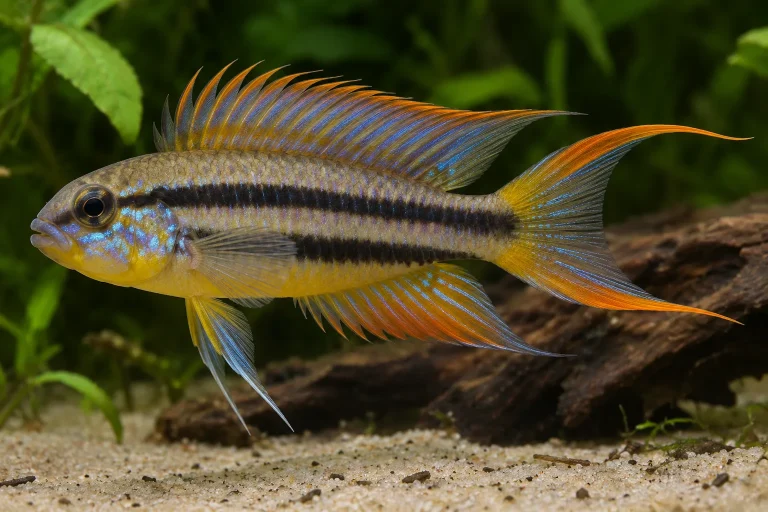
Apistogramma bitaeniata
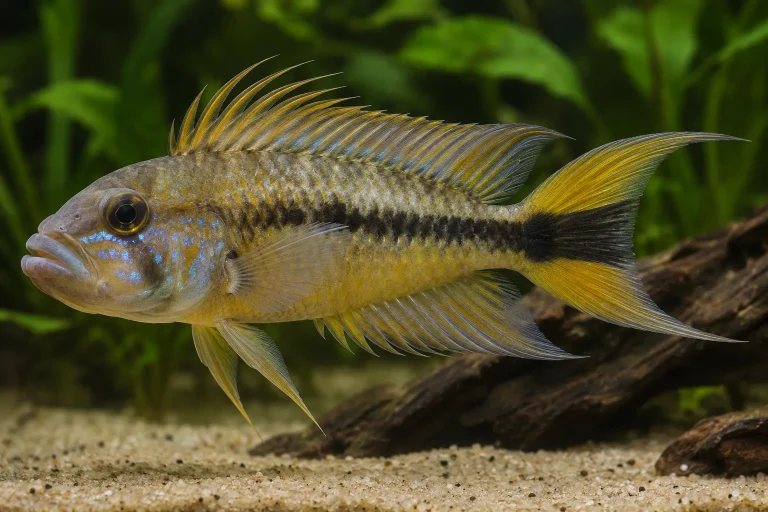
Apistogramma barlowi
Apistogramma eunotus