
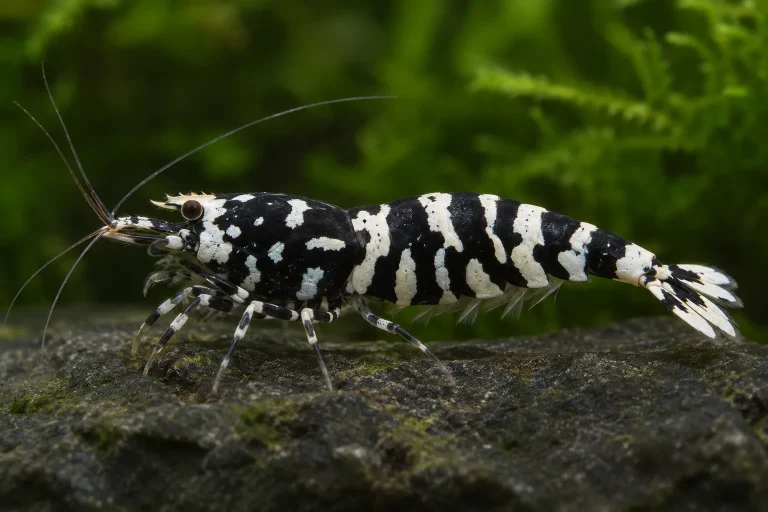
Black Fancy Tiger Caridina Shrimp
Caridina spp.
- Care level
- Intermediate
- Adult size
- 2–3 cm
- Minimum tank
- 20 litres
- Temperature
- 20–24 °C
Species profile
Caridina multidentata
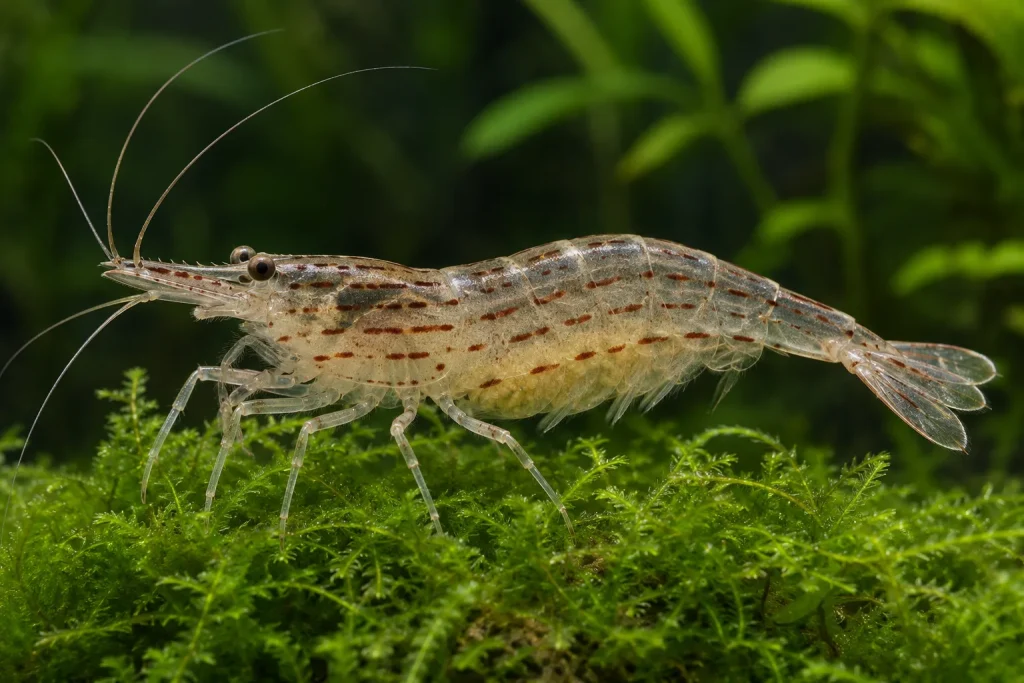
Common names: Amano Shrimp, Yamato Shrimp, Japanese Algae Shrimp
Up to 5.5 cm
Typical adult length 3–5.5 cm.


A large, peaceful East Asian algae-grazing shrimp valued for consuming soft algae and leftover food. Adults live in freshwater, but the larvae require a carefully managed brackish phase.
A translucent grey, tan, or greenish shrimp with rows of reddish-brown dots and dashes along the flanks. Females are larger and usually show elongated dash-like side markings, while males tend to have smaller rounded dots.
Distinguish true Amano Shrimp by the transparent body, orderly lateral rows of dots or dashes, long rostrum, and comparatively large adult size. Caridina japonica is an obsolete synonym rather than a separate species.
Females are larger, deeper-bodied, and develop a visible saddle or egg mass. Their lateral markings are often elongated into dashes, while males more often show separate round dots.
Use a mature aquarium with biofilm, wood, rock, plants, and open grazing surfaces. Cover filter intakes and all escape gaps. Moderate flow and good oxygenation are beneficial, but provide calmer resting areas after moulting.
A busy, peaceful grazer that explores every level of the aquarium and may seize larger food pieces from smaller shrimp.
Keep a group rather than a single specimen. They do not form a tight school, but groups forage more confidently.
Not territorial, although larger individuals may briefly push smaller shrimp away from concentrated food.
Suitable with peaceful small fish, snails, and other non-aggressive shrimp. Avoid shrimp-eating fish, large cichlids, puffers, and predatory invertebrates. Newly moulted shrimp require secure cover.
Adults tolerate a broad freshwater range when acclimated gradually. Stable mineral content is needed for safe moulting, and warm water requires stronger oxygenation.
An omnivorous grazer that consumes soft algae, biofilm, detritus, microbial growth, and prepared foods.
Feed enough to support the group after natural algae declines. Avoid prolonged overfeeding, which can foul the substrate and reduce oxygen.
Females carry hundreds to thousands of small eggs beneath the abdomen. The eggs hatch into free-swimming larvae that require brackish water, suspended microscopic food, and carefully controlled transfer back to freshwater after metamorphosis.
You can write a note about what worked for you, or send a photograph. We check everything before it appears here.
Caridina spp.
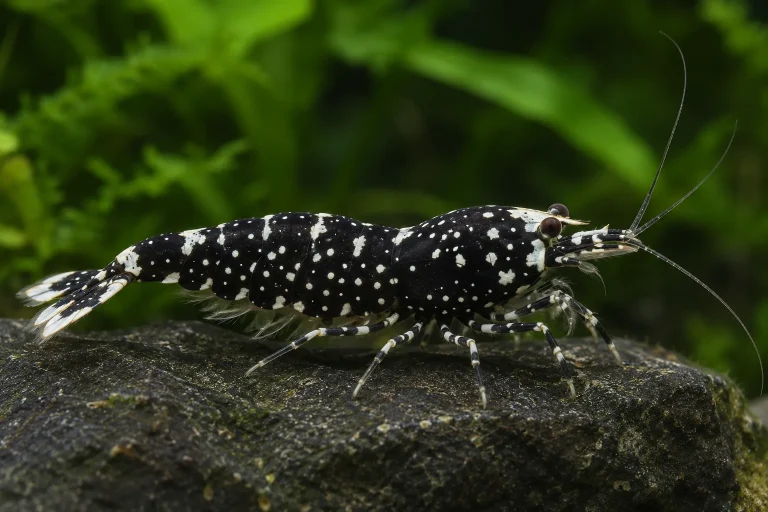
Caridina spp.
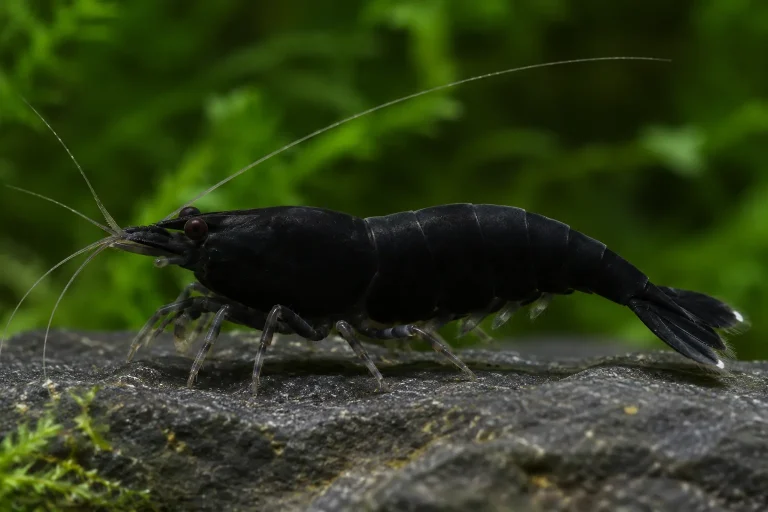
Caridina logemanni
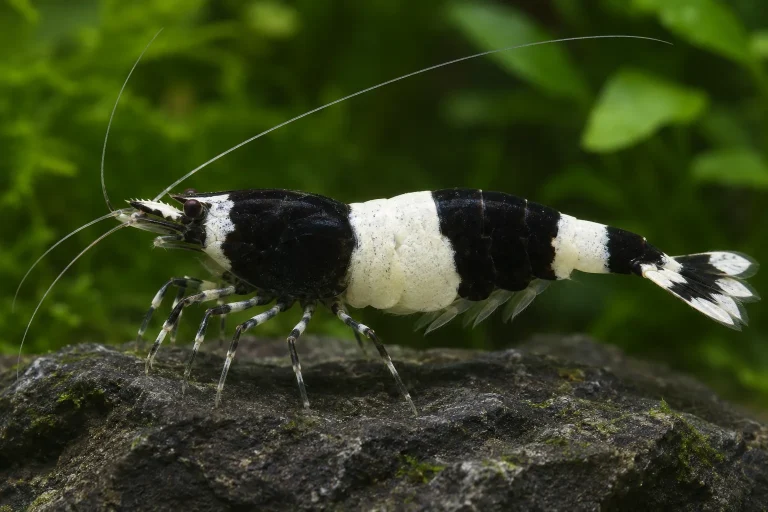
Caridina spp.