
Explainer
Amano vs Cherry Shrimp
Amano shrimp and cherry shrimp are both popular freshwater aquarium invertebrates, but they suit different goals. Amano shrimp are larger, powerful grazers that are especially valued in planted community tanks. Cherry shrimp are Neocaridina davidi selectively bred for color, and they are popular because they can form self-sustaining freshwater colonies when conditions are suitable.
Neither is automatically “better.” Choose Amano shrimp when you want larger, active grazers without easy freshwater population growth. Choose cherry shrimp when color, colony behavior, and straightforward freshwater breeding are priorities. Water chemistry, tank mates, feeding competition, and your willingness to protect tiny shrimplets should guide the final choice.

Amano vs Cherry Shrimp: Key Differences
Amano shrimp grow larger and are generally more assertive at feeding time. Cherry shrimp are smaller and occur in many selectively bred colors, including red, blue, yellow, orange, and other lines.
Amano shrimp larvae require a brackish or marine phase, so they do not establish ordinary freshwater colonies. Cherry shrimp complete their life cycle in freshwater and can reproduce steadily in a mature shrimp-safe tank.
Both graze biofilm and algae, but their effectiveness depends on algae type, group size, available food, and the rest of the aquarium.
The visual difference is obvious in an adult mixed group. Amanos are larger, mostly translucent gray-brown shrimp with characteristic dots or dashes along the sides, while cherry shrimp are compact Neocaridina selected for solid or patterned color. Their behavior at food also differs: an Amano can pick up a substantial pellet and carry it away, whereas cherries often gather as a group around smaller particles. That difference affects how you feed a mixed colony. It also affects visibility—bright cherry shrimp create a colorful display, while Amanos blend naturally into wood, stone, and plants.
Tank Size and Aquascape
Both species benefit from mature planted aquariums with moss, wood, rocks, and other biofilm-rich surfaces. Amano shrimp’s larger size and active movement make additional floor and hardscape area useful.
Cherry shrimp colonies need room to grow. A tank that begins with a small group can become densely populated if food and conditions support reproduction.
Cover filter intakes for either species. Tiny cherry shrimplets are particularly vulnerable to unprotected intakes.
For cherry shrimp, think about future population rather than only the first ten animals. A mature colony can include adults, juveniles, and tiny shrimplets using every layer of moss and hardscape. Amanos will not create the same freshwater population pressure, but their larger bodies benefit from more feeding surface and room to forage. In either setup, a sponge prefilter turns a dangerous intake into additional grazing area. Dense moss is especially valuable for cherry shrimplets because it provides both refuge and microscopic food, whereas adult Amanos are more capable of moving through open community-tank spaces.
Water Chemistry and Stability
Both need stable, cycled water with ammonia and nitrite controlled. They require suitable mineral availability for normal exoskeleton development and molting.
Neocaridina are often selected for moderate, relatively forgiving freshwater conditions, while Amano shrimp also adapt to many community parameters. Exact ranges vary among sources and breeding lines, so stability and acclimation matter.
Test GH, KH, pH, temperature, and source water rather than adjusting minerals from guesswork.
The overlap in acceptable water conditions is why the two species are often kept together, but a mixed tank should not be built by averaging two incompatible target numbers. Start with stable conditions suitable for both and acclimate new shrimp to the actual aquarium. Neocaridina breeding lines may have been raised for generations in local tap water, while imported Amanos may arrive through a different supply chain. Ask the seller about their holding water when possible. If you use RO, create a repeatable remineralization recipe so each water change does not become a new acclimation event.
Feeding and Algae Control
Amano shrimp are larger and can dominate sinking foods. They are often strong grazers of soft algae and leftover food, but they cannot solve every algae problem.
Cherry shrimp spend much of the day picking at biofilm and fine particles. In a mature colony, the group collectively grazes a large surface area.
Supplement both species when natural food is insufficient. An aquarium that looks clean can still leave shrimp underfed.
Amano shrimp usually win a direct contest over a large pellet because they are bigger and more assertive. In a mixed tank, crush or divide food and distribute it among moss, wood, and open substrate. That allows juvenile cherries to feed without confronting an Amano carrying away the entire meal. Do not overfeed just to ensure everyone sees food. Mature biofilm provides continuous background grazing, and prepared food should supplement it. A feeding dish can help you judge leftovers, but placing every meal in one dish may concentrate competition, so use it according to the behavior you observe.
Breeding Differences
Cherry shrimp females carry eggs beneath the abdomen and release miniature freshwater shrimplets. With safe tank mates and abundant cover, a colony can expand without special larval rearing.
Amano females also become berried, but the larvae require a different salinity environment. Normal freshwater tanks therefore do not produce a growing Amano population.
If you do not want rapid shrimp population growth, Amano shrimp are easier in that respect. If breeding is part of the hobby, cherry shrimp are far more accessible.
Cherry shrimp offer the simpler breeding experience because a berried female releases benthic miniature shrimp that can remain in freshwater. Their biggest challenges are predation, food availability, intake safety, and stable water. Amano breeding is fundamentally different: larvae are free-swimming and require a salinity transition before later returning to freshwater. This is not merely a more difficult version of cherry breeding; it is a different rearing process. If your goal is to watch multiple generations develop in the display tank, cherry shrimp are the clear fit. If you prefer a stable purchased group, Amanos are easier to control.
Fish Tank Mates and Shrimplet Survival
Adult Amano shrimp are less likely to fit into the mouth of very small fish, but larger or aggressive fish can still injure them. Cherry shrimp adults and especially shrimplets face greater predation risk.
A peaceful fish community is not automatically shrimp-safe. Many small fish opportunistically eat baby shrimp even when they ignore adults.
For maximum cherry shrimp breeding, a shrimp-only tank or very carefully selected tank mates are preferable.
A fish can be compatible with adult Amanos and still eliminate nearly every newborn cherry shrimp. This is why online claims that a species is “shrimp safe” need context. Ask whether the claim refers to adult shrimp or successful colony reproduction. Small rasboras and tetras may leave large Amanos alone while opportunistically eating tiny shrimplets. For a display where both shrimp species are kept with fish, expect lower cherry recruitment unless cover is extremely dense. For deliberate cherry breeding, removing fish predation is more reliable than trying to create enough hiding places to defeat it.
Which Shrimp Should You Choose?
Choose Amano shrimp for a planted display where larger shrimp, active grazing, and minimal freshwater reproduction are desirable. Choose cherry shrimp for color, colony development, and freshwater breeding.
You can keep both together when water conditions overlap and the aquarium has enough food and space. Distribute food so Amanos do not monopolize every feeding location.
Whichever species you choose, buy healthy shrimp, acclimate them carefully, and establish the tank before relying on them as part of the cleanup crew.
Your maintenance goals can make the decision simple. A planted community keeper who wants visible, hardworking grazers and no easy freshwater breeding may prefer Amanos. A keeper who wants a shrimp-focused aquarium with color genetics, juveniles, and colony growth will get more from cherries. If you want both, design around the smaller cherry shrimp first: protect intakes, provide fine cover, and distribute food. Amanos will generally handle those conditions comfortably. Buying both only for algae control misses much of what makes each species interesting and can lead to underfeeding after the aquarium becomes clean.
Frequently Asked Questions
Which Is Better for Algae, Amano or Cherry Shrimp?
Amano shrimp are larger and often stronger individual algae grazers, but neither species solves every algae type. The answer also changes if your goal is a display group rather than successful reproduction, because shrimplet survival creates stricter tank-mate requirements. The answer also changes if your goal is a display group rather than successful reproduction, because shrimplet survival creates stricter tank-mate requirements. The answer also changes if your goal is a display group rather than successful reproduction, because shrimplet survival creates stricter tank-mate requirements.
Which Shrimp Breeds More Easily?
Cherry shrimp reproduce entirely in freshwater and are much easier to breed in a home aquarium. The answer also changes if your goal is a display group rather than successful reproduction, because shrimplet survival creates stricter tank-mate requirements. The answer also changes if your goal is a display group rather than successful reproduction, because shrimplet survival creates stricter tank-mate requirements. The answer also changes if your goal is a display group rather than successful reproduction, because shrimplet survival creates stricter tank-mate requirements.
Can Amano and Cherry Shrimp Live Together?
Yes when their water requirements overlap and food is distributed so both can feed. The answer also changes if your goal is a display group rather than successful reproduction, because shrimplet survival creates stricter tank-mate requirements. The answer also changes if your goal is a display group rather than successful reproduction, because shrimplet survival creates stricter tank-mate requirements. The answer also changes if your goal is a display group rather than successful reproduction, because shrimplet survival creates stricter tank-mate requirements.
Which Shrimp Is Larger?
Adult Amano shrimp are generally larger than cherry shrimp. The answer also changes if your goal is a display group rather than successful reproduction, because shrimplet survival creates stricter tank-mate requirements. The answer also changes if your goal is a display group rather than successful reproduction, because shrimplet survival creates stricter tank-mate requirements. The answer also changes if your goal is a display group rather than successful reproduction, because shrimplet survival creates stricter tank-mate requirements.
Which Is Better for a Shrimp-Only Colony?
Cherry shrimp are the usual choice because they reproduce readily in freshwater and come in many colors. The answer also changes if your goal is a display group rather than successful reproduction, because shrimplet survival creates stricter tank-mate requirements. The answer also changes if your goal is a display group rather than successful reproduction, because shrimplet survival creates stricter tank-mate requirements. The answer also changes if your goal is a display group rather than successful reproduction, because shrimplet survival creates stricter tank-mate requirements.
Will Fish Eat Cherry Shrimp?
Many fish can eat shrimplets and some can eat adults. Amanos’ larger size reduces but does not eliminate predation risk. The answer also changes if your goal is a display group rather than successful reproduction, because shrimplet survival creates stricter tank-mate requirements. The answer also changes if your goal is a display group rather than successful reproduction, because shrimplet survival creates stricter tank-mate requirements. The answer also changes if your goal is a display group rather than successful reproduction, because shrimplet survival creates stricter tank-mate requirements.
Do Both Shrimp Need a Cycled Tank?
Yes. Both do best in mature, stable aquariums with established biofilm and controlled ammonia and nitrite. The answer also changes if your goal is a display group rather than successful reproduction, because shrimplet survival creates stricter tank-mate requirements. The answer also changes if your goal is a display group rather than successful reproduction, because shrimplet survival creates stricter tank-mate requirements. The answer also changes if your goal is a display group rather than successful reproduction, because shrimplet survival creates stricter tank-mate requirements.
Choose between Amano and cherry shrimp according to the aquarium you want to maintain. Amanos offer larger size, assertive grazing, and little chance of freshwater population growth. Cherries offer vivid color and an accessible freshwater breeding colony. Both need a mature, stable tank and appropriate minerals. In a mixed setup, protect the smaller cherries and distribute food so the larger Amanos do not dominate every meal.
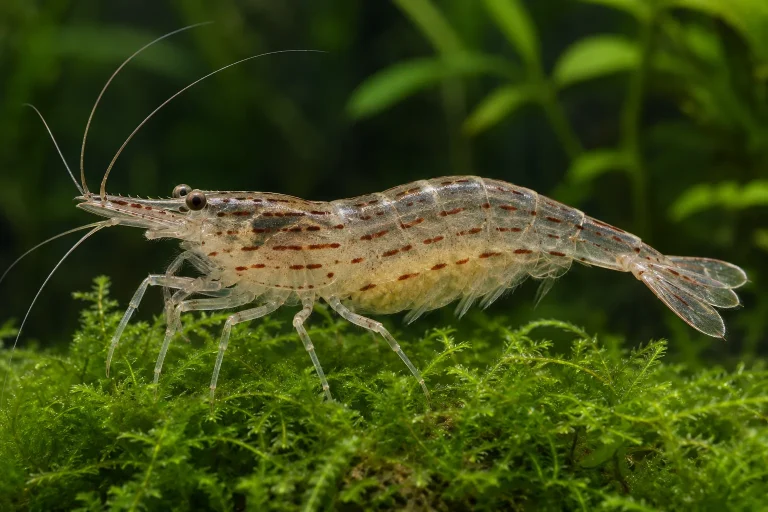
Amano Shrimp
Caridina multidentata
- Care level
- Beginner
- Adult size
- 3–5.5 cm
- Minimum tank
- 40 litres
- Temperature
- 18–28 °C
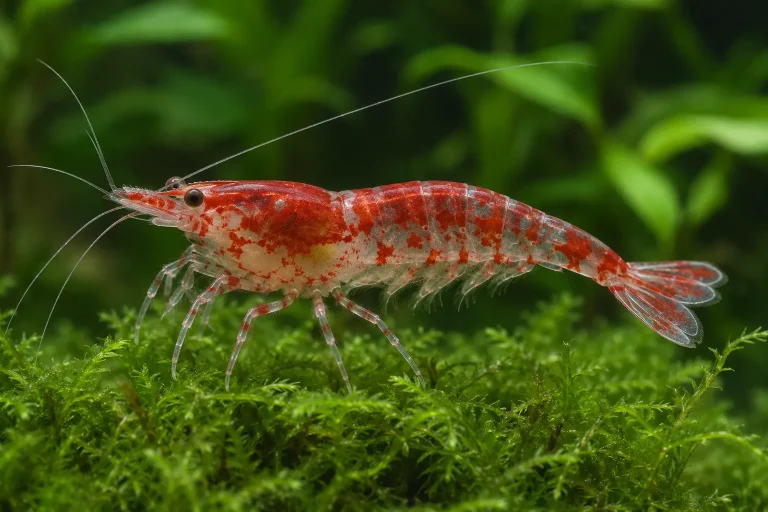
Red Cherry Shrimp
Neocaridina davidi
- Care level
- Beginner
- Adult size
- 3–4 cm
- Minimum tank
- 20 litres
- Temperature
- 18–26 °C
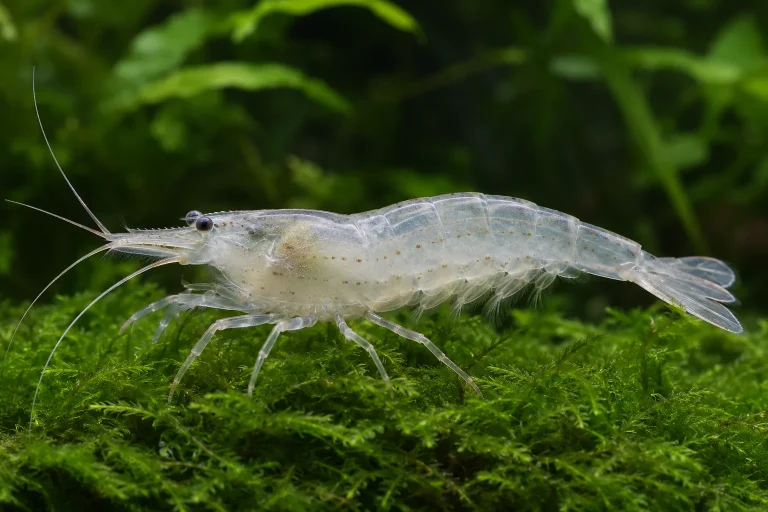
White Amano Shrimp
Caridina multidentata
- Care level
- Intermediate
- Adult size
- 4–6 cm
- Minimum tank
- 60 litres
- Temperature
- 20–27 °C
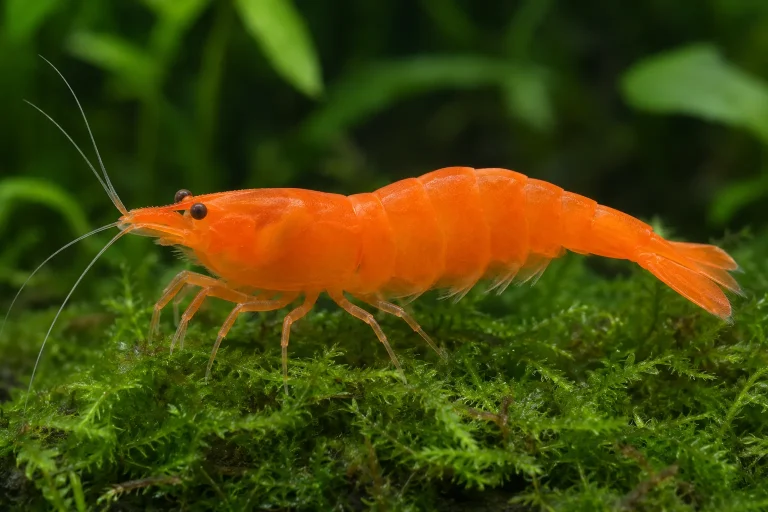
Orange Cherry Shrimp
Neocaridina davidi
- Care level
- Beginner
- Adult size
- 3–4 cm
- Minimum tank
- 20 litres
- Temperature
- 18–26 °C