
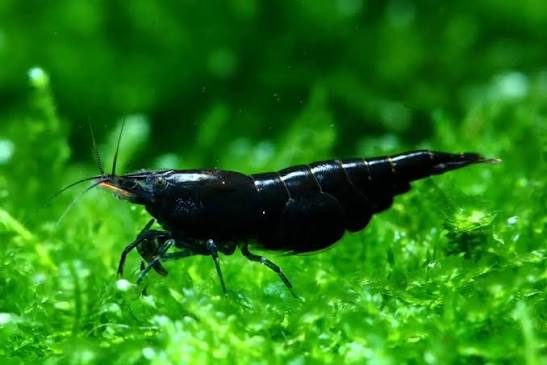
Black Rose Shrimp
Neocaridina davidi
- Care level
- Beginner
- Adult size
- 3–4 cm
- Minimum tank
- 20 litres
- Temperature
- 18–26 °C
Species profile
Neocaridina spp.
Common names: Assorted Shrimp, Assorted Neocaridina Shrimp, Mixed Neocaridina Shrimp
Up to 3.5 cm
Typical adult length 2–3.5 cm.



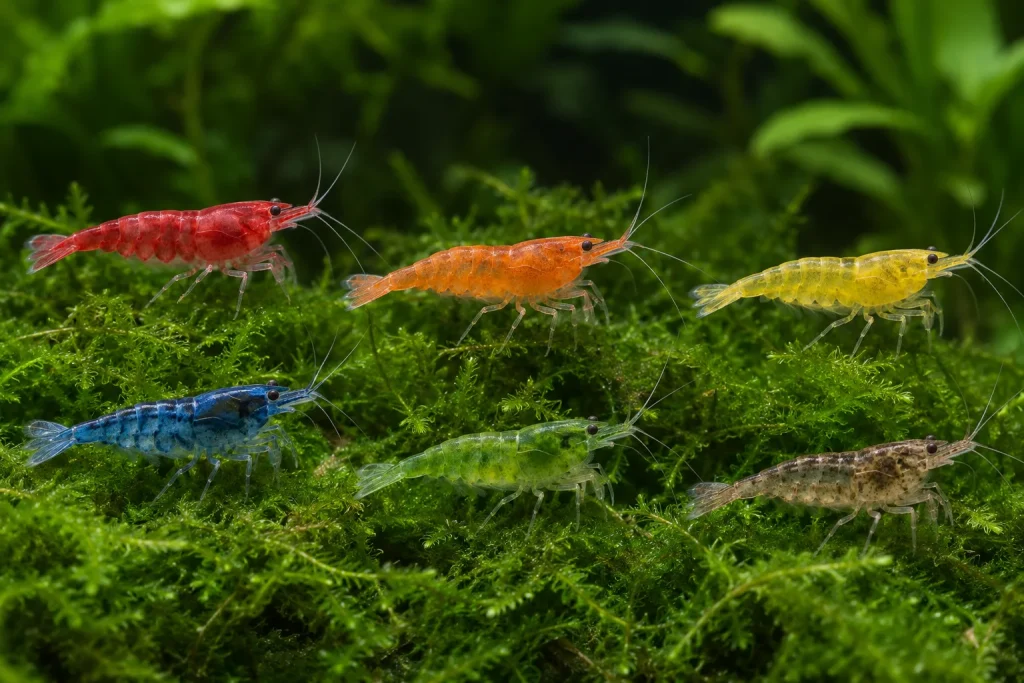
A mixed retail group of Neocaridina shrimp rather than one species or stable colour line. They are hardy social grazers, but mixed colours commonly produce variable wild-type offspring.
Appearance varies widely and may include red, orange, yellow, blue, green, black, brown, clear, rili, striped, or mixed-pattern individuals. Offspring from mixed strains often revert toward transparent brown wild-type colour.
This is a commercial mixed-group profile, not a formal species identification. Use a separate species or variety profile when the shrimp can be verified as Neocaridina davidi or another named taxon and colour line.
Females are larger, deeper-bodied, and usually more strongly coloured. Mature females may show an ovarian saddle and carry eggs beneath the abdomen.
Use a mature aquarium with moss, plants, wood, leaf litter, biofilm, and a sponge-covered filter intake. Provide stable minerals for moulting and avoid large abrupt water changes.
Peaceful social grazers that spend the day picking biofilm from plants, wood, substrate, and hardscape.
Keep a group of at least six, with ten or more preferred. Colonies reproduce readily when adults of both sexes are present.
Not territorial, although larger shrimp may temporarily dominate concentrated food.
Best with snails, other peaceful dwarf shrimp, and very small non-predatory fish. Most fish will eat some shrimplets. Avoid puffers, cichlids, loaches, large barbs, crayfish, and predatory shrimp.
Some links may earn us a commission on qualifying purchases, at no extra cost to you. Check suitability, price and availability with the seller. How affiliate links work
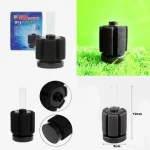 Xinyou XY-2835 small sponge filter
A small air-driven filtration option for a lightly stocked dwarf-shrimp setup. The seller lists a sponge approximately 5.5 cm across and 7 cm high.
An air pump and airline are required separately. Choose the complete filter and pump combination for your actual tank and stocking; this small sponge is not presented as the sole filter for a large aquarium.
Most captive Neocaridina are adaptable, but stable hardness and conductivity matter more than chasing a precise number. Very warm water shortens lifespan and lowers dissolved oxygen.
An omnivorous grazer that consumes biofilm, algae, microorganisms, detritus, and prepared shrimp foods.
Feed lightly and allow the colony to graze. Overfeeding is a common cause of poor water quality and pest outbreaks.
Females brood eggs beneath the abdomen. The young hatch as miniature benthic shrimp without a free-swimming marine larval phase. Mixed colours and species can produce unpredictable offspring, so use isolated lines for selective breeding.
You can write a note about what worked for you, or send a photograph. We check everything before it appears here.
Neocaridina davidi
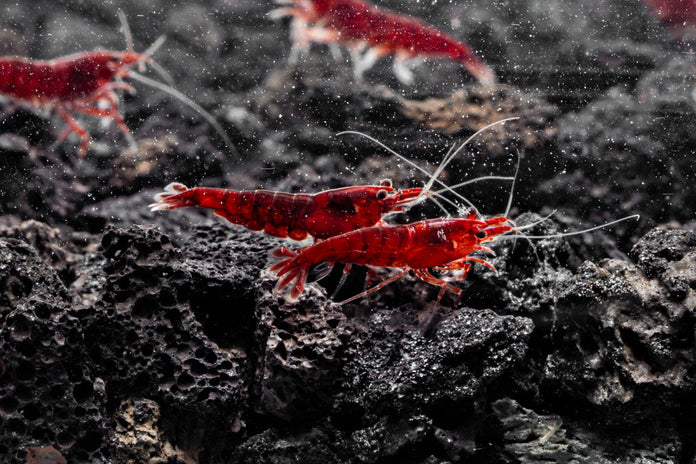
Neocaridina davidi
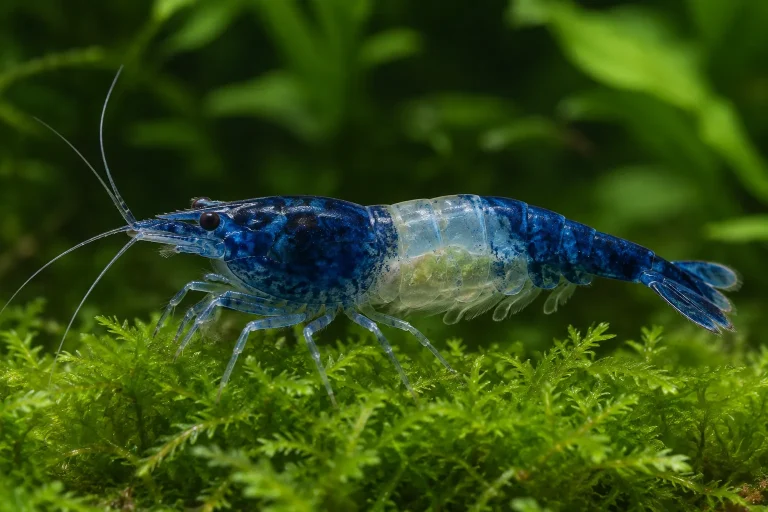
Neocaridina davidi
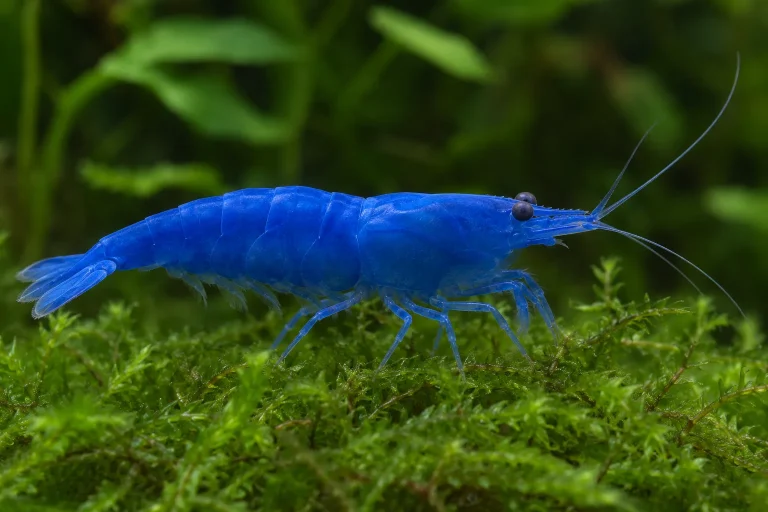
Neocaridina davidi