
July 23, 2026
Crayfish Care Guide
Freshwater crayfish need a tank sized for their species, a tight-fitting lid with every gap sealed, hard water with enough minerals for molting, one hiding place per animal and a varied sinking diet. Most will catch fish and snails, so they usually do best in a species tank. Check your local rules first, because several species are banned in some regions as invasive.
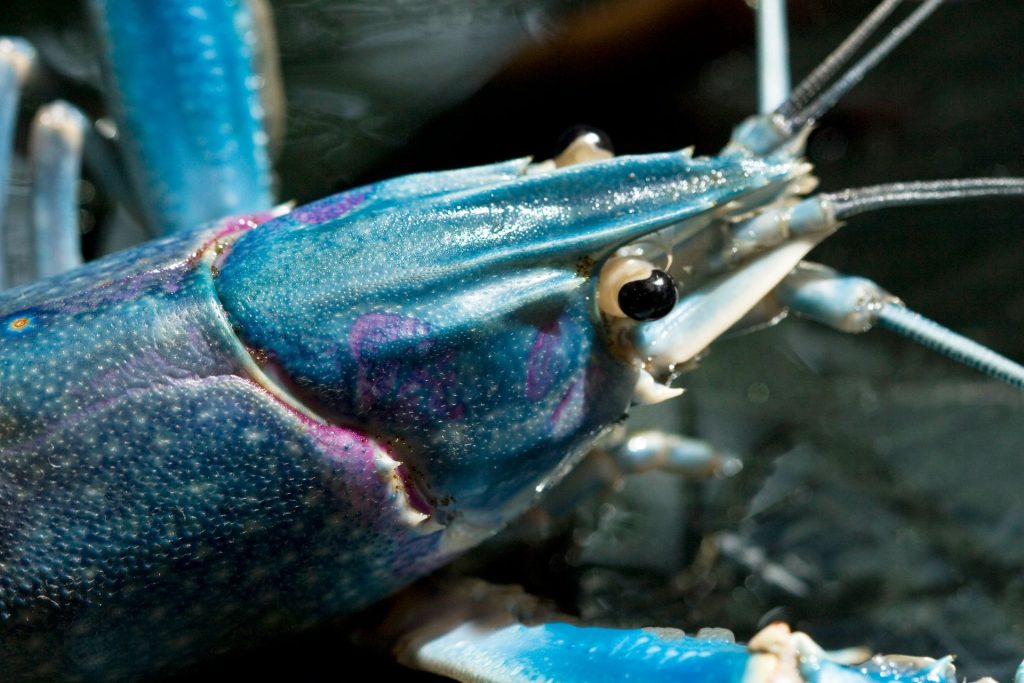
Know Which Crayfish Species You Keep
Care depends heavily on the species. Dwarf crayfish such as Cambarellus patzcuarensis reach only 3 to 4 cm, the red swamp crayfish (Procambarus clarkii) about 12 cm, and redclaw (Cherax quadricarinatus) 20 cm or more. Temperature range, tank size and how aggressive they are all differ.
Some species, including the red swamp crayfish, the marbled crayfish and some Cherax, are restricted or banned in parts of the world because they spread disease and damage wild habitats. Confirm the species and the local law before buying, and never release crayfish or aquarium water into the wild.
Tank Size, Lid, and Aquascape
Dwarf crayfish can live in 40 to 60 litres. Medium species such as Procambarus need about 75 to 110 litres for one animal, and large Cherax 200 litres or more. Floor space matters more than height.
Crayfish climb filter tubes, air lines and cables, and will escape through small gaps. Use a tight lid and seal openings around equipment. Provide caves, pipes, rocks and wood, with at least one hiding place per crayfish plus a spare, and secure rocks so digging cannot topple them.
Water Quality, Hardness, and Temperature
Most crayfish prefer moderately hard to hard water, with a pH of about 7.0 to 8.0 and enough calcium and other minerals to build a new shell. Very soft, acidic water can lead to poor or failed molts.
Temperature depends on species: dwarf crayfish are often kept around 18 to 25 °C, many Procambarus at 20 to 26 °C, and redclaw at 24 to 28 °C. Keep ammonia and nitrite at zero, and never use copper-based medicines, which are toxic to crustaceans.
What to Feed Crayfish
Crayfish are omnivores and scavengers. Feed a sinking crustacean pellet or wafer as the staple, with blanched vegetables such as courgette, peas and spinach, and dried leaves such as oak or Indian almond leaves to graze on. Add a small protein food, such as frozen bloodworm or shrimp, once or twice a week.
Feed small amounts once a day or every other day and remove leftovers, as uneaten food quickly fouls the water.
Molting, Minerals, and Hiding Places
Crayfish grow by shedding their old shell. Young crayfish molt often, adults less often. Before a molt they may hide and eat less; afterwards the new shell is soft for several days and the animal is very vulnerable.
Leave the old shell in the tank, because the crayfish usually eats it to recover minerals. Keep plenty of hiding places available, avoid handling during this time, and make sure tank mates cannot reach a freshly molted animal.
Tank Mates and Aggression
Most crayfish will catch and eat slow or bottom-dwelling fish, snails and shrimp, especially at night. A species tank is the safest choice. Dwarf crayfish can sometimes live with fast, small midwater fish, but they may still take shrimp and sleeping fish.
Keeping more than one crayfish needs space and many hiding places. Males of the same species often fight, and a freshly molted animal can be attacked. Watch for lost claws and legs, which grow back over later molts but signal too much competition.
Routine Care and Health Checks
Change part of the water each week and remove uneaten food, but avoid cleaning the filter media in tap water or rearranging the whole tank at once, as this upsets the biological filter.
A healthy crayfish is active, eats readily, and has clean, intact limbs and a complete shell. Lethargy, refusing food for long periods outside a molt, failed molts or repeated escape attempts are signs to test the water and check the minerals.
Frequently Asked Questions
How Large a Tank Does a Crayfish Need?
It depends on the species. Dwarf crayfish manage in 40 to 60 litres, medium species such as Procambarus need about 75 to 110 litres for one animal, and large Cherax 200 litres or more.
Can Crayfish Live With Fish?
Usually not reliably. Most crayfish catch slow or bottom-dwelling fish, especially at night. Dwarf crayfish with fast midwater fish are the most likely combination to work, but there is always some risk.
What Do Freshwater Crayfish Eat?
Sinking crustacean pellets or wafers, blanched vegetables, dried leaves such as oak or Indian almond, and a small amount of protein food once or twice a week.
Why Does a Crayfish Hide After Molting?
After molting, the new shell is soft for several days, so the crayfish hides to stay safe until it hardens. This is normal; leave it alone and make sure it has a secure hiding place.
Do Crayfish Need Hard Water?
Most species do best in moderately hard to hard water with enough calcium for a new shell. Very soft, acidic water can cause poor or failed molts.
Can Two Crayfish Live Together?
Sometimes, with enough floor space and plenty of hiding places, but males of the same species often fight. Many keepers keep one per tank, or a male with females in a larger tank.
Why Does My Crayfish Climb the Aquarium?
Crayfish are natural explorers and climb equipment, but repeated escape attempts can also mean poor water quality, low oxygen or too few hiding places. Test the water and make sure the lid and every gap are secure.
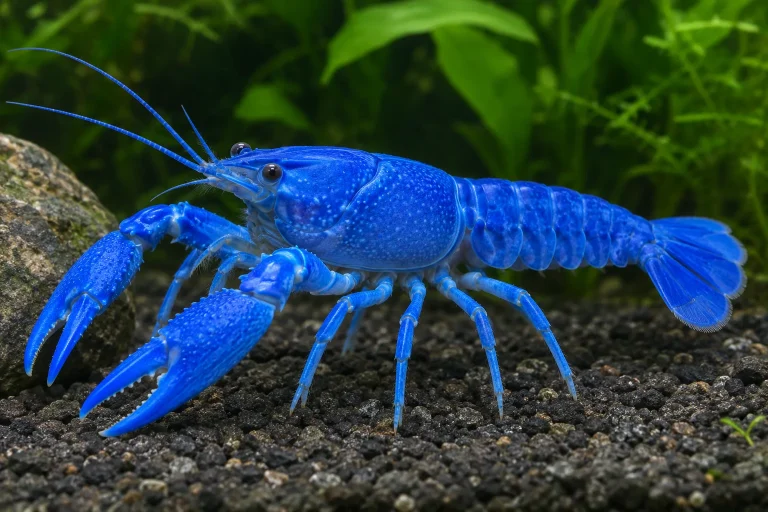
Blue Crayfish
Procambarus alleni
- Care level
- Advanced
- Adult size
- 10–15 cm
- Minimum tank
- 75 litres
- Temperature
- 20–26 °C
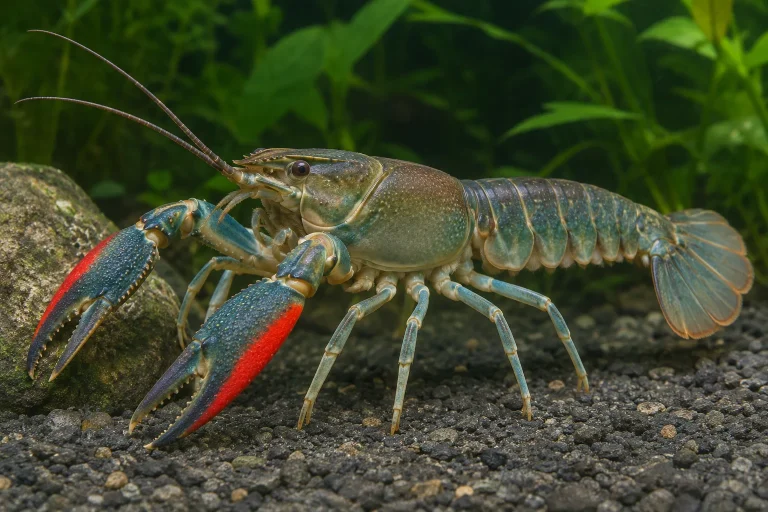
Red Claw Crayfish
Cherax quadricarinatus
- Care level
- Advanced
- Adult size
- 15–25 cm
- Minimum tank
- 200 litres
- Temperature
- 22–28 °C
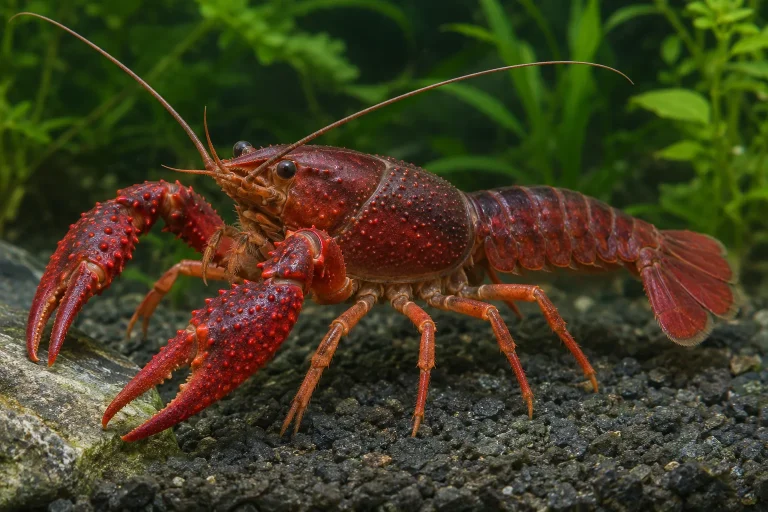
Red Swamp Crayfish
Procambarus clarkii
- Care level
- Advanced
- Adult size
- 8–12 cm
- Minimum tank
- 100 litres
- Temperature
- 18–28 °C
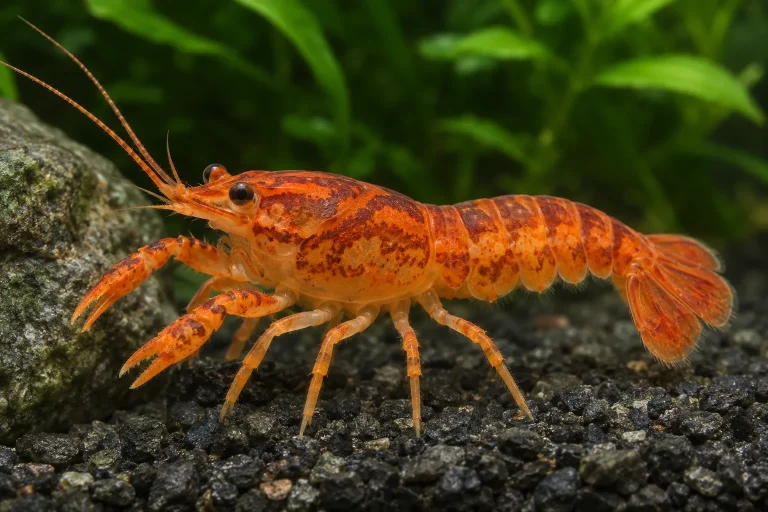
Dwarf Orange Crayfish
Cambarellus patzcuarensis
- Care level
- Intermediate
- Adult size
- 3–5 cm
- Minimum tank
- 30 litres
- Temperature
- 20–25 °C