
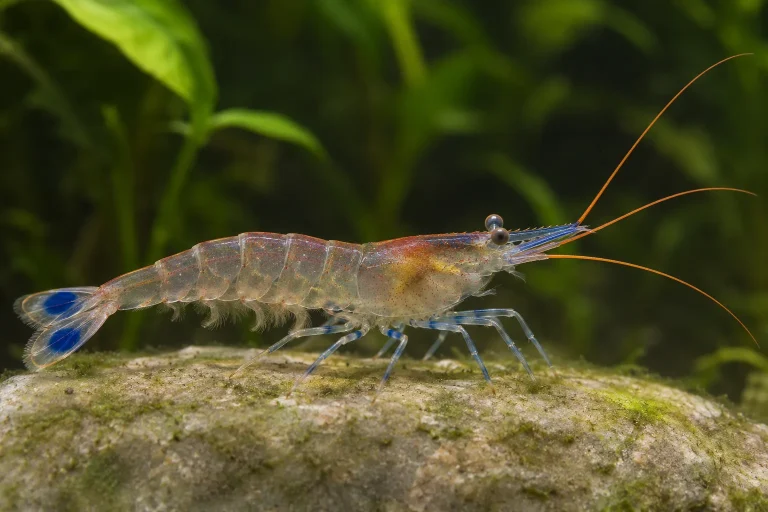
Blue Leg Poso Sulawesi Shrimp
Caridina caerulea
- Care level
- Advanced
- Adult size
- 2–3 cm
- Minimum tank
- 30 litres
- Temperature
- 27–30 °C
Species profile
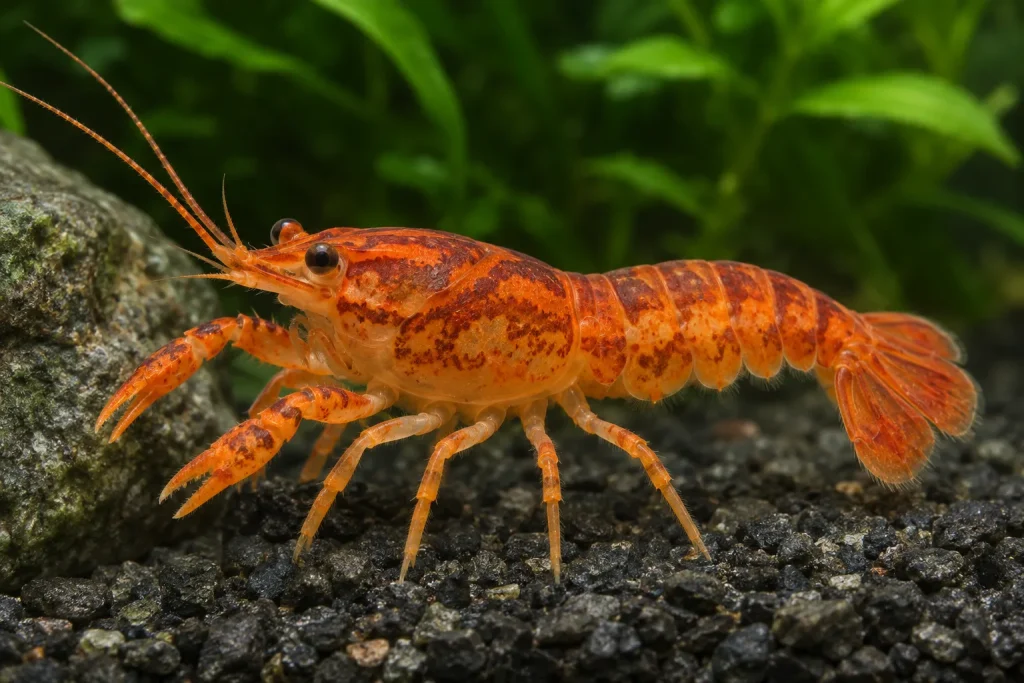
Cambarellus patzcuarensis
Common names: Dwarf Orange Crayfish, CPO Crayfish, Mexican Dwarf Orange Crayfish, Cambarellus patzcuarensis Orange
Up to 5 cm
Typical adult length 3–5 cm.

A selectively bred orange colour form of the small Mexican crayfish Cambarellus patzcuarensis.
Bright orange to reddish-orange body colour, often with darker marbling, stripes, or mottling across the carapace and abdomen.
The accepted species is Cambarellus patzcuarensis. “Orange” or “var. Orange” is an aquarium-trade colour form and should not be included as a formal scientific variety name.
Mature males have modified first swimmerets used in mating; females have a broader abdomen for carrying eggs.
Provide many caves, leaf litter, plants, and visual barriers. Use a secure lid and sponge-protected filter intakes.
Active dwarf crayfish that explores plants, substrate, and hardscape and may defend small shelters.
Can sometimes be maintained in a group when the aquarium has many separated shelters, but aggression and limb loss remain possible.
Moderately territorial, especially during moulting and around caves.
More community-compatible than large crayfish, but small shrimp, slow fish, snails, eggs, and moulting animals remain at risk.
Provide mineralized, well-filtered water, multiple shelters, and a secure lid. Stable hardness is especially important during moulting.
Omnivorous scavenger. Feed complete crustacean food, vegetables, leaf litter, and moderate animal protein.
Feed in several places when keeping a group, and provide mineral availability for moulting.
Females carry eggs and hatchlings beneath the abdomen. Juveniles develop directly but require dense shelter to reduce predation and cannibalism.
You can write a note about what worked for you, or send a photograph. We check everything before it appears here.
Caridina caerulea